Side braids on long hair range from a loose three-strand braid you can tie off in a minute to cornrows that call for a stylist and real time.
Your braiding skill and how much of the morning you can spare decide which one fits: the Loose Side Braid and the Side Braid with Waves forgive uneven tension, while the Dutch, Fishtail, and Side Bubble Braid reward practice.
A low side-swept braid covers the widest range of plans, from a boardroom meeting to the weekend, and 3 or 4 hair rings is all a fishtail needs to look deliberate.
1. Loose Side Braid

A loose three-strand braid takes the least effort of any side braid, since you skip the tight sectioning and just cross the strands and tie off.
Brush the hair to one side, braid without pulling tight, and stop a few inches before the ends so the tail stays soft.
Tug the sections gently outward once it’s done. That small step makes the braid look relaxed and a little fuller, which suits a cardigan, a weekend errand, or a quiet day at the office.
Beginners should start here, because loose tension forgives uneven sections.
2. Dutch Side Braid
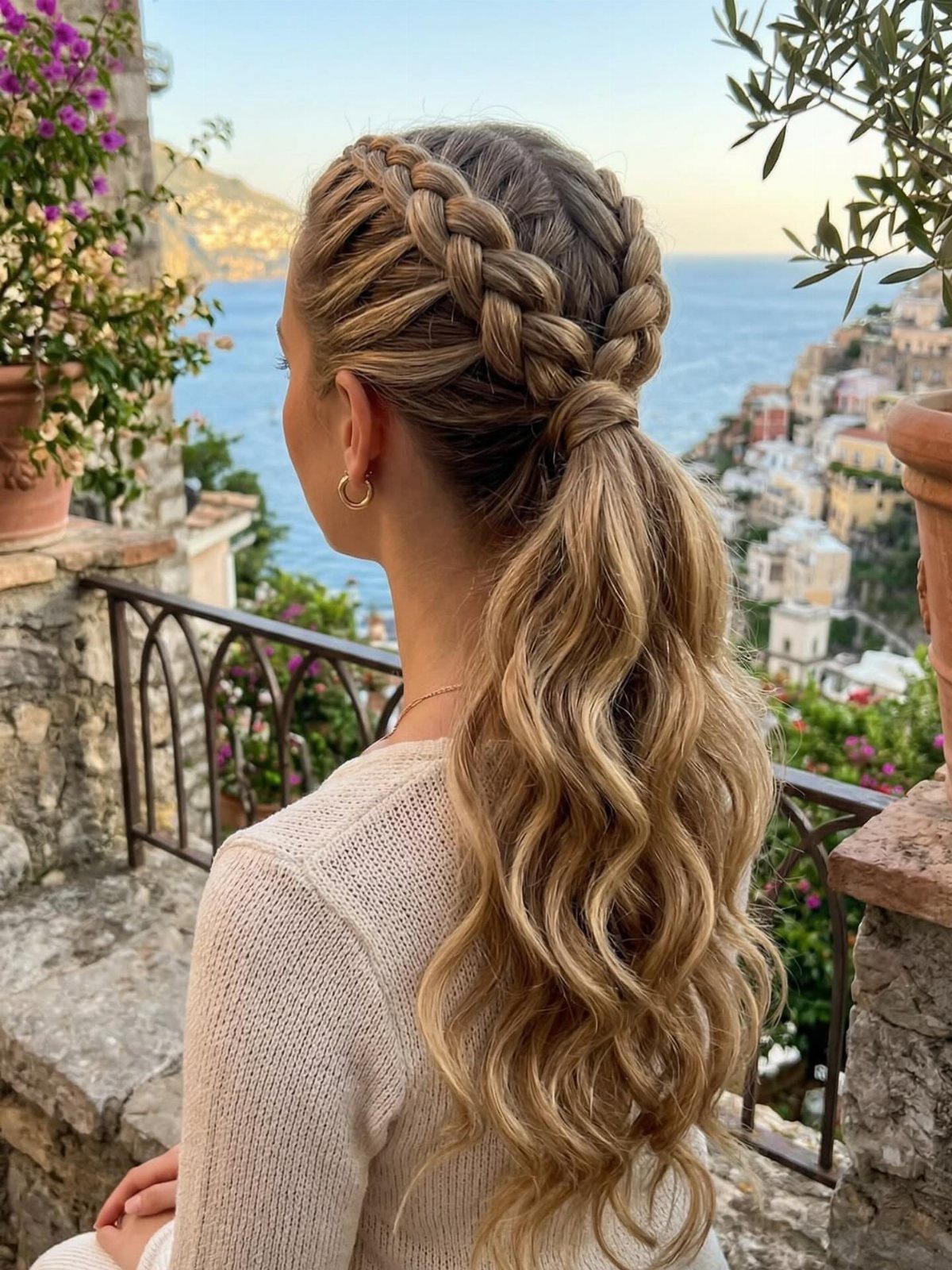
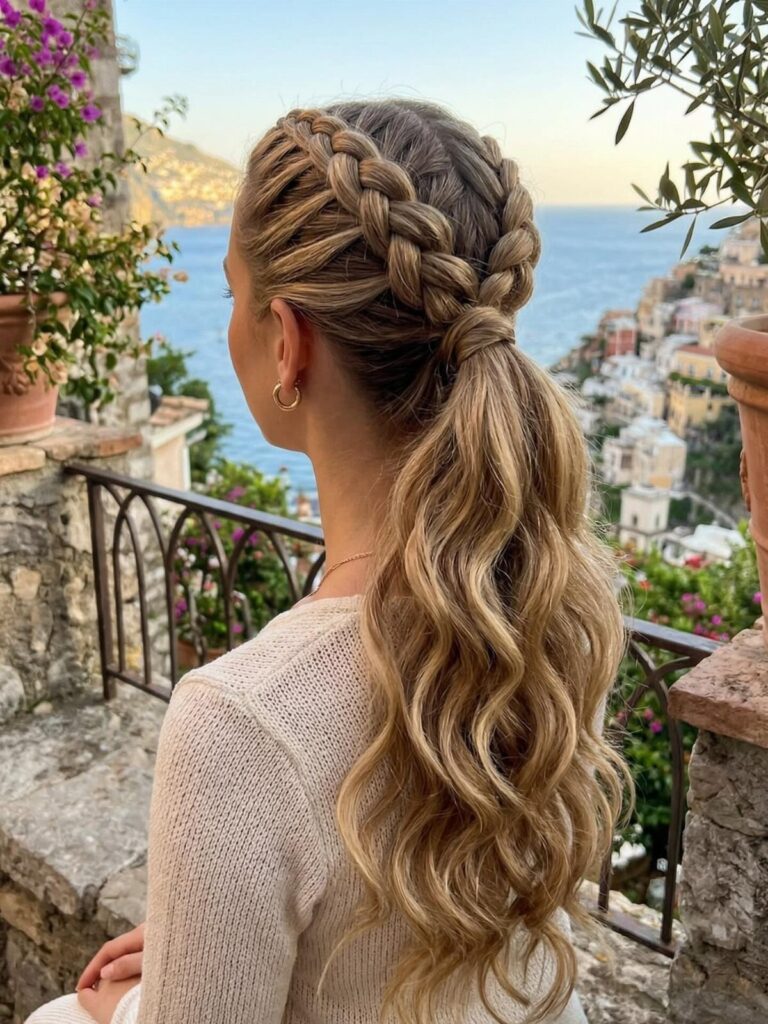
Thick, lifted, and sitting right against the scalp, a Dutch braid crosses the strands under instead of over, so the plait stands out on top of the hair.
Start near the crown, then guide it down one side and finish with a ponytail.
I like this version for windy days and longer outings, since the braid anchors the top while the ponytail stays loose and wavy. Pancake the edges by pulling them apart a little for extra width.
The trade-off: Dutch braiding takes practice, so expect a few messy tries.
3. Fishtail Side Braid
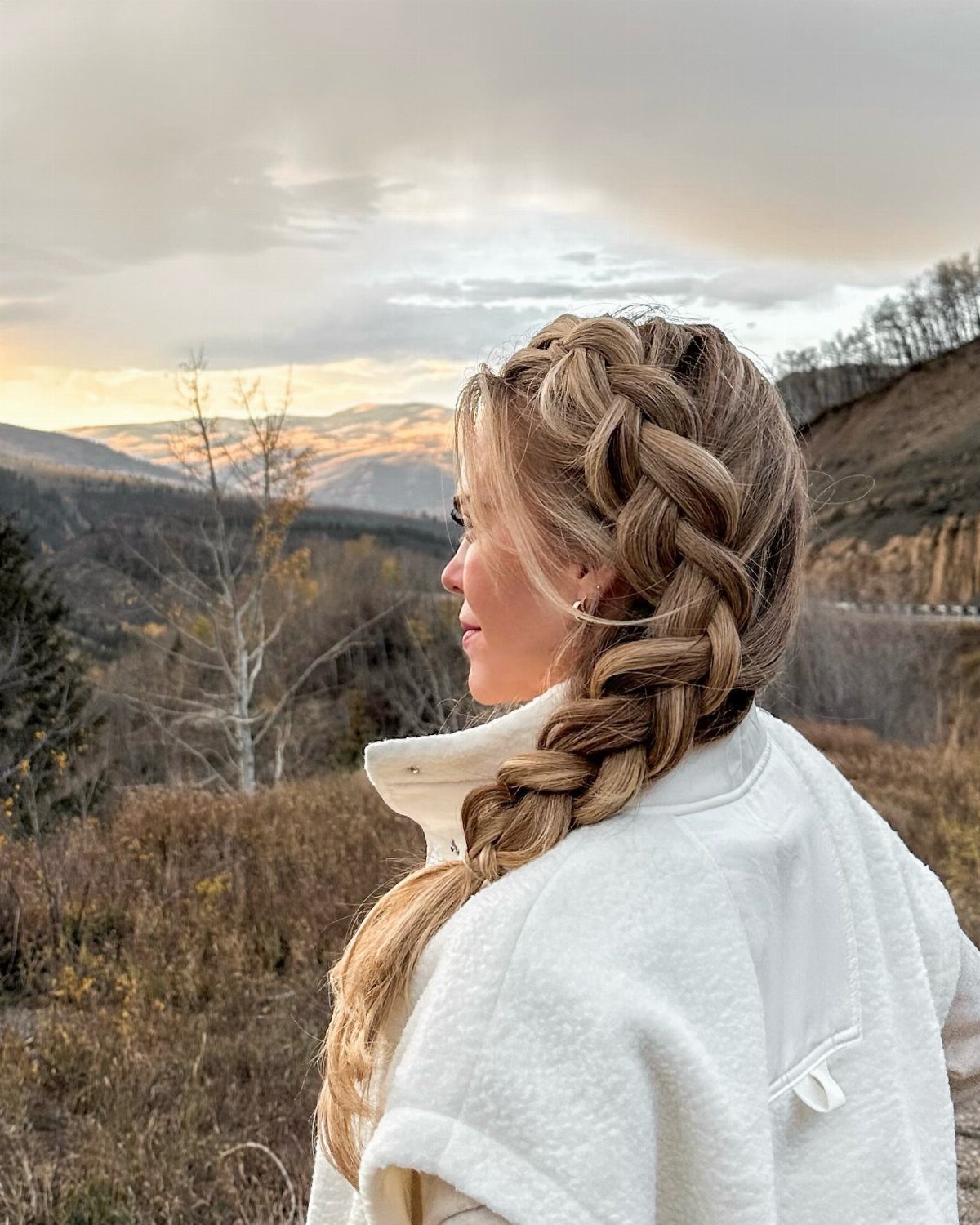
Fishtail braiding uses two sections, not three.
Take a small strand from the outside of one half, cross it over to join the other half, and alternate. The result looks intricate, though the move is simple.
Work with fine, small strands for a tighter pattern, and secure the end with a clear elastic. Over one shoulder it suits evenings and photos, but it takes longer than a basic braid.
Fishtail is my pick when you want texture without adding any product.
4. Small Side Braid
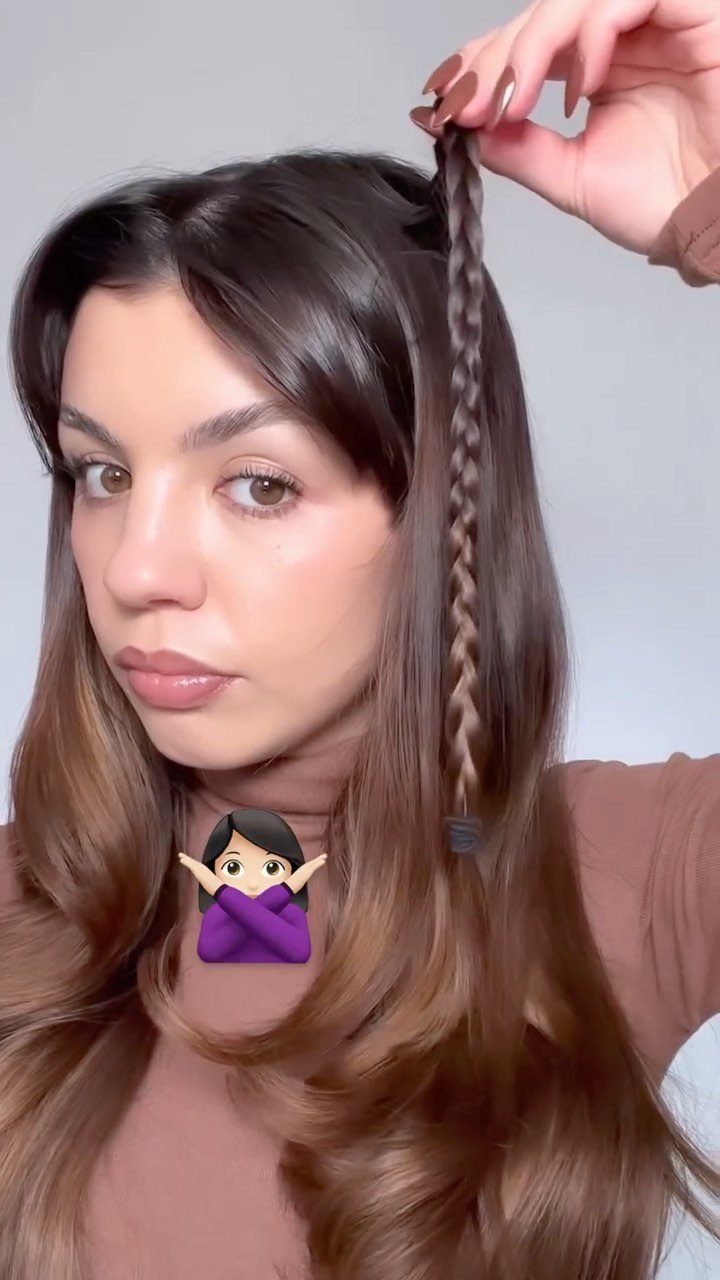
Just one narrow braid, left in with the rest of the hair loose, gives you a detail instead of a full style.
Section a thin piece near the face, braid it to the ends, and secure it with a tiny elastic.
This is the choice for days when you want your hair down but out of your eyes. Tuck the braid behind the ear or let it hang.
It adds no volume and won’t hold all of your hair, but it does pull the front pieces back, so it works as a small accent.
5. Side Braid with Waves
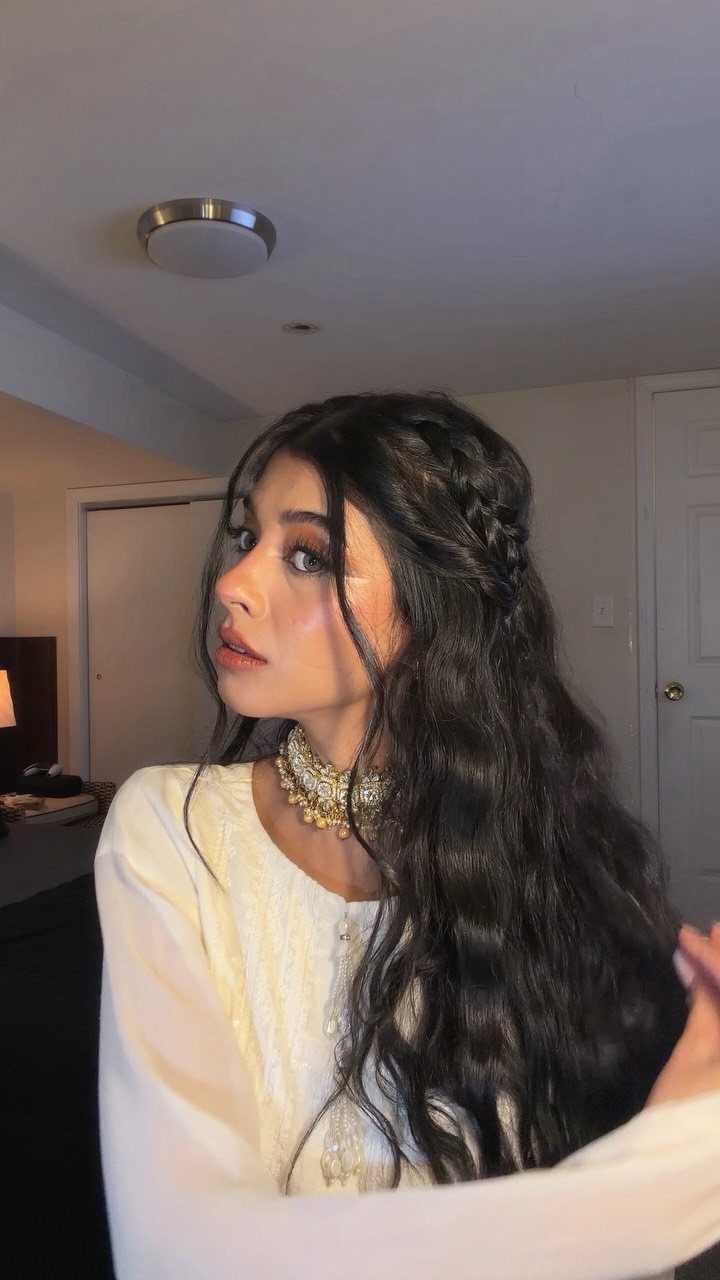
Waves soften a side braid and add movement the braid alone lacks. Curl the hair first with an iron or heatless method, let it cool, then braid only a small section at one side, leaving the rest loose.
Braiding over cooled curls keeps the pattern from dropping out. A light texture spray helps the waves hold.
For a party or dinner, this pairing looks dressed up while staying easy to wear, especially with gold jewelry.
6. Braided Side Ponytail
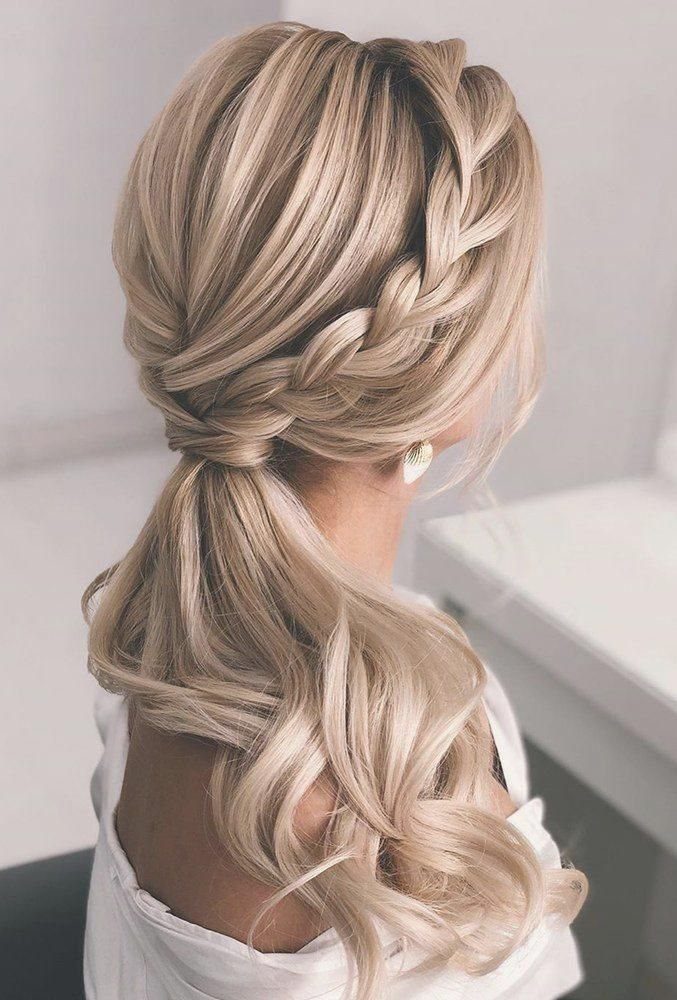
Gather the hair low at one side, braid from the nape, and tie it off to finish as a ponytail.
A braid that flows into a low ponytail keeps hair off the neck and looks neat in a bright, simple outfit.
I’d choose this for work or a wedding guest look, because it stays put and reads polished. Use an elastic that matches your hair color.
Wrap a thin strand around the elastic and pin it underneath to hide it.
7. Side Bubble Braid
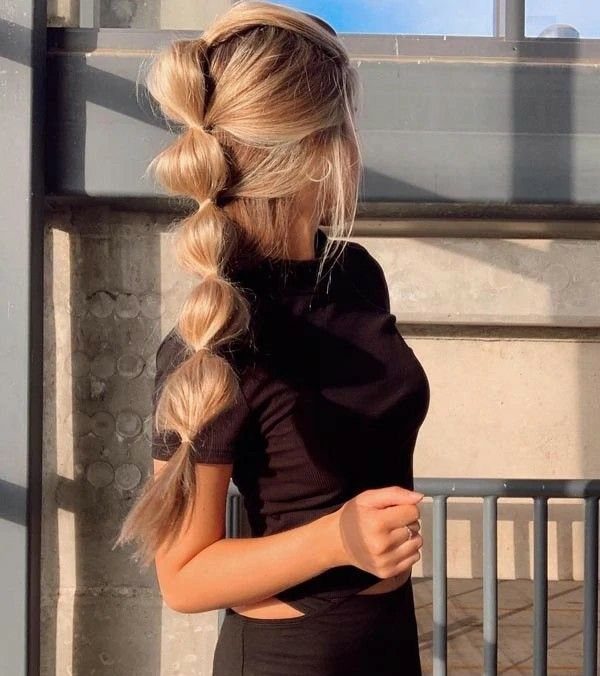
Bubble braiding swaps a tight plait for a series of puffed sections, each one tied off with a small elastic and then pulled outward.
Over one shoulder, a long bubble braid reads playful and a little different from the usual weave.
Space the elastics evenly, about the same distance apart, so the bubbles come out uniform. Clear elastics disappear against blonde hair, and a matching color works for any other shade.
Pull each section gently wider, working from the bottom up. It takes longer than a basic braid, so it suits a weekend more than a rushed morning.
8. Side Cornrow Braid
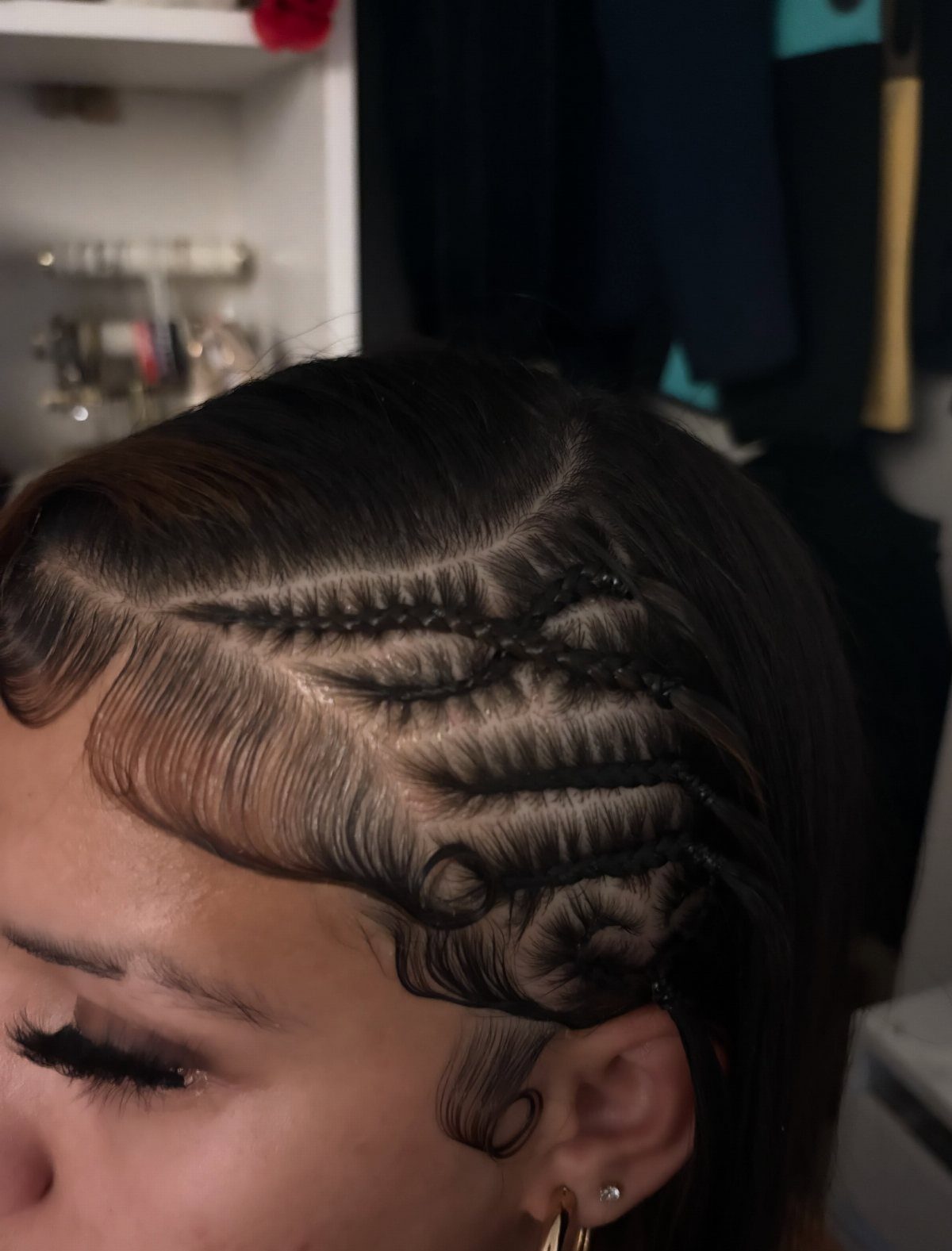
Small cornrows run flat along the scalp, so the braid stays close and neat instead of hanging down. Keeping them on one side leaves the rest of the hair free.
Cornrows need tight, even sections from root to end, which makes this a style to book with a stylist, or to practice patiently if you braid your own. Expect it to take real time.
Smooth the edges with a soft brush and a little gel for a clean finish. This is my pick when you want a sharp, low-maintenance look that stays put.
9. Side Braid with Hair Rings
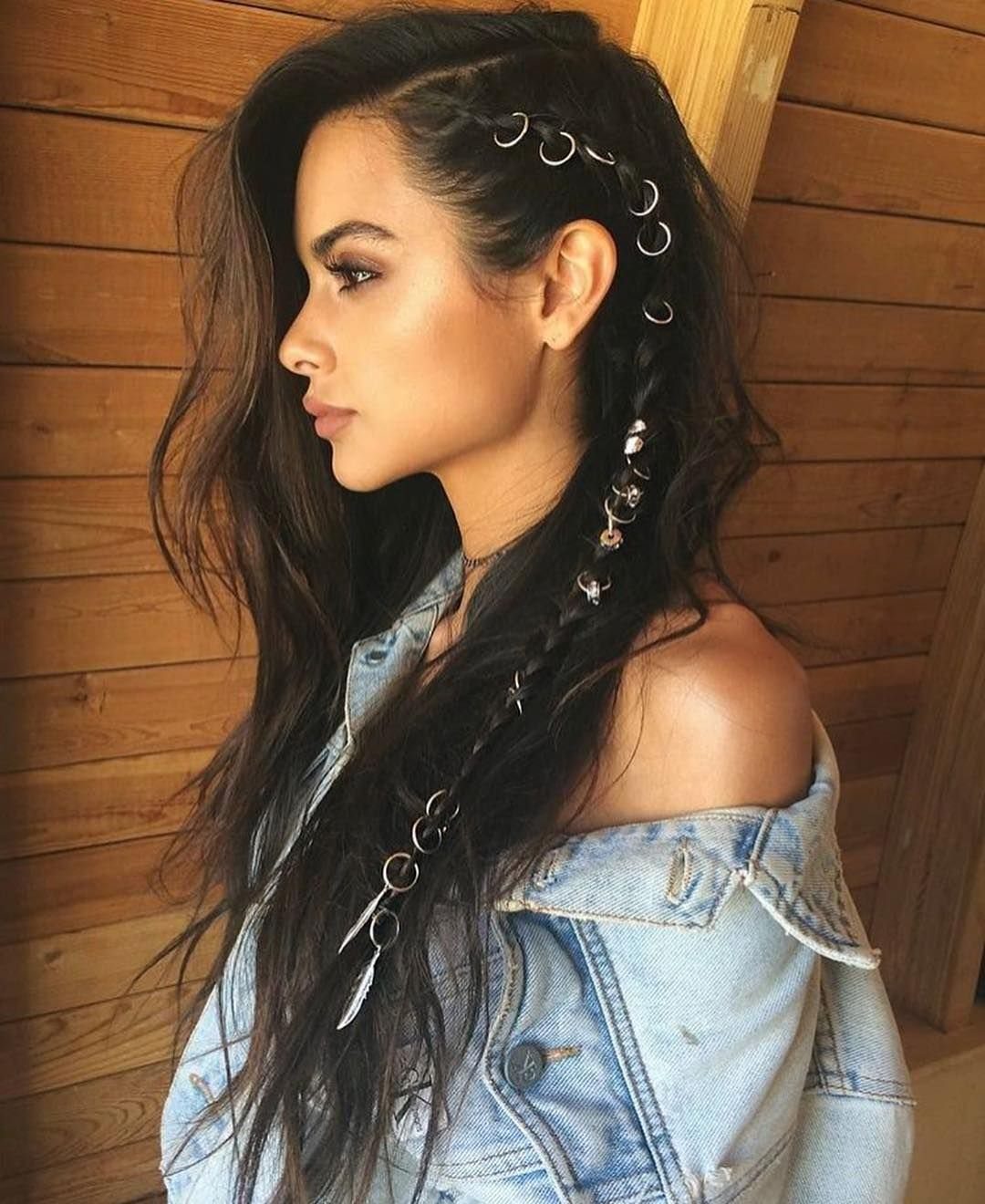
Metal rings slipped onto a fishtail turn a simple braid into an accessory. Braid the fishtail first, keeping the strands small so the pattern stays tight, then thread the rings on or clip them over the braid.
Silver looks sharp against dark hair and pairs well with a denim jacket or other casual layers. Choose rings with an opening wide enough to slide over the braid without snagging.
Don’t overload it: 3 or 4 rings read deliberate, and more can weigh the braid down.
10. Crown Side Braid
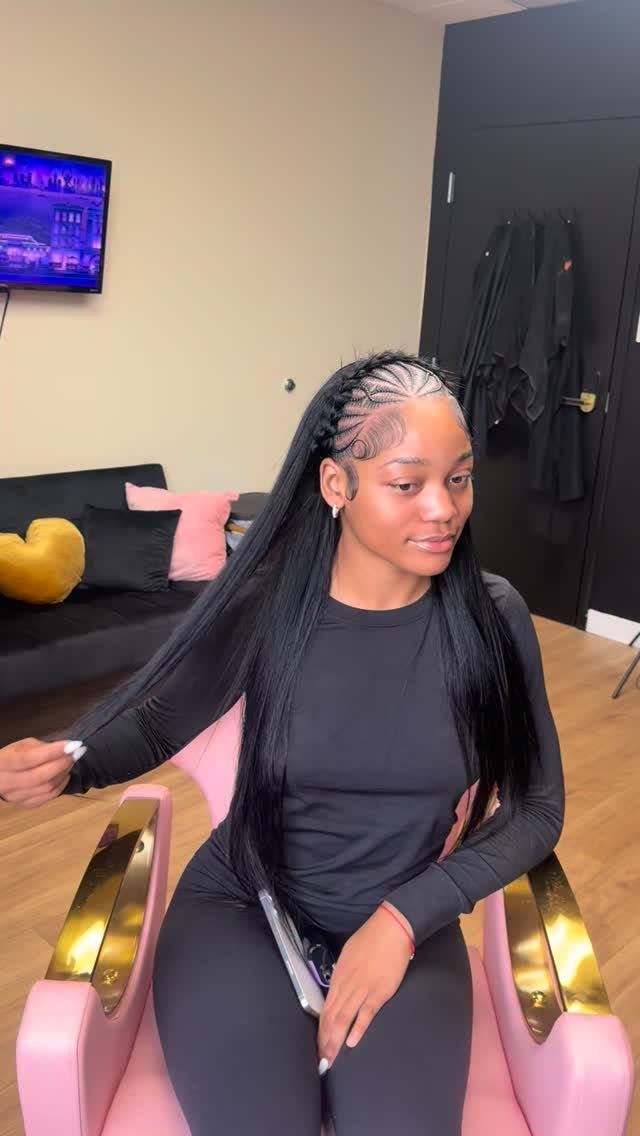
Starting at the crown and sweeping down one side, this braid frames the head instead of hanging straight from the nape. It works as a Dutch or a regular three-strand braid; the Dutch version sits higher.
Part the hair where you want the braid to begin, then add hair to each strand as you move down toward the shoulder. Finish with a regular braid and tie it off.
I like it for long, straight hair, since the braid adds shape up top. It takes steady hands, so practice it before an event.
Occasion and Styling Context
A low side-swept braid is the most flexible option for occasions.
Smooth at the top and resting on one shoulder, it is formal enough for a boardroom meeting yet casual enough for the weekend, so one style can cover a full week.
Weddings, parties, and date nights call for a softer, romantic finish. Pulling a few strands loose around the face and gently tugging the braid’s loops wider gives a side braid more body, and the softer frame suits most face shapes.
For work, go the other way: keep the top smooth and the plait tight, and finish with a plain black elastic.
If you only want to learn one braid for varied plans, make it this low, one-sided braid. Change the tension and the loose strands, and the same braid reads dressy or relaxed.
Frequently Asked Questions
How to braid your long hair?
Start by brushing everything over one shoulder, divide it into 3 even strands, and cross the outer ones over the middle without yanking, then secure the braid with an elastic a few inches above the tips.
A loose hand also hides uneven strands, which makes this a forgiving place for a beginner to start.
Once it’s tied off, pull gently at the edges of each loop to widen the braid and give it a soft, fuller shape.
What are different types of braids?
For long hair worn to one side, the main options are a loose three-strand braid, a Dutch braid (strands cross under so the plait sits on top), a fishtail (two sections, with small strands crossed between them), a bubble braid (puffed sections tied with small elastics), and flat cornrows.
You can also braid one thin accent strand, or finish a braid as a low side ponytail. Loose three-strand is the easiest; Dutch, fishtail, bubble, and cornrows take more practice or time.
What is the healthiest braid style?
A loose braid is the gentlest choice, since it skips the pulling that tight sectioning needs.
Cornrows work differently, since they depend on tight, uniform sections from the scalp to the ends. If you wear a braid with an elastic, pick one that matches your hair color and keep the braid soft instead of cinched.