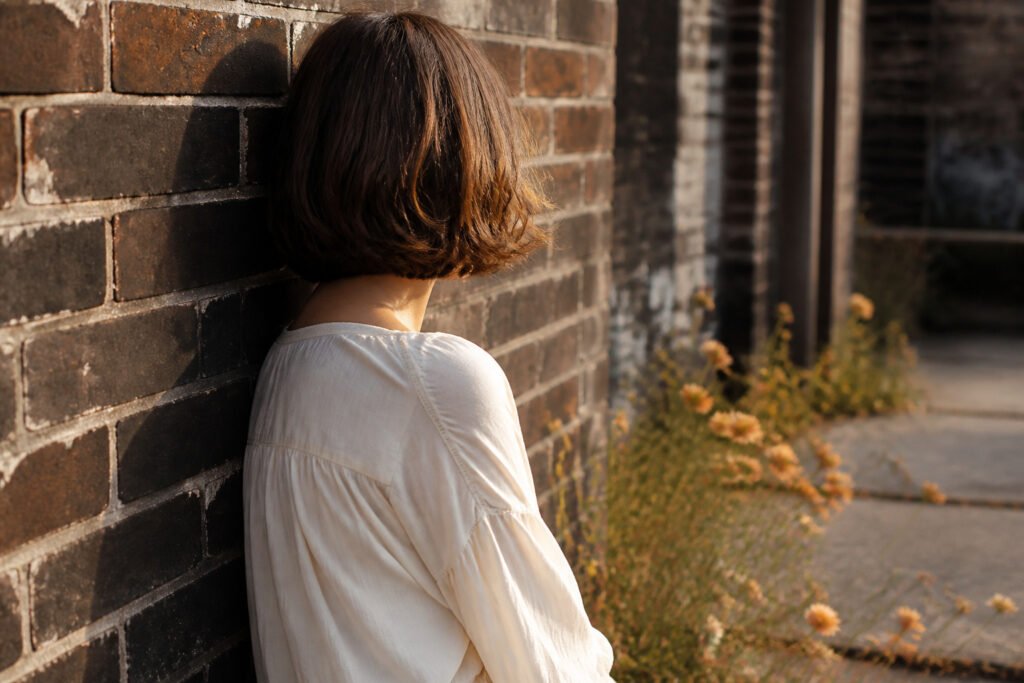
Short hair with bangs costs you a trim every five to six weeks if you want the line to stay intentional rather than accidental. Most people get the face shape conversation backward, asking what looks good in a photo instead of what air-dries in four minutes on a Tuesday morning. A French bob sits heavy enough to skip the round brush if your stylist accounts for how your hair responds to July humidity, not just salon lights.
1. Consult Your Stylist on Face Shape and Lifestyle

A good stylist will start by asking what your mornings actually look like, not just what you pinned last night. The French bob with bangs is everywhere right now, and it works because the cut sits heavy enough to air-dry well if you are rushing out the door. Shorter bangs, landing just below the widest part of the face, will elongate a rounder one and draw the eye upward to where you want attention. Longer bangs do the opposite, adding width to a longer face so it does not read stretched. The bang itself should boost what is good, not cover a third of the face like a curtain. Before you commit, pin your hair back into a bob or bang shape and wear it through a full day; what photographs well at 9 PM may feel like maintenance you resent by Wednesday.
2. Visualize With Reference Images and Pinning

Before committing to scissors, pin your hair back into a bang or bob shape and live with it for a day or two. A few bobby pins and a mirror session at home will tell you more than a mood board about what suits your face shape and your actual routine. What reads as "short" in a photo may sit entirely differently on your own head, and your stylist needs a visual starting point that matches your definition. Wispy bangs that graze the eyebrows can be pinned up easily if the test run feels off, while heavier fringe demands more patience to grow out. Take photos of yourself from the front and side during this preview stage; the angles that flatter in motion are rarely the ones you expected standing still.
3. Discuss Styling Techniques and Tools at the Salon

A good stylist will walk you through the tools that keep short hair with bangs looking intentional rather than accidental. Round brushes create the movement and volume that keep a short cut from falling flat, especially around the crown where gravity works fastest. Straighteners and curlers both have their place, though which one matters more depends on whether you are after a polished line or a piece-y bend. Heat response varies by hair type, so the amount of setting product needed changes with the texture you started with. Humidity is the variable most people forget to account for: bangs that hold their shape in dry January air can separate or curl unpredictably by July, and the weather where you live should shape what you commit to at the appointment. Ask for a quick demo before you leave, since a style that looks great under salon lights but takes forty-five minutes at home usually ends up in a ponytail by week three.
4. Maintain With Regular Trims or Careful Home Cutting

Short hair with bangs lives or dies on the edge staying sharp. Most salons will book a trim between full appointments if you ask; the cost is usually half a cut or less, and it keeps the shape from collapsing into that grown-out wedge that reads accidental rather than styled. I have watched friends stretch eight weeks into fourteen and then wonder why their face-framing layers went limp.
If you are trimming bangs at home, professional shears matter more than technique. Kitchen scissors crush the shaft and leave a frayed line that shows under light. Take off an eighth of an inch at most, cutting dry hair so you see exactly where it lands. Wet bangs spring up shorter than you planned, and that mistake takes three weeks to grow out, not three days.
5. Style Bangs With Heat Tools for the Finished Look

A Kent round-brush lives in my bathroom now because it actually earns the space. The bristles grip without pulling, and the barrel diameter matters more than I expected: too large and the bangs flip outward like a 1960s newscaster, too small and you get a tight curl that fights the rest of the cut. Start with the brush at the root and roll through to the ends while the dryer hits the top of the brush, not your forehead. That angle keeps the volume at the crown rather than plastering everything flat.
Straighteners work when I want the bangs to sit closer to the face, but the trick is a slight inward curve at the ends, not a dead-straight board. Curlers? Only if the humidity has already won and I need to commit to a wave rather than fighting it. The weather matters more than the tool itself; a product that holds in dry October air turns sticky by July. My stylist asked whether my hair takes a set easily before recommending anything, and that single question saved me from buying tools I’d resent.
6. Add Texture and Accessories for Interest

Texture separates a basic short cut from something that actually looks like you. I learned this the hard way after walking out of a salon with a perfectly even bob that sat like a helmet for three weeks. A little point-cutting or razor work at the crown breaks up that solid line and lets the bangs move independently from the rest.
Accessories do the same job with less commitment. A thin metal headband slid two inches back from the hairline turns grown-out bangs into a deliberate look rather than a scheduling problem. Small claw clips at the temples, the matte kind that cost under ten dollars, pin back sections that would otherwise fall into your eyes by noon.
The mistake is treating these as afterthoughts. Texture needs to be cut in, not sprayed on afterward; accessories need to live in your bag or on your dresser, not in a drawer you forget. I keep three identical black clips in rotation because losing one mid-day means the whole style collapses.
7. Textured Bob With Choppy Bangs

A textured bob with choppy bangs lives or dies by the point-cutting technique your stylist uses on the ends. The uneven, almost jagged snips create separation so the hair moves instead of falling in a solid sheet, which is what makes this cut read as modern rather than matronly. I watched three different stylists work through this shape on video before I understood why some versions looked effortless and others looked fried: the choppy layers need to start higher on finer hair, lower on thick hair, or the whole thing balloons outward by week three.
The bangs themselves should be cut with the same irregular rhythm, not blunt across. Ask for them to hit somewhere between eyebrow and lash line with the longest pieces angling slightly away from your face. That length range matters because shorter choppy bangs on a bob can tilt into anime territory fast, while longer ones lose the piece-y separation that makes the style work.
Styling at home takes roughly four minutes with a round brush and a blow dryer with a concentrator nozzle. Dry the bangs first, brushing them from side to side while aiming heat at the roots; this breaks up any natural part and keeps them from training into a curtain you did not ask for. A dime-sized amount of texturizing paste worked through the ends once the hair is cool gives the choppy separation that separates a salon finish from a wash-and-go flop. Skip the paste on day two and just mist with dry shampoo at the roots, or the ends will accumulate product and start looking stringy rather than textured.
8. Curly Short Hair With Wavy Bangs

Natural texture does most of the styling work here, which is why a small amount of leave-in treatment matters more than any hot tool. The curls give the cut its shape, and the bangs fall in soft waves rather than a straight line, so the whole thing reads as intentional rather than grown-out.
I would ask for a similar length all over if you want this particular balance. Too much layering around the crown and the bangs start to look like an afterthought; too little and the weight pulls the waves flat against your forehead. A stylist who works with curl patterns regularly will know where to take weight out without breaking the wave structure.
The upkeep is minimal, but not zero. A leave-in conditioner after each wash keeps the hair from drying into frizz, and that softness is what makes the bangs readable as wavy rather than just messy. Sleep on a silk or satin pillowcase if you want to stretch the style an extra day without refreshing, though that is more habit than necessity.
9. Short Curly Hair With Micro Bangs

The extra short micro-bang is having a major moment right now, and on curlier textures the overall effect leans hard into old school glamour. I keep seeing this cut described as vintage, but the women actually wearing it in 2026 are making it feel current, not costume. The bangs sit high and tight, well above the brow, which means the curl pattern has to be consistent enough that the fringe doesn’t read as accidental. A small amount of leave-in treatment keeps the whole shape soft and shiny rather than frizzing into a halo by noon. If your curls are looser in the front, which happens, the micro length can look sparse instead of deliberate. That tension between the tight fringe and the fuller crown is what gives the style its structure, but it only works when the density is actually there. Ask your stylist to assess the curl spring at your hairline before committing; mine would have talked me out of this two years ago when my front curls were still recovering from bleach.
10. Soft Waves and Side-Swept Bangs

Short hair with bangs can feel like a big commitment, but shorter face-framing pieces that blend into the rest of the cut offer a gentler entry point. The bangs read as bangs without the blunt drama of a full fringe, and they grow out with far less awkwardness.
A gentle side-parting polishes the look while giving thinner hair the illusion of volume at the crown. I have watched this style work on chin-length bobs and on cuts that sit closer to the jaw; the waves soften the line and the swept angle keeps the face open. For styling, a 1.25-inch curling iron or even a flat iron used to bend the ends outward will produce that rounded, lived-in shape. The pieces themselves should be cut to hit somewhere between the cheekbone and the eyebrow, long enough to tuck behind the ear if the mood strikes.
This is the option I would steer someone toward if they want to test whether bangs suit their routine before going for a heavier, straight-across fringe.
11. Pink Blunt Bob With Bangs

A pink blunt bob with bangs turns the blunt bob’s clean line into something you notice from across the room. The full fringe and the saturated color do the heavy lifting, so the cut itself stays simple: one length, strong perimeter, no layers to complicate the grow-out.
Color this vivid needs commitment. The pink will fade, and the blunt edge shows root growth faster than a softer, textured cut. Budget for refresh appointments every four to six weeks if you want the shade to stay punchy, or plan to let it wash to a softer pastel between visits.
Styling is minimal, which is part of the appeal. The blunt cut falls into place with a quick blow-dry; the bangs need only a round brush to sit straight. What sells the look is the pairing of two deliberate choices: the geometric bob and the unexpected color. Either one alone reads safer. Together they feel like the point of the whole outfit.
"I absolutely love a bob with bangs—it adds a fun, flirty vibe"
— Elle
What Chowdhary calls "fun, flirty" here reads bolder with pink in the mix. The bangs soften the bob’s severity; the color keeps it from looking like a default choice. For someone who wants short hair with bangs but worries the combination will feel too plain, this is the solve.
12. Extra Short Bob With Bangs

An extra short bob with bangs sits right at the ear line, and that graphic silhouette is what makes it read as intentional rather than grown-out. The chop works best on hair that lies flat or takes a straightener without a fight, since the clean edge is the whole point. Curly textures can wear it too, though the effect shifts toward old Hollywood structure rather than sharp geometry. Either way, this is not a style that hides behind styling tricks. The length exposes the jaw and the bangs frame the eyes, so the cut does the heavy lifting with minimal morning effort.
13. Flapper Style Short Hair With Side-Swept Bangs

The flapper style short hair with side-swept bangs carries the most glamour per square inch of any cut on this list. A sleek, close-cropped bob with bangs swept dramatically across one eye reads 1920s without looking costume-y, provided the line stays sharp.
The side sweep matters more than the length. Ask your stylist to cut the bangs heavy enough to hold the diagonal, then train them with a round brush and a concentrator nozzle. I have seen this go wrong when the bangs are too wispy, they separate and look accidental rather than styled.
For an evening out, a deep side part and a touch of shine serum keep the silhouette mirror-smooth. Day to day, tucking the sweep behind one ear softens the look without losing the shape. The maintenance is real: this cut shows grow-out fast, so plan on a trim every five to six weeks if you want to keep that precise edge.
14. Subtle Layers and Full Bangs

Growing out a cut can feel like a hostage situation between salon visits, which is exactly where subtle layers paired with full bangs earns its keep. The layers do the heavy lifting of blending awkward lengths as the shape shifts, so the whole thing reads intentional rather than in-between. Full bangs, meanwhile, give the eye a fixed point to land on while everything else is in flux.
The maintenance is low-key enough that you can stretch appointments without the style falling apart. A rounded, soft silhouette keeps it from looking too grown-out or too deliberately edgy; it sits right in the middle where most daily routines actually live. For anyone easing out of a shorter cut or testing whether they want to commit to longer layers, this is the version that forgives hesitation.
15. Brunette Mullet With Bangs

The modern mullet has shaken off its 1980s baggage and become something genuinely wearable, especially when the cut stays subtle through the layers and shorter around the face. Francesca Babbi’s street style version shows how the brunette color keeps the silhouette from reading too theatrical: the depth of tone grounds the shape, and the bangs act as a bridge between the shorter front pieces and the longer crown rather than a separate statement.
What separates this from the retro version is the layering. Ask for face-framing pieces that taper rather than chop, and keep the back length close enough to the nape that you can still tuck it. The bangs themselves should hit at or just below the brow, heavy enough to hold a line but not so thick they fight the texture.
For styling at home, a round brush creates the movement this cut needs, and humidity will work against the bangs more than the rest. Straighteners help if your hair resists a set, though the point of this particular mullet is controlled dishevelment rather than polish. Color can shift the whole mood, but the brunette base is what makes the cut feel deliberate instead of accidental.
16. Soft Bob With Middle-Parted Bangs

A soft bob with middle-parted bangs sits right at the crossroads of looking put-together and actually being manageable day to day. The cut keeps a rounded silhouette that falls somewhere between chin and collarbone, with the bangs split cleanly down the center rather than swept sideways or cut straight across. That middle part does the heavy lifting: it frames the face symmetrically without the commitment of a full fringe, and it grows out gracefully if you decide to push it aside later.
What makes this style genuinely versatile is how little it demands in the morning. The rounded shape holds its structure even when air-dried, and the subtle bangs blend back into the rest of the cut if you skip a styling session. For women building a wardrobe of pieces that work across settings, this is a haircut that translates from video calls to dinner without its own outfit change. The ease is the point, not a compromise.
17. Short Hair With Deep Side Parting

A deep side part on short hair does more than change where the hair falls; it restructures the whole silhouette. With curls or coils, the shift is dramatic because the part determines which sections hang and which lift. I learned this after years of parting down the middle and wondering why my curls looked flat at the crown. The deep side part pushes volume to one side, and the asymmetry gives each coil room to spring without mirroring the other half of the head.
The part should sit at least two inches off center, roughly above the outer edge of one eyebrow. Anything closer reads as a regular side part and misses the architectural effect. On short cuts, this placement also lets bangs sweep across the forehead at an angle rather than sitting straight down, which softens the line between bangs and the rest of the shape.
Styling starts wet. I rake product through, establish the part with a comb while the hair is saturated, then diffuse or air-dry without touching the roots. Once dry, the lifted side holds its height; the heavier side stays smooth against the scalp. The contrast is the whole point. For tighter coils, a small gold or tortoiseshell clip at the deeper part keeps the sectioning visible and adds a deliberate finish.
18. Short Wavy Hair With Wispy Bangs

Wispy bangs change the whole mood of short wavy hair. Where heavy bangs sit like a curtain, these lighter pieces graze the eyebrows and let air through, so the cut reads casual rather than styled. That openness is what makes this the low-key option in the lineup.
The waves do most of the work if your texture is already there. A small amount of leave-in treatment keeps them soft and shiny without looking product-heavy. I pin mine up some mornings when the bangs fall wrong or the wave goes flat in back; the wispy cut makes that easy, no bobby pins fighting a thick fringe.
What sold me on this style, reading through dozens of reference shots, was how little commitment it asks. The bangs grow out fast, blend into layers fast, and the whole thing still looks intentional even three weeks past a trim. The trick is asking for pieces that graze, not cover, the brow; anything heavier and you have a different cut entirely, one that needs daily heat and a styling routine this option is built to skip.
Face Shape and Bang Pairings That Work

The shortest layer of hair around your face is where the eye stops before it travels downward. On a round face, shorter bangs draw attention to the eyes and create the feeling of more vertical space to traverse. On a longer face, the same short bang has the opposite effect: the eye halts early, leaving a lot of face still to cover, so the face reads as even longer. Longer bangs suit longer faces because they let the eye travel in one continuous sweep.
| Face shape | Bang length | What happens to the eye line |
|---|---|---|
| Round | Shorter | Stops at the eyes, elongates the impression |
| Long | Longer | Travels with the hair, no early halt |
| Long | Short | Stops too soon, face seems longer |
A bang should boost what the face already has, not act like a sheet covering a third of it. If the first layer falls at the widest point of a round face, somewhere around the cheekbone, the eye stops there too. That can work if you want the focus up, but it is worth knowing before the scissors come out.
Daily Styling Tips for Different Textures

A round brush is the tool that changes how short hair with bangs behaves from the moment you lift it. Kent makes the one that sits in my kit, though any brush with a similar barrel and natural bristles will create the same lift at the root and bend through the ends. The motion matters more than the heat: roll the brush under as you blow-dry, pulling the bangs in the direction you want them to fall, and the shape holds without looking set.
Straighteners and curling wands have their place, but how your hair responds to humidity is the real decider on whether you reach for them. Fine hair that collapses in damp weather needs the round brush and a light setting spray; thicker or more porous hair might need a flat pass to keep bangs from swelling. The weather will undo a polished finish faster than any other factor, so plan for touch-ups on muggy days rather than expecting morning work to last.
Texture is the other shift worth making. A little dry shampoo at the roots, worked through with fingertips, breaks up too-clean edges and gives short cuts the movement they need to avoid looking helmeted. Scarves and barrettes do the same job when you do not want heat in the hair at all.
Trim Schedule and Home Cutting Cautions

Cutting layers into hair began in the 1930s, and that history matters when you’re standing in front of a bathroom mirror with kitchen scissors in your hand. The technique was developed by professionals who understood how weight distribution changes a shape, and professional scissors still matter for the same reason: a clean slice preserves the cuticle, while a dull blade crushes it and leaves you with frizz you didn’t plan for.
Trimming only small amounts at home is the rule that saves most mistakes. A quarter-inch taken off dry bangs, snipped vertically into the ends rather than straight across, keeps the line soft. Go further and you discover why stylists book those fifteen-minute bang trims between full cuts: hair springs up when it’s short, and what looked right at the cheekbone can land at the eyebrow once it dries.
I have learned to mark my calendar for a proper trim every five to six weeks. The shape holds, the bangs stay intentional rather than apologetic, and the money spent at the salon protects the money already spent on the cut itself.
Frequently Asked Questions
What are the best bangs for my face shape?
Shorter bangs that land just below the widest part of the face elongate a rounder one and draw attention upward. Longer bangs add width to a longer face so it does not read stretched. The bang should boost what is good, not cover a third of the face like a curtain. Pin your hair back and wear it through a full day before committing to see what actually suits you.
How do I maintain my bangs?
Most salons will book a trim between full appointments for half a cut or less, which keeps the shape from collapsing into a grown-out wedge. If trimming at home, use professional shears, not kitchen scissors, and cut dry hair an eighth of an inch at most. Wet bangs spring up shorter than planned, and that mistake takes three weeks to grow out.
What tools do I need to style bangs?
A round brush creates the movement and volume that keep a short cut from falling flat, especially at the crown. Straighteners work for a polished line sitting closer to the face; curlers help when humidity has already won and you need to commit to a wave. Ask your stylist for a quick demo before you leave, since a style that takes forty-five minutes at home usually ends up in a ponytail by week three.