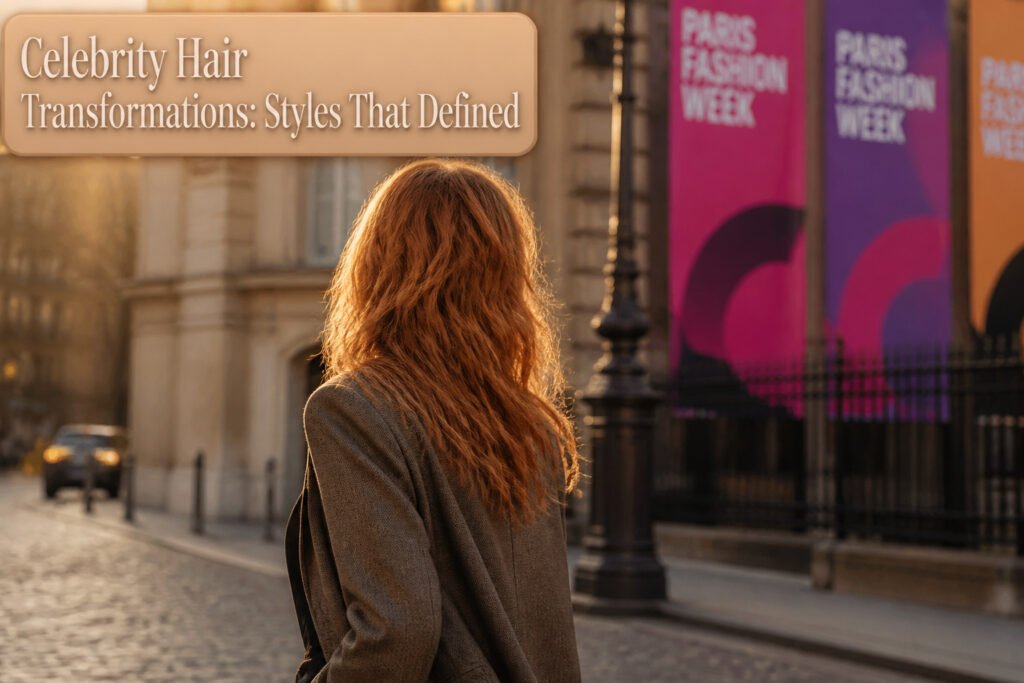
A celebrity hair transformation only registers if the timing and setting match the shift. The ones that defined 2026 were not the most dramatic cuts or colors, but the moves that landed during moments people were already watching. Pamela Anderson arrived at Paris Fashion Week with a textured ginger shag that replaced her blonde bob entirely, a pairing of structure and color that kept the look wearable rather than costume. That specificity, a named style at a named event, is what separated the transformations that lasted from the ones that disappeared by Monday.
1. Sofia Richie’s Iconic Bob

Sofia Richie’s French bob arrived on June 21, 2025, and the timing mattered. She posted the reveal on Instagram with the caption itself, "French Bob," crediting stylist George Curran. That directness, no mystery or slow tease, made it instantly copyable. The cut sat right at the jawline with the blunt ends and slight inward curve that define the French version, not the longer, softer lobs that had been everywhere.
By mid-summer, salons were fielding requests with her screenshot in hand. What separated this from other celebrity chops was the specificity: a named style, a named stylist, a single reference image that translated cleanly to real hair. The bob renaissance it sparked lasted into 2026, with editors at Cosmopolitan naming it among the defining transformations of 2024–2025. The lesson for anyone considering the same move is to bring the exact photo and ask for the exact length. Richie’s version worked because it was precise, not interpreted.
2. Bella Hadid Goes Blonde at Cannes

Bella Hadid’s blonde era began at the Cannes Film Festival, and that timing mattered more than the color itself. Cannes is a career checkpoint for actresses and models, a place where the industry decides who has arrived or who is arriving next. She chose that moment to step out with lighter hair, and the cameras treated it like a coronation rather than a casual change.
The shift has been gradual since then, a few levels lighter every couple of months rather than one drastic bleach-and-tone session. That slower pace keeps the story alive; each appearance becomes a check-in on where the color has landed. Sun-kissed evolution beats a single-day reveal if you want people still talking about your hair six months later.
What works here is the match between setting and statement. A film festival demands a look that photographs against marble stairs and Mediterranean light, and pale hair carries that weight differently than her previous darker shades. The professional milestone amplified a color change that might have gone unnoticed at a lesser event. For anyone considering their own switch, the lesson is in the calendar: major hair moves land harder when they coincide with a moment people are already watching.
3. Pamela Anderson’s Textured Ginger Shag

Pamela Anderson’s textured ginger shag landed as the single most talked-about celebrity hair transformation of the year, and the shift was deliberate enough to feel like a real statement rather than a whim. She arrived at Paris Fashion Week with the blonde flippy bob fully gone, replaced by a shag cut in a warm ginger tone that caught light differently in every photograph. The texture was the detail that saved it from looking like a simple color swap: layers were cut to move, not to sit still, which kept the style from aging into something too polished or too retro.
What made this work, watching it appear across the week, was that the cut met her actual texture rather than fighting it. A shag lives or dies on whether the wearer will let it look slightly undone, and Anderson wore it like she had stopped maintaining the old signature precisely so this one could breathe. The ginger read as intentional against her skin tone, neither copper-bright nor safely auburn, sitting in a middle range that most salons can mix but few clients request without prompting.
For anyone considering a similar move, the lesson is in the pairing: dramatic color plus dramatic structure usually collapses into costume, but the lived-in texture here kept both elements wearable.
4. Tyla’s Sharp Bob

Tyla’s blunt bob landed differently than the wave of celebrity chops that filled 2026. What set it apart was the pairing: braids placed right along her side part, a detail that kept the cut from reading as generic salon-wall inspiration. The precision of that placement turned a standard blunt line into something that actually moved with her, not just around her face.
Most bobs that season either went aggressively asymmetric or soft and feathered. Tyla split the difference with a straight-across edge that still carried texture through those braided accents. It felt like a natural step in her style evolution, not a reboot for the sake of headlines. The look worked because it read as hers rather than a trend she borrowed for a week. I’ve scrolled through enough red-carpet roundups to recognize when a cut is being worn versus when it’s wearing the person, and this one stayed in the first category from the first photo through the months she kept it.
5. Sabrina Carpenter’s Mid-Length Cut

Sabrina Carpenter’s mid-length cut arrived at that exact point where most people just look like they’re waiting for a salon appointment. She kept it deliberately blunt, hitting just past the collarbone with clean ends rather than the feathery grow-out layers that read as accident. The length itself functioned as strategy: short enough to feel like a committed choice, long enough to still pull back for stage choreography or red carpet without the bobby-pin warfare a pixie demands.
What made it work was the styling consistency. She wore it blown straight with a slight inward curve at the ends, almost bob-like in its precision, which signaled intention rather than in-betweenness. For anyone considering a similar transitional cut, the lesson is in the finish. Uneven ends or too much texturing at this length tips immediately into "growing it out" territory. Carpenter’s version stayed polished enough that it read as a destination, not a layover, even while it clearly left her room to go shorter or longer without another dramatic chop.
6. Rosalía’s Halo Hair

Rosalía’s golden blonde halo at the crown turned an unexpected placement into the kind of cultural beauty moment that outlasted the red carpet. The color sat specifically at the top of her head, not pulled through the lengths, which kept the look from reading as a standard blonde shift. Against her long waves, the effect read angelic without trying for full transformation.
This was the less expected move from her. Rosalía had built recognition on darker, richer tones that matched the flamenco-pop visual language she came up with. Bleaching just the crown risked looking like grow-out or an unfinished job, but the deliberate ring shape made it intentional, almost liturgical. It separated her from the full-head color changes that dominated 2026’s transformation coverage.
What made it work technically was the contrast in levels. The halo sat several shades lighter than the midlengths and ends, which stayed in her natural depth range. That two-tone approach let her keep the recognizable base while still registering as changed. For anyone considering a similar move, the placement matters more than the exact shade: too low and it reads as roots, too perfect a circle and it looks costume. Rosalía’s sat at the precise point where the head curves to catch light, which meant it photographed as glow rather than stripe.
7. Ariana Grande Goes Brunette

Ariana Grande’s brunette return in 2026 marked the end of an era that had lasted nearly a decade and a half. Since her Victorious days ended, she’d built an entire visual identity around the high ponytail and progressively lighter tones, a look so consistent it became shorthand for her brand. The shift back to darker hair read as deliberate unmasking rather than simple color change.
What made this particular celebrity hair transformation worth watching was the context. Grande had dyed her hair every other week during four seasons of the Nickelodeon show, damage that led her to focus on recovery once that contract ended. Coconut oil became her stated go-to for hydration. The 2026 brunette moment, paired with that same voluminous ponytail silhouette, suggested someone who had finally integrated the signature style with the healthier, lower-maintenance color she’d started with. The internet treated it as a signal, and that reaction was fair: when a performer has worn one look long enough for it to become meme material, any departure becomes commentary on where they stand with their own image.
8. Hailey Bieber’s Lob

Hailey Bieber’s long bob hit the sweet spot between a trim and a real change, which is harder to pull off than it sounds. The cut sat right at collarbone length, long enough to still pull back but short enough that the shape of her jaw and cheekbones suddenly carried the whole look. That middle ground is where a lot of celebrity hair transformations fizzle; go too subtle and nobody notices, go too far and it reads as damage control. The lob let her keep her center part, her usual warm tone, her whole aesthetic, while still registering as a deliberate shift.
For someone with her oval face shape, the length works because it ends exactly where the bone structure does the most work. Shorter cuts can compete with those proportions; longer hair softens them into generic territory. The lob also fits a styling routine that has to move fast. It air-dries with enough body to look intentional, takes a flat iron in three minutes flat, and holds a loose wave without falling into prom-curl territory by noon. That practicality is part of why the cut stuck around past the usual celebrity-news cycle.
9. Jennifer Lawrence’s Bangs

Jennifer Lawrence’s bangs at the September 26 Die My Love premiere in San Sebastian, Spain, sat slightly past her eyebrows, a placement that read sophisticated rather than playful. The cut itself was intentionally uneven and feather-light, which gave the fringe a lived-in quality that looked cool rather than overly styled. What struck me, looking at the photos from that night, was how such a relatively small shift still registered as a genuine transformation. Lawrence has built a public image on approachable glamour, and this fringe narrowed that into something more editorial without abandoning the core idea. The uneven, feather-light texture was the key detail; a blunt, heavy bang would have read as costume on her, but this version looked like she had worn it in already. For anyone considering a similar move, the lesson is in proportion. The bangs were not the story of the night, yet they changed how the rest of the look read, which is exactly what a successful minor transformation should do.
10. Zoë Kravitz’s Major Cut

Zoë Kravitz’s shift to a micro bob with equally micro side bangs landed her among the riskier celebrity hair transformations of 2026. Most people cannot wear a cut that short without looking like they lost a bet; Kravitz made it read as deliberate and cool. The length sat so close to the jaw that the bangs almost merged into the line of the cut itself, blurring where one ended and the other began. That edginess tracked with where her fashion choices had already been heading, away from the longer, looser styles she’d worn in previous years and toward sharper silhouettes that feel more controlled. Watching the transition, what struck me was how much the haircut did the styling work on its own. There was no visible effort, no product-heavy texture fighting against the shape. It read as finished the moment she stepped out. For anyone considering a dramatic crop, this is the reality worth weighing: the cut has to suit your natural texture and your tolerance for maintenance, because micro lengths leave no room to hide a bad grow-out phase. Kravitz’s version succeeded because the precision of the line matched the precision of her broader style evolution.
11. Kim Kardashian’s Pixie

Kim Kardashian’s February 2026 cut dropped seven inches of hair to land at a true pixie, a length her audience had not seen in years. Chris Appleton, her longtime stylist, posted the reveal himself and headed off the usual skepticism immediately: the chop was real, not a wig. The timing read as deliberate. Kardashian had spent the previous year building Skims into everyday wardrobe territory, and trading her signature waist-grazing extensions for something sharp and low-maintenance matched that pivot toward clothes that do the work instead of hair that demands it. A pixie on her bone structure also reads differently than on most faces; the cut exposed the line of her jaw and shifted focus to neckline and shoulder, which happens to be exactly where her brand’s newest collections sit. Whether the move was personal reinvention or calculated product alignment hardly matters for the rest of us borrowing the reference. What registers is that a celebrity hair transformation this extreme tends to signal a chapter change rather than a whim, and Kardashian’s timing made that readable even without the caption.
"Love this new chop on Kim, we got [seven] inches off her hair!" He captioned a pic of her new ‘do. Adding: "No, it’s not a wig before you start lol."
Appleton’s pre-emptive strike against the wig theory tells you how rare this actually was for her. For anyone considering their own dramatic crop, the detail to steal is the proportion: seven inches off brought her to jaw-skimming, not buzzed, which keeps the door open for styling without requiring daily effort.
12. Keke Palmer’s Pixie Transformation

Keke Palmer’s move from long hair to a pixie cut was the most dramatic length change on this list, and the one that generated the most conversation about what a haircut can signal. She had been wearing long auburn hair for months, then on August 18 she debuted a cropped style via Instagram that dropped all that length at once. Some outlets described it as a pixie; others noted she took it further, shaving off waist-length braids and dyeing what remained pink. Either way, the look was read as a deliberate break from her earlier image. She posted a photo with the caption, "The less you care, the happier you’ll be, I promise," which framed the cut as personal evolution rather than trend-chasing. What struck me reading through the coverage was how rarely a celebrity haircut gets interpreted as a statement about control rather than style. This one did, and that made it stick in the 2026 conversation longer than most.
13. Sydney Sweeney’s Bob

Sydney Sweeney’s chin-length platinum bob arrived at the Christy premiere during the AFI Festival on October 26, a cut that dropped at least six inches of the signature waves she’d been known for. The style was softened with waves rather than worn straight, which kept the look from reading too severe against her earlier, more romantic public image. That earlier look, the long, flowing blonde that became almost a character reference in itself, had started to feel like a costume she was expected to re-wear. The bob functioned as a hard reset: same color family, but the length and the blunt perimeter shifted the proportion of her face in photographs and, by extension, the roles she seemed available for. I notice how often a celebrity hair transformation works this way, not as a trend adoption but as a boundary redrawn. The styling choice mattered too; had she worn it flat-ironed, the cut would have read editorial and distant. The soft waves kept it approachable, almost grown-out already, as if the change had happened organically rather than in a single salon appointment. That tension between deliberate and effortless is where the best celebrity hair transformations live.
14. Emma Chamberlain’s Bleached Pixie

Emma Chamberlain’s bleached pixie cut delivered the kind of double transformation most people space across two salon visits. She showed up at the Met Gala in May with the cut already chopped and bleached, then kept the style through September, when she slicked it down even shorter for Prada’s Milan show. The spiky bangs from May were gone, replaced by something closer to a true pixie.
The commitment matters here. Chamberlain has treated her hair as movable territory for years, and this was not a tentative test. Bleach on a pixie is high-maintenance by definition, roots visible in weeks, ends prone to dryness. She kept it anyway, which reads less like a red-carpet stunt and more like someone who actually likes the mirror check. That distinction separates the transformations that stick from the ones that get braided back into extensions by Monday.
15. Carrie Underwood’s Brunette Shift

Carrie Underwood’s shift to brunette landed in August 2025, and it carried weight precisely because she had spent nearly two decades as one of country music’s most recognizable blondes. The singer noted on Instagram that she had not seen her natural hair color since she was about twelve years old, which made the return a genuine reset rather than a seasonal experiment. For a public image so tightly bound to lighter, brighter tones, going back to her natural brown was the bolder move, not the safe one. The transformation read less like a trend chase and more like someone stripping back a layer of performance. For readers tracking celebrity hair transformations, this one mattered because it reversed the usual direction; stars typically lighten up for reinvention, and Underwood ran the other way.
Why Celebrities Change Their Hair

Hair carries more weight than we give it credit for. It is one of the few parts of our visual identity we control completely, and celebrities treat it that way. A drastic chop, a bold new color, or a fresh set of bangs marks the end of one era and the start of another, which is why so many women book salon appointments after breakups or during transitions. The same impulse drives the transformations on this list.
For celebrities, a new ‘do often leads to a new role and sometimes a whole new career. The timing is rarely accidental. A breakup, a move, a professional pivot, and the hair changes first. Coco Chanel’s old line about a woman cutting her hair being about to change her life holds up because the pattern repeats so reliably. What reads as fashion news is usually identity work happening in public: the hair signals the shift before the press release does. The celebrities on this list used their hair to tell us who they were becoming, and that is why the changes stuck in memory.
The Trends These Starts Set

The 2024–2025 resurgence of bobs and pixie cuts did not happen in a vacuum. Emma Stone arrived at the January 5 Golden Globes with a short pixie that dropped jaws precisely because her collarbone-length hair had been her signature for so long. That single appearance sent screenshot traffic to salons for weeks. Sofia Richie followed with what several outlets called the bob to end all bobs, a blunt, chin-skimming cut that made the style feel less like a throwback and more like the current uniform. Pamela Anderson, meanwhile, took a different path, pairing vintage Hollywood glamour with a textured ginger shag that warmed up the red carpet palette entirely.
The shift toward warmer hair hues ran parallel to these chops. Stone’s auburn pixie, Anderson’s ginger tone, and Carrie Underwood’s later brunette shift all moved away from the cool, ashy blondes that had dominated the early 2020s. These were not subtle adjustments; they were full tonal reversals that required commitment and maintenance, which is exactly why they read as transformations rather than experiments. A celebrity coloring her hair slightly warmer does not start a trend. A celebrity ditching her entire established palette for something that changes how her skin reads on camera does.
What separates the trends that stick from the ones that fade is whether the look solves a real styling problem. Richie’s bob worked because it required minimal daily effort. Stone’s pixie worked because it framed her face without the weight of longer layers. Anderson’s shag worked because the texture disguised the work of styling. The celebrities who led these trends did not just wear them; they made them look livable.
Reading the Before and After

A before-and-after only lands when you can spot the shift from a thumbnail. Emma Stone’s move from long, shiny locks to a sleek pixie crop sent the beauty world into a frenzy because the change was total: length, silhouette, and the entire frame of her face. That is what reads as dramatic. Billie Eilish’s platinum blonde shag with curtain bangs hit the same register, swapping black and neon green for something classically feminine. The shock came from how completely it broke her previous aesthetic.
Keke Palmer’s buzz cut works differently. She shaved off waist-length braids and dyed the cropped result pink, so the visual jolt was there, but the public read it as narrative: the caption she posted afterward, "The less you care, the happier you’ll be," turned the cut into a statement about control rather than style. The most extreme transformations are the ones where hair color, length, and styling intent all flip at once.
Technically subtle changes, a few inches off or a tone shift within the same family, tend to read as maintenance unless the celebrity has worn one look for years. The coverage they get is quieter because the viewer has to work harder to name what changed. Stone and Palmer do not have that problem; the eye catches it instantly, and the story writes itself.
Frequently Asked Questions
What are the best celebrity hair transformations of 2025?
Standout transformations include Pamela Anderson’s textured ginger shag, Sofia Richie’s precision French bob, Emma Stone’s auburn pixie at the Golden Globes, Carrie Underwood’s return to natural brunette after nearly two decades of blonde, and Kim Kardashian’s seven-inch chop to a true pixie. Each made the list for being precise enough to copy rather than vague enough to interpret, and several sparked salon request waves that lasted into 2026.
What are the current hair trends among celebrities?
Bobs, pixies, and warmer hair hues dominated 2025 and carried into 2026. Sofia Richie’s blunt chin-skimming bob and Emma Chamberlain’s bleached pixie showed two ends of the chop spectrum, while Pamela Anderson’s ginger shag, Emma Stone’s auburn crop, and Carrie Underwood’s brunette shift all moved away from the cool ashy blondes of the early 2020s. The common thread: styles that solved real styling problems rather than creating new ones.
How do celebrity hair transformations affect their image?
A dramatic cut or color shift usually signals a chapter change before any press release confirms it. Keke Palmer’s pixie was read as a statement about control rather than trend-chasing, framed by her caption about caring less. Ariana Grande’s brunette return after fourteen years of lighter tones suggested someone who had finally integrated her signature ponytail with healthier, lower-maintenance color. Sydney Sweeney’s chin-length bob redrawn the boundary of what roles she seemed available for. The hair typically tells us who they are becoming, and the public treats it as commentary on where they stand with their own image.