
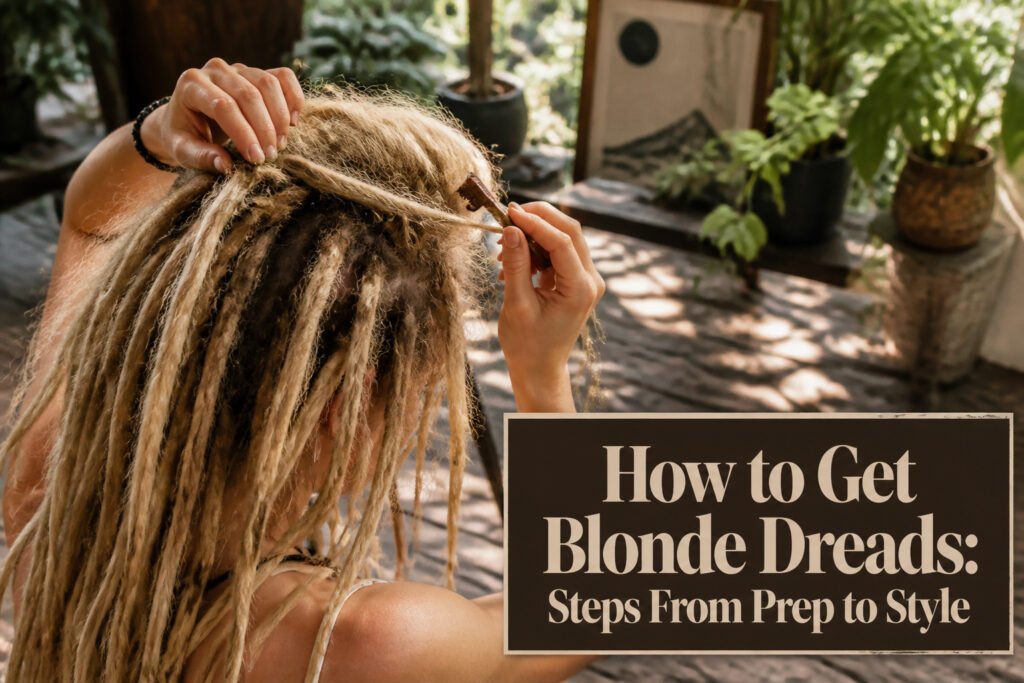
Blonde dreads demand an afternoon of backcombing or twisting plus months of palm-rolling before they fully lock, and the pale color forgives nothing: every uneven section, every fuzzy halo, every grayish root stripe from cheap shampoo shows up under daylight. The same visibility that makes finished blonde dreads striking is what makes them harder to start than darker locks, because the same sloppiness that hides on brown hair reads as a glaring ridge once the strand dries light. I learned this when my first same-day wash left sections slipping at the roots within two weeks; waiting a full day for natural texture to return cut the effort in half.
1. Prepare the Hair

Clean hair is the only foundation that works for blonde dreads, but the timing matters more than most people expect. Residue from conditioner, dry shampoo, or even hard water minerals wraps each strand in a slick film that keeps knots from catching and holding. Skip the deep clean, and the sections loosen within days, especially at the crown where oil collects fastest. Wash 24 to 48 hours before you start rather than the same morning. Slightly textured hair grips itself better than squeaky-fresh strands, and that bit of natural friction saves hours of backcombing or twisting later. I learned this after a same-day wash left my first set slipping out at the roots within two weeks; the second attempt, with a full day of air-dry time, locked in half the effort.
2. Section the Hair

Section size is what decides how thick your blonde dreads will end up, so this step deserves more attention than it usually gets. Most people eyeball it and regret it six months later when one lock is pencil-thin and another is thumb-thick. For finer blonde hair, smaller sections hold together better and mature more evenly than they would if you tried to match the chunky sections that work on coarser textures.
I start at the nape and work up, parting with a metal comb and clipping each row out of the way. Square parts give cleaner results than triangles or random shapes, though some stylists prefer brick-lay patterns to hide scalp lines. The clips matter more than you’d think; cheap ones slip and let sections bleed together while you’re working. Spend the extra few dollars on ones that actually clamp.
A good rule of thumb: if the section at the root looks about the diameter you want the finished dread to be, you’re in the right range. Blonde hair compresses and fluffs differently than darker, coarser hair, so what looks generous wet will tighten up smaller once it locks. Go too big and the center stays loose for months; too small and you get wispy ends that refuse to blunt properly.
3. Choose the Method

Five paths lead to blonde dreads, and the right one depends on how much patience you own versus how much you want to borrow.
Backcombing builds the fastest foundation. You tease sections toward the scalp, then palm-roll and secure. The dreads look defined within hours, though they loosen and tighten unpredictably for weeks. Straight or wavy hair takes to it well; tight coils often slip free before they lock.
Twisting suits looser curl patterns naturally. Two strands twist together and compress over time into a single rope. The result runs slimmer and neater than backcombed dreads, but the early weeks look more like rope braids than mature locks.
Interlocking pulls the tip of a dread through its own base with a tool, creating instant knots without backcombing’s fuzz. It demands precision; done poorly, the dread weakens at the root. Curly and coily hair holds these knots most reliably.
Neglect means doing almost nothing. Hair separates and tangles on its own schedule, usually six months to two years before recognizable dreads form. The shape stays organic and uneven, which is either the appeal or the dealbreaker.
Dread perming chemically roughens the cuticle so hair tangles faster, then sets the shape with a second solution. Salons charge the most for this route, and the damage shows if you later want the hair straight again.
4. Create the Dreads

Blonde hair shows every uneven pull, so tension has to stay consistent from the first section to the last. I learned this watching lighter sections catch the light at odd angles while darker ones forgave the same sloppiness.
- Work one section at a time, keeping the base tight to the scalp but not straining. The pale color makes gaps and bumps visible from across a room.
- Twist or backcomb the length according to your chosen method, maintaining the same pressure throughout. What looks like a minor irregularity on wet brown hair becomes a glaring ridge once the blonde dread dries and catches daylight.
- Palm-roll each finished dread immediately before moving on. The shape sets fast, and blonde fibers do not hide a crooked start.
- Expect to lose most of a day to this. My hands cramped around hour three, and the back sections took twice as long because I could not see them directly.
- Check finished dreads under strong light before you seal or set them. Shadows that read as texture on darker hair read as flat-out mistakes on blonde.
5. Maintain the Dreads

Palm rolling keeps blonde dreads tight and uniform, and the light color makes sloppy maintenance obvious fast. I work each lock between my palms for a few minutes every morning while my coffee brews; the motion trains the hair to mat in one direction and prevents the fuzzy halo that stands out so starkly against pale strands.
Washing demands residue-free shampoo, no exceptions. Standard conditioners and creamy cleansers leave film that collects at the root and shows up as grayish streaks in blonde hair within a week or two. I rinse for a full minute longer than I think I need to, tilting my head so water runs through the length rather than pooling at the scalp.
Separating congos, those thick bands where neighboring dreads merge, belongs on the weekly calendar. The pale base color makes these tangles easier to spot early, which is the only time they split without damage. A clean pull at the root line, never higher up the shaft, keeps the sections distinct.
Visible lint is the blonde dread owner’s special headache. Dark flecks from sweaters and pillowcases embed in the fiber and read as dirt against light hair. A lint roller over hats and scarves before wearing, plus a silk or satin pillowcase, cuts the problem by half. When fuzz does lodge deep, a fine-toothed comb worked gently at the surface lifts it without unraveling the lock.
Every three to four days for washing, daily for palm rolling, weekly for separation: that rhythm has kept mine presentable through two winters of wool coats and static.
6. Style the Dreads

Blonde dreads catch light in a way dark ones do not, so the style you choose changes how you read on camera and in person. After a few months of wear, these are the moves that hold up.
- Half-up knots lift the length off the neck while the blonde ends hang free. The contrast between the darker root area and the pale tips shows more here than it would on black or brown dreads, so the shape of the knot itself matters. A messy loop reads casual; two symmetrical knots read intentional.
- Crown braids or pinned updos work best when you leave a few face-framing dreads out. The blonde picks up ambient light and softens the silhouette the same way highlights do in loose hair. Without those loose pieces, the style can look severe against lighter skin tones.
- Silk wraps and headscarves in mustard, rust, or olive read better against blonde than against dark dreads. The warm tones compete less with the hair and photograph as color blocking rather than contrast. I skip black wraps; they swallow the blonde entirely in low light.
- Metal cuffs and rings at the mid-lengths catch and throw light downward, which brightens the jawline in a way cuffs placed at the roots do not. Brass and copper age more gracefully on blonde than silver, which can read cold.
- Loose, low ponytails or single braids show off the full color gradient from root to tip. This is the style to bookend a color refresh, when the blonde is most even.
Dyeing Blonde Dreads

Bleach moves through mature dreads unevenly, and that unevenness is what makes blonde color on locked hair its own category of project. Loose hair lets you pull a comb through for saturation; a dread is dense, coiled fiber that the peroxide meets from the outside in. The center can stay dark while the surface lifts, or lift patchy, or over-process and snap while you are still waiting on the interior.
Damage risk runs higher here than on loose hair for exactly that density reason. Chemicals pool, heat builds inside the cylinder, and the hair you already put months or years into growing can weaken in places you will not see until a dread thins or breaks. Some people manage the lift in stages at home, bleaching in thin sections and rinsing before the strand feels gummy. The safer money, though, is on a colorist who has worked locked hair before and knows to work the formula in from multiple angles, section by section, checking the interior with a tool rather than guessing from the surface. The cost of that session stings once; re-growing a snapped dread costs more in time than in salon dollars.
Time to Create Dreads

Backcombing and twisting will put you in a chair for a solid afternoon, but the real wait starts after you leave the salon. Those fresh sections look like dreads immediately, yet they loosen and shrink for weeks before they settle into something that holds its own weight. Interlocking speeds up that settling phase since the base is already woven tight, though the install itself still eats most of a day. Neglect, or letting the hair mat naturally, stretches the timeline to months or even years, and the result is looser, more irregular, and harder to predict.
| Method | Install time | Time to mature | What you get |
|---|---|---|---|
| Backcombing / twisting | Hours | Weeks to months | Uniform, dense dreads |
| Interlocking | Hours | Weeks | Tight bases, less frizz early |
| Neglect | None | Months to years | Organic, varied thickness |
Backcombing gives you the fastest finished look, but only if you can handle the palm-rolling maintenance while they tighten. Neglect demands almost no effort yet rewards almost no control over shape or placement. Interlocking splits the difference on labor and patience, though finding someone who does it well without snapping strands takes its own search.
Removing Dreads Safely

Young dreads still hold enough of their original structure to comb out if you change your mind, but the process is not gentle on either your schedule or your scalp. Saturating the dread with a heavy silicone-free conditioner, letting it sit for twenty minutes, then working a metal flea comb from the tip upward will eventually separate the hair. The older the dread, the more the hair has permanently shifted into a locked form, and at that point cutting becomes the only realistic option. Most people who have worn mature dreads for more than two years simply crop close to the root and grow out the remaining length rather than fighting hours of tugging that still leaves breakage. Conditioner saturation and patient combing are your only tools for saving length on dreads under six months old; after that, plan for a short cut and a year of regrowth.
Frequently Asked Questions
How long does it take to get blonde dreads?
The install itself runs a few hours for backcombing, twisting, or interlocking, but the real wait is the maturing phase. Backcombed or twisted sections loosen and shrink for weeks before they settle into dense locks that hold their own weight. The neglect method skips the install entirely but stretches the timeline to months or even years before recognizable dreads form.
Can you dye blonde dreads?
Yes, but bleach travels through the dense, coiled fiber unevenly, so the surface may lift while the center stays dark or over-processes and snaps. Chemicals pool inside the cylinder and heat builds where you cannot see it, which raises the damage risk above loose hair. A colorist who has worked locked hair before is the safer route than home bleaching, since they can work the formula in from multiple angles and check the interior with a tool.
What are the best methods for creating blonde dreads?
Backcombing builds the fastest foundation and suits straight or wavy hair, though the dreads loosen unpredictably for weeks. Twisting works better for looser curls and produces slimmer, neater results. Interlocking creates instant knots without fuzz and holds tightest on curly or coily textures, but demands precision to avoid weakening the root. Neglect means letting hair mat naturally over months to years for an organic, uneven shape. Dread perming chemically speeds the process but carries the highest damage risk and salon cost.