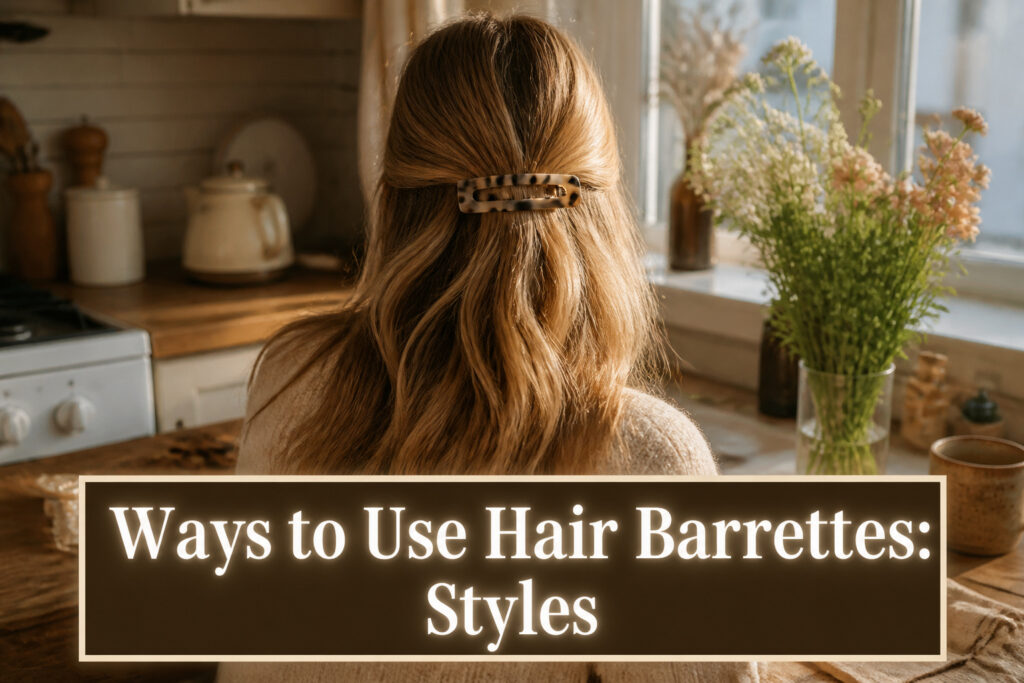
A barrette only holds if the hair has something to bite into.
Texture spray or dry shampoo changes everything: clean strands slide out by noon, but ten seconds of prep gives the metal grip enough friction to last a full day.
The French barrette’s pop-open fastener has secured styles for decades, yet even that mechanism fails without the texture step most people skip.
1. Front Pulled Back
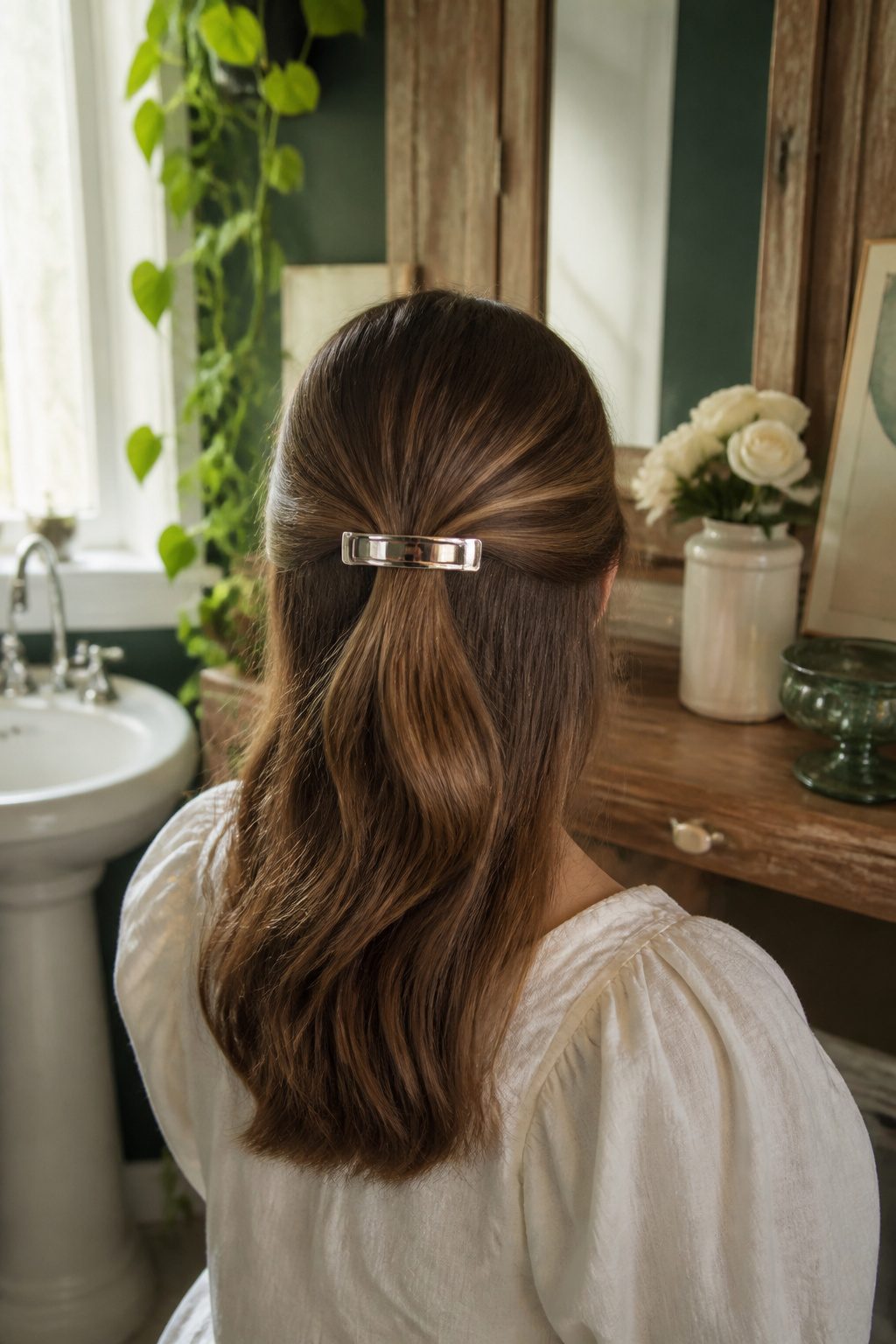
A French barrette is the classic hardware for pulling the front of your hair back without fuss.
The metal frame with its pop-open fastener grips a 1-inch section from either side of the face and holds it cleanly at the back of the head, the two ends meeting in a single line.
Texture spray before you start keeps fine hair from sliding out and gives the barrette something to bite into.
I have watched this style fall apart in humidity when the prep step got skipped; the grip matters more than the clip itself.
A circle barrette with open negative space at its center turns the functional into the interesting, though a plain silvery French barrette still reads as the safer everyday choice.
The negative-space version wins for an evening when the back of your head is actually visible; the classic wins for work.
2. Side Swept
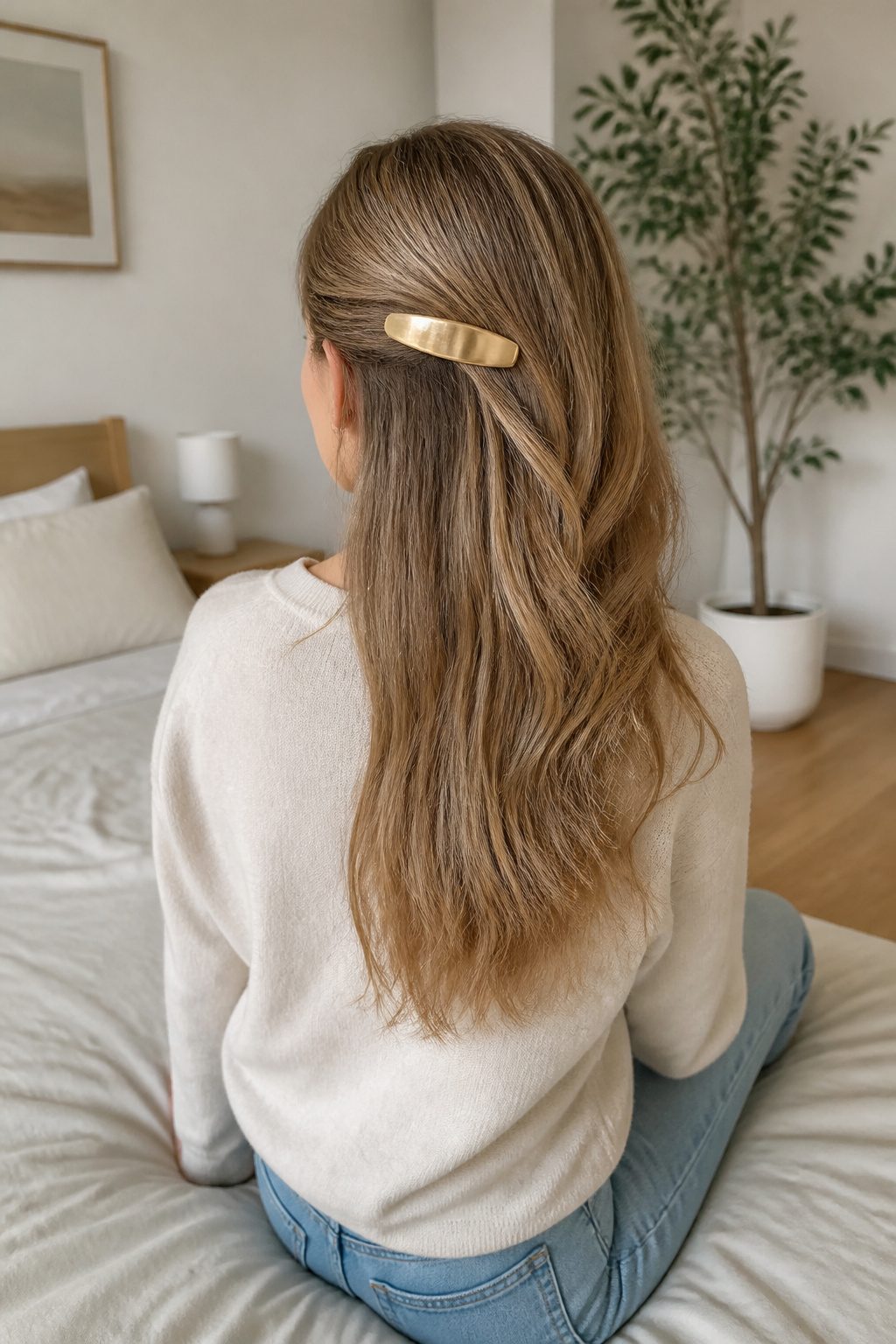
A side part gives the heavier side of your head something to work with.
Pull two or three pieces back from the temple, just enough to keep the hairline clear, and slide a barrette in horizontally to catch them against the scalp.
The metal frame with its snap closure, the classic French style, sits flat and stays put through a full day.
Small barrettes do the actual work of keeping hair out of your eyes without announcing themselves.
A one-inch clip at the temple reads as practical; the same clip three inches back, holding a heavier section, starts to look like a statement.
French barrettes come in enough sizes that you can match the tool to the job rather than forcing a large clip to grip a wisp or stretching a tiny one across too much weight.
Medium to long hair needs the larger sizes, while the small ones handle fine sections or short layers that slip out of everything else.
3. Half-Back Braid
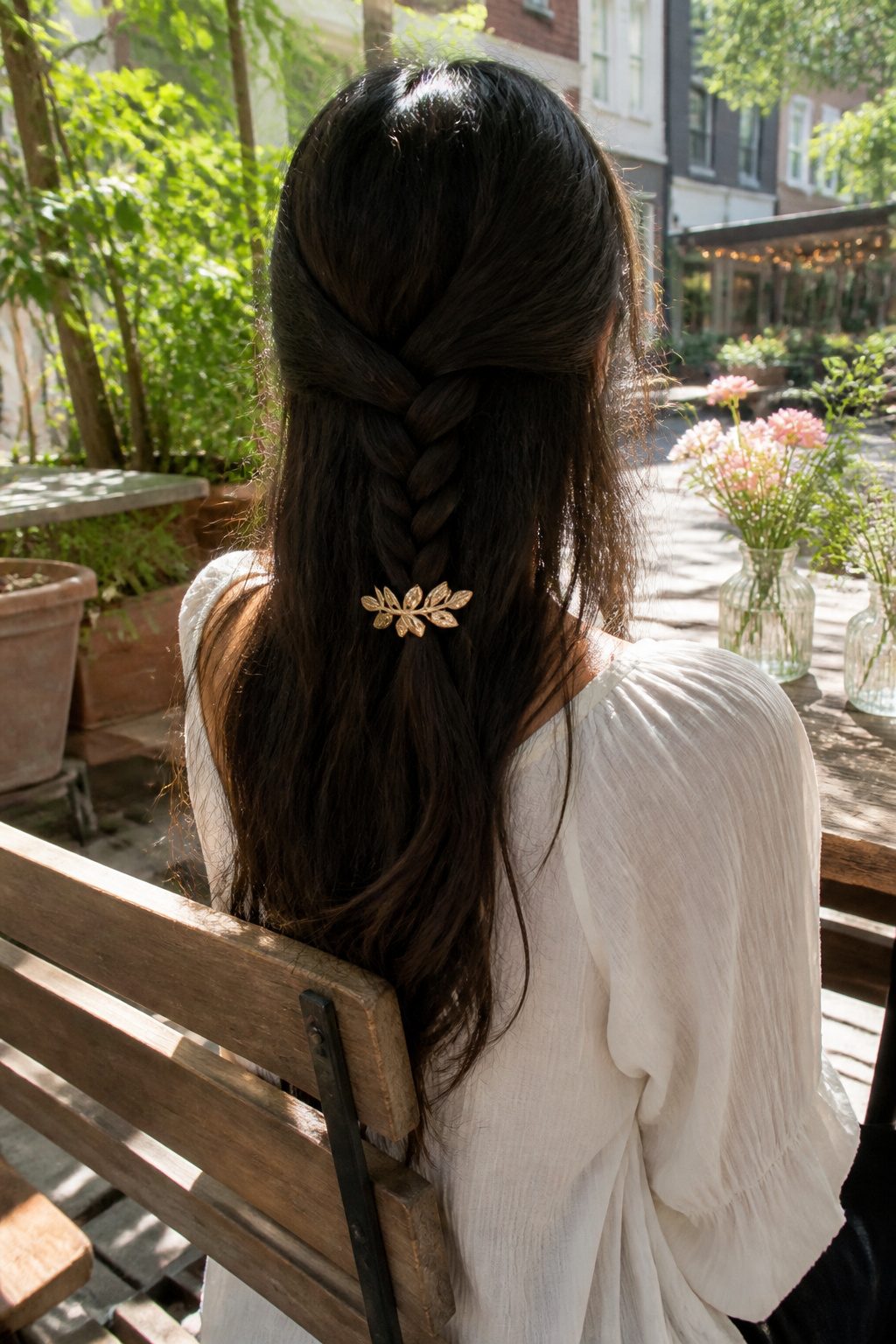
A half-back braid is where a barrette earns its keep. Pull the top section of hair to the center of your crown, braid it, and secure the end with an elastic.
The elastic holds the structure, but it looks like a rubber band got lost at a party. Slide a barrette over that elastic and the whole thing reads intentional.
Barrettes are designed to secure medium to long hair, and this style shows why. The clip has actual length to grip, and the braid gives it something flat and uniform to bite into.
Fine or short hair slips out; here, the braided section is thick enough that the barrette stays put without digging.
I usually pancake the braid first, tugging the side loops outward so it looks fuller against the head. A too-tight braid makes the barrette sit like a sticker on a helmet.
Loosened, the clip nestles into the texture and the transition from braid to loose hair falls cleaner.
4. Adorned Dutch Braid
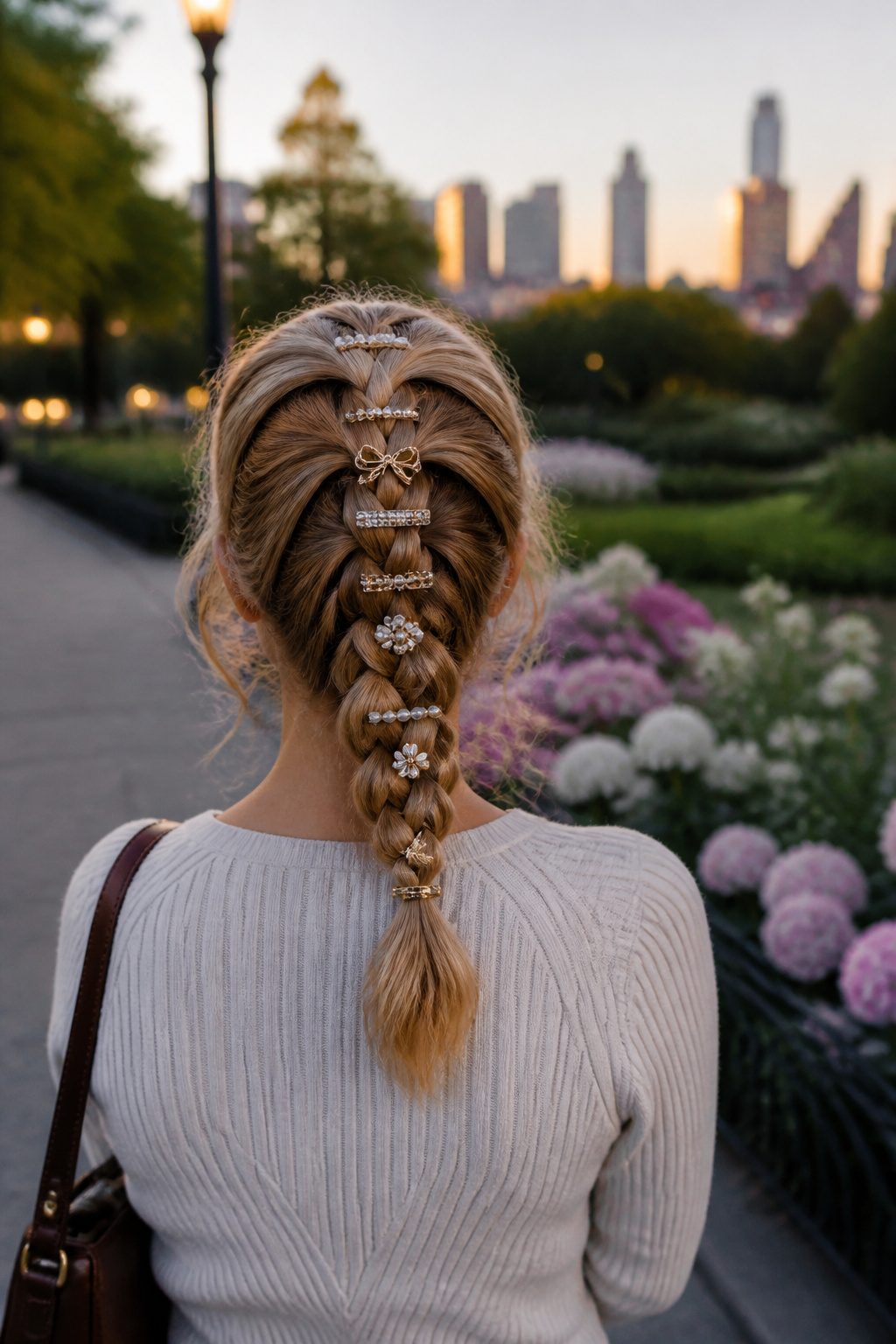
A Dutch braid gives barrettes something to grip that a smooth ponytail never will.
I start with a side part and braid along the heavier side, keeping the strands under rather than over so the braid sits raised against the scalp.
Once I reach the ear, I loosen the tension and finish with a regular braid to the ends, securing it with a small elastic.
The real work comes after: pulling the outer edges wider so the braid has ridges and valleys for clips to nest into.
Smaller barrettes, like the No. 3 clips from MACHETE’s Heirloom Collection, stack cleanly on top of one another for a denser line of color or metal. That stacking reads as one deliberate piece rather than scattered singles.
Bobby pins work too, though they function differently: a bobby pin fixes hair flat to the head with its prongs, while a barrette uses a tension bar and metal arm to clamp a section between them.
For this style, I alternate: barrettes where the braid is thickest and needs holding, bobby pins slipped crosswise through the looser tail where they stay invisible.
5. Messy Bun with Side Braid
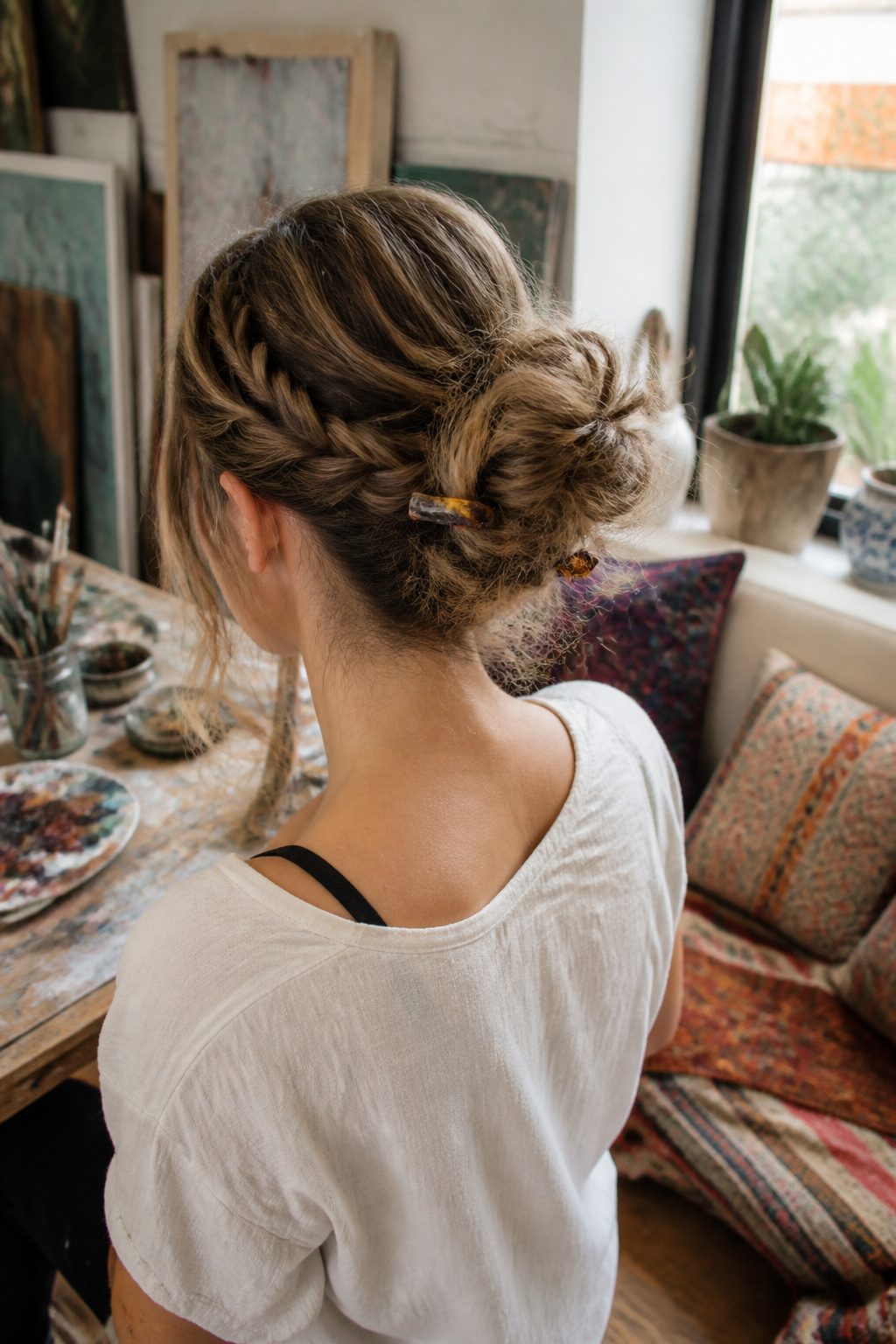
A side braid feeding into a messy bun looks effortless until you turn around and find half your neck hairs have escaped.
That is where barrettes earn their keep on this style, not just as decoration but as actual hardware for the bits a hair tie cannot catch.
Start the Dutch braid at your temple and run it back along the hairline, keeping the tension loose so it does not pull flat against your scalp.
Gather everything, braid included, into a high bun and secure the main mass with whatever pins you already trust.
Then comes the part sources tend to skip: the wispy pieces at the nape, the ones that shrink from bobby pins and refuse to stay tucked.
Small barrettes clamp these flyaways flat against the head without the stab-and-hope of a pin, and they read as intentional since the eye already expects ornament here.
Medium to long hair handles this best; the braid needs enough length to reach the bun without straining, and the bun itself needs volume to balance the detail at the side.
On shorter layers, the same barrettes still work, just placed closer to the ear where the hair is long enough to grip.
6. Barrette Row
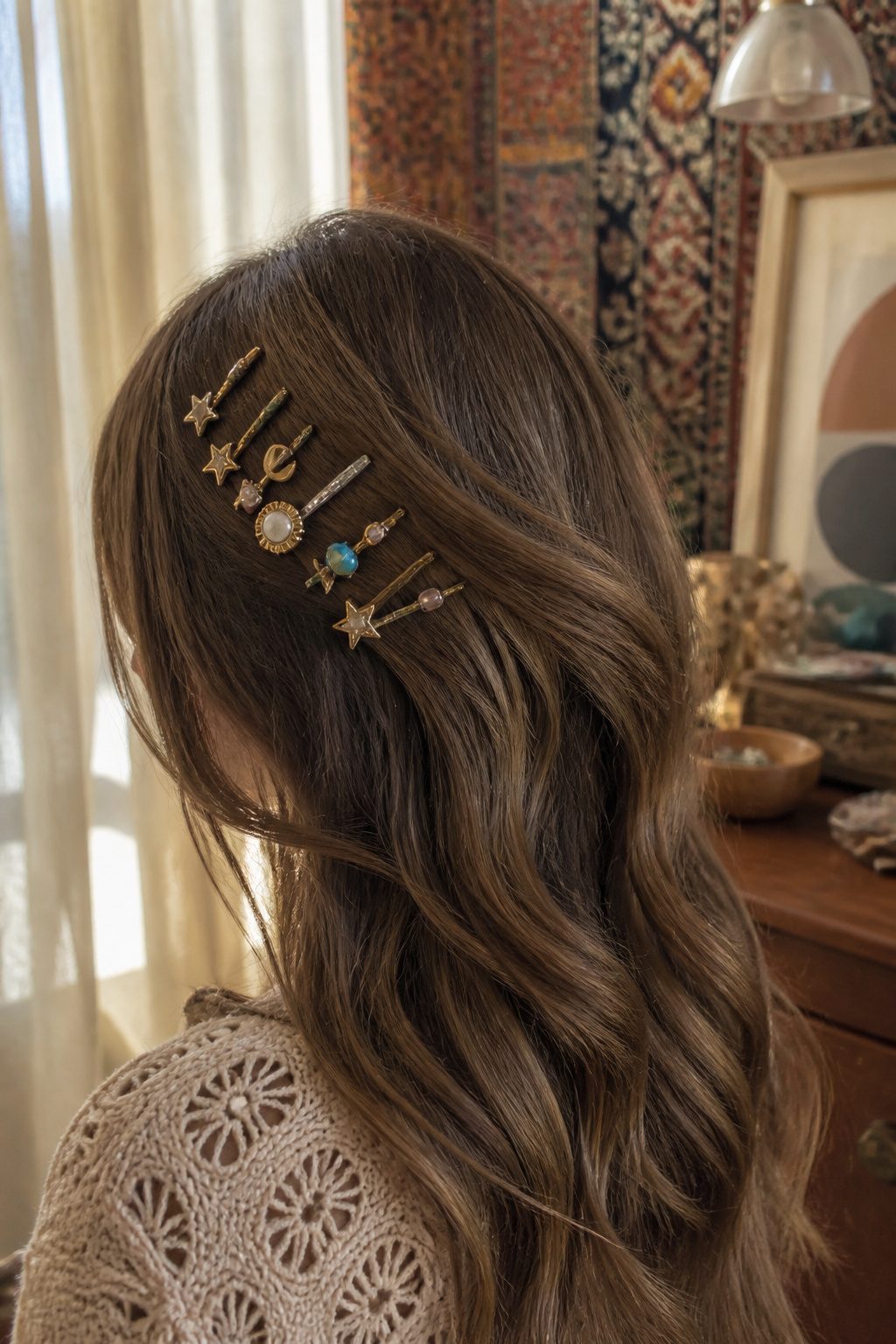
A deep side part gives this style its architecture.
On the side with less hair, smaller barrettes or snap clips work best when stacked together, each one catching a slightly different section as you move from the temple toward the ear.
I learned the spacing the hard way after wearing three heavy enamel barrettes too close together to a concert last year; by the second song they had slid into each other and one popped open.
Now I mix sizes, placing a one-inch snap clip nearest the face where the hold needs to be tightest, then adding slightly longer barrettes as the hair thins toward the back.
The finish stays flat against the scalp that way, and you can add as many or as few as the thickness of your hair allows.
Celestial shapes or mixed metallics turn the row into something intentional rather than a fix for growing-out bangs, though it works for that too.
7. French Braid with Clips
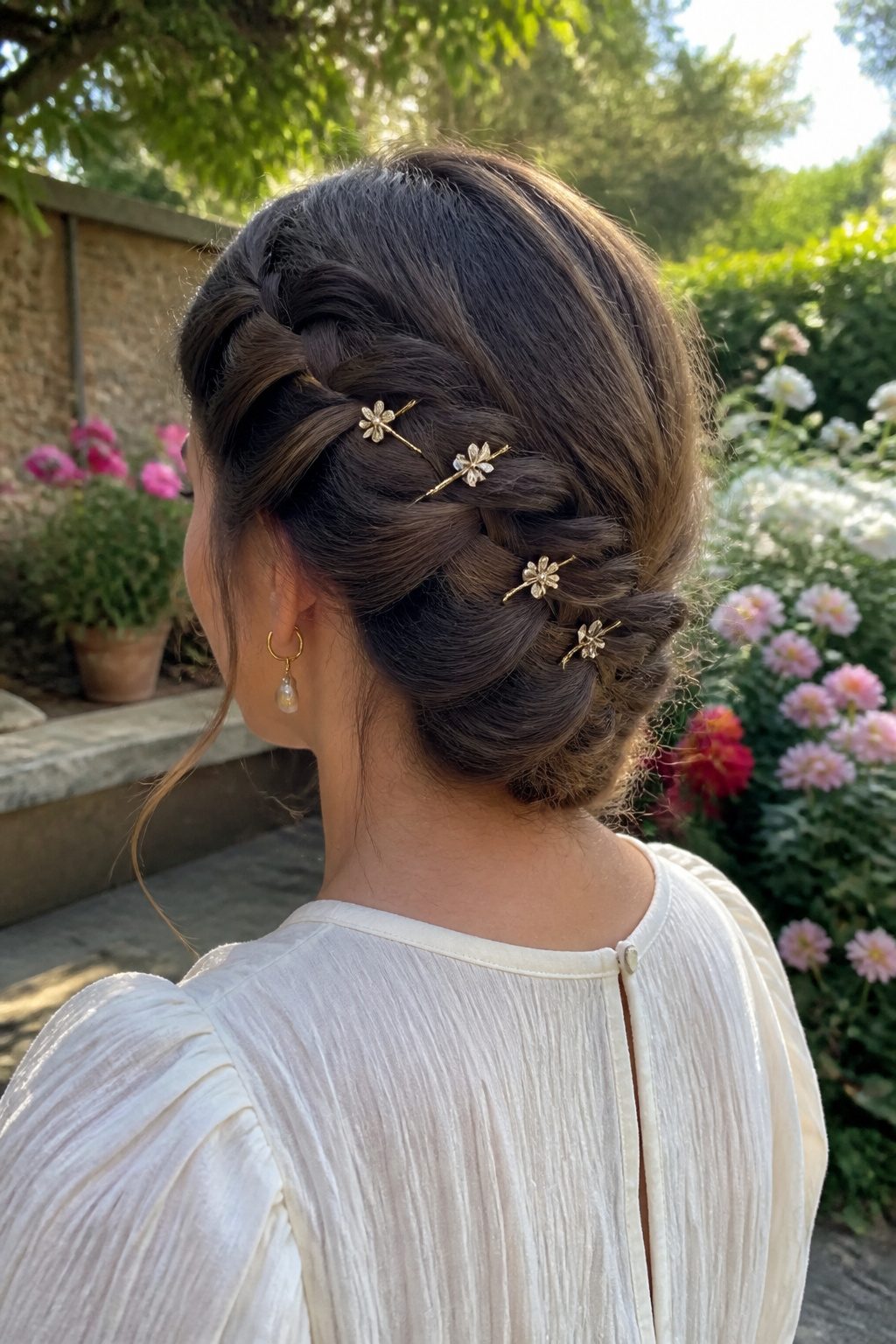
A French braid held with clips only works if you stop the braid behind the ear and anchor it there. I start with a side part, braid along the heavier side, and end where the ear meets the scalp.
Several small clips pressed across the braid keep it flat; thick hair or tiny clips need a clear elastic underneath so nothing slides.
The loosening happens after the clips are set. I pull the outer loops of the braid outward, working from top to bottom, which gives the width that makes this style look intentional rather than leftover gym hair.
If the braid continued past the clip line, the tail gets unfurled so the texture matches the loosened upper section.
What you clip with changes the finish. A true French barrette uses a metal frame with a fastener that snaps open and closed, wider and flatter than an alligator clip’s narrow pinch.
Alligator clips grip closer to the scalp and disappear more easily; claw clips are built for holding buns or half-ups, not lying flat against a braid.
For this style, the French barrette’s surface area sits smoother, though an alligator clip works if you do not mind the metal showing.
8. French Twist
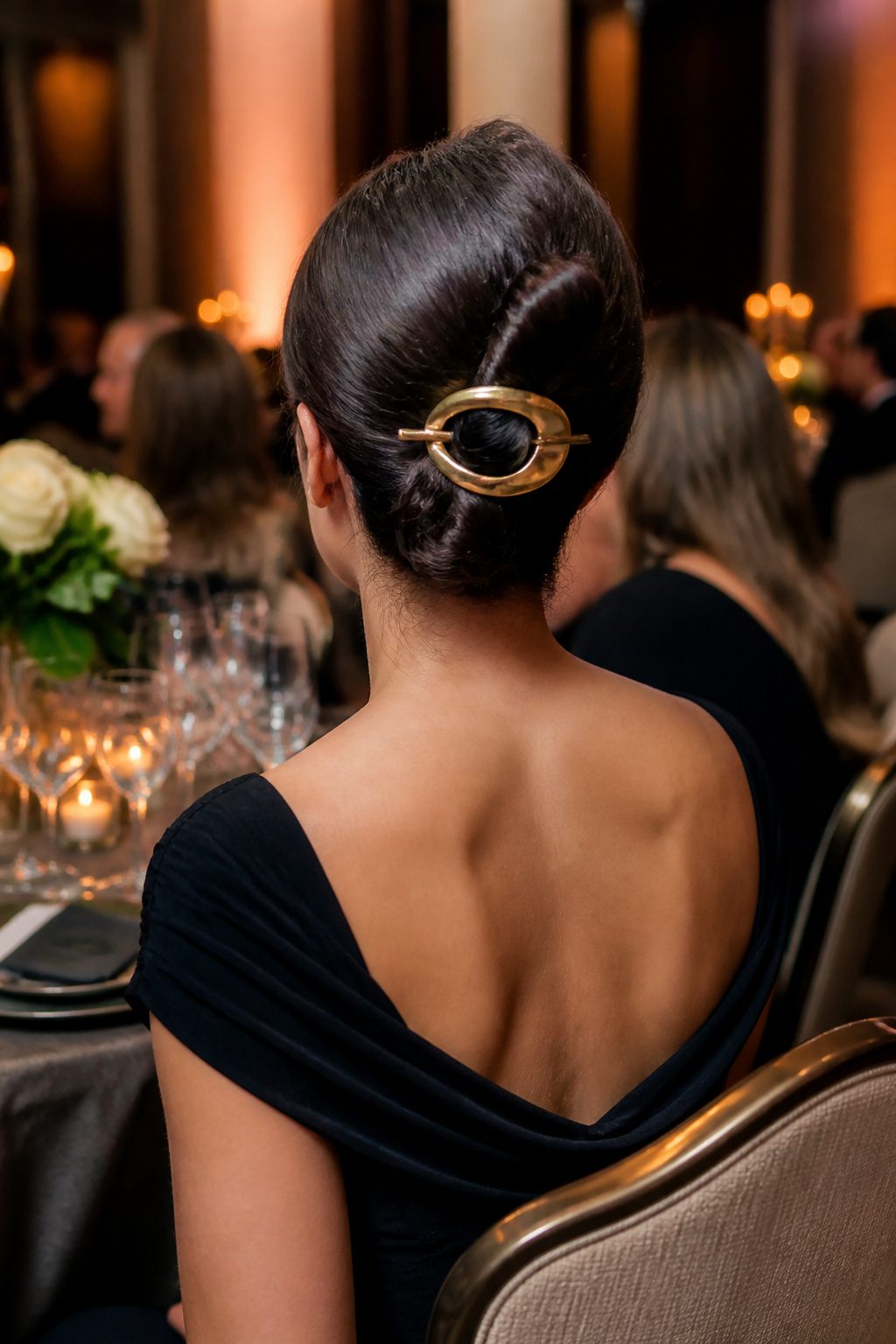
A French twist looks polished until a single bobby pin slips and the whole thing unravels down your neck.
That is where a large barrette changes the game, turning a style held by hope into one that stays put through a full evening.
The build matters here. French barrettes carry a metal frame with a fastener that pops open and snaps shut, the same mechanism that has secured these styles for decades.
The metal gives the tension you need for a twist that sits vertically up the head, hair gathered at the nape and twisted straight upward rather than coiled into a bun.
Longer hair folds back on itself, the excess tucked underneath, and the barrette pins that seam along the side.
Smaller clips work for holding back a face-framing piece. They will not anchor this much weight.
For a twist that lasts, the barrette needs size enough to grip the bulk of the style, and the French build delivers that clamping force without the decorative bulk of newer designs.
9. Bubble Ponytail
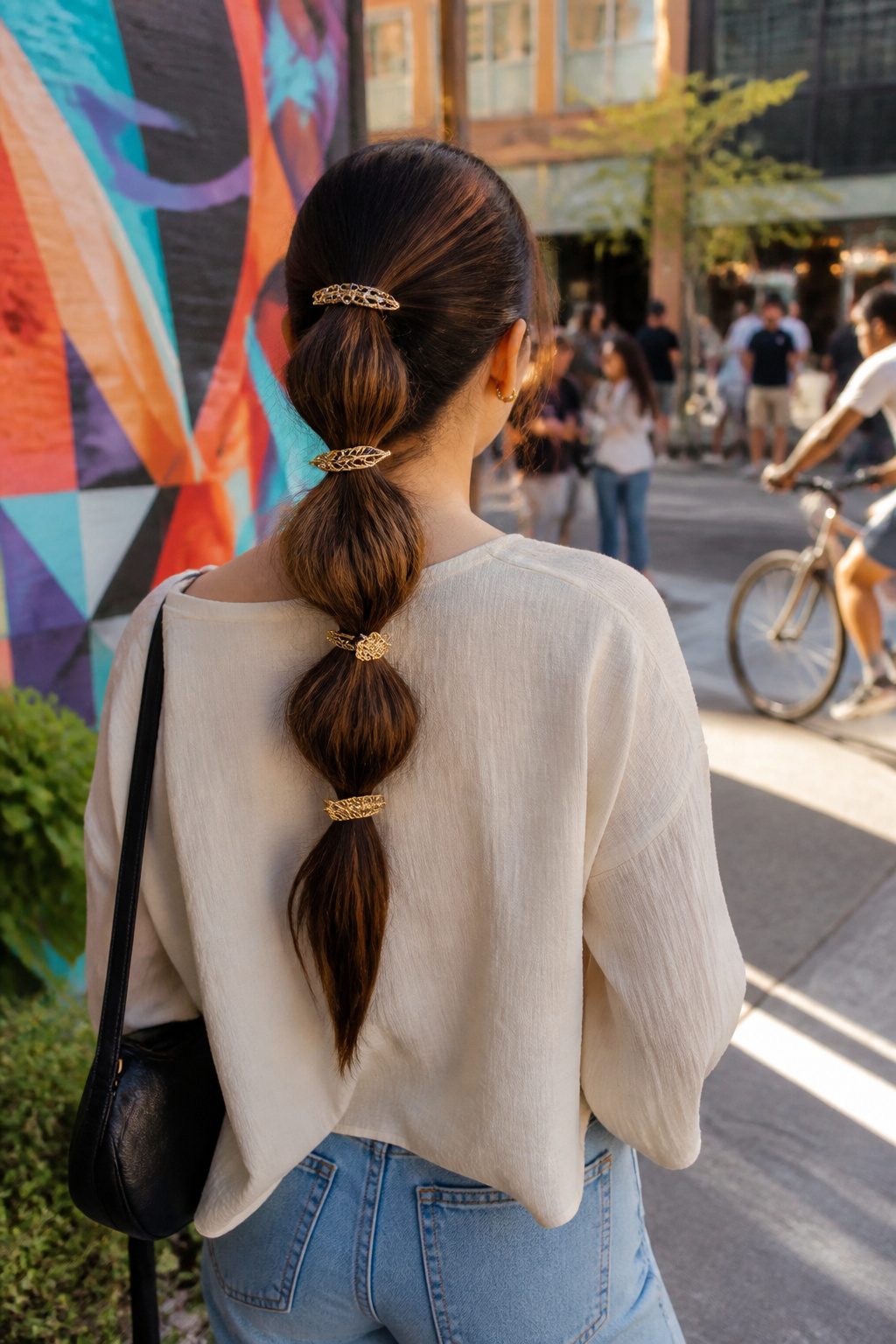
A bubble ponytail turns the barrette into pure ornament, which is where these clips really stretch their range.
You start with a standard ponytail, then add elastics every two inches down the length and tug the hair gently between each band to create those rounded sections. The structure holds itself; the barrettes just ride on top.
One clip per bubble, pinned flat against the elastic, keeps the line clean. I have seen this done with mismatched vintage barrettes and with identical sets, and the identical route reads more intentional, less flea-market.
Metal slides with a low profile work best; anything too dimensional catches on collars and car headrests.
The real test is spacing. Too many bubbles and the ponytail turns into a segmented caterpillar that fights your neck all day.
Four to five sections on mid-back hair is the workable ceiling before the weight starts pulling the elastics downward.
Barrettes add only grams, but they do add them, and a sagging bubble ponytail looks like a style giving up rather than one that was built with care.
10. Messy Ponytail with Barrettes
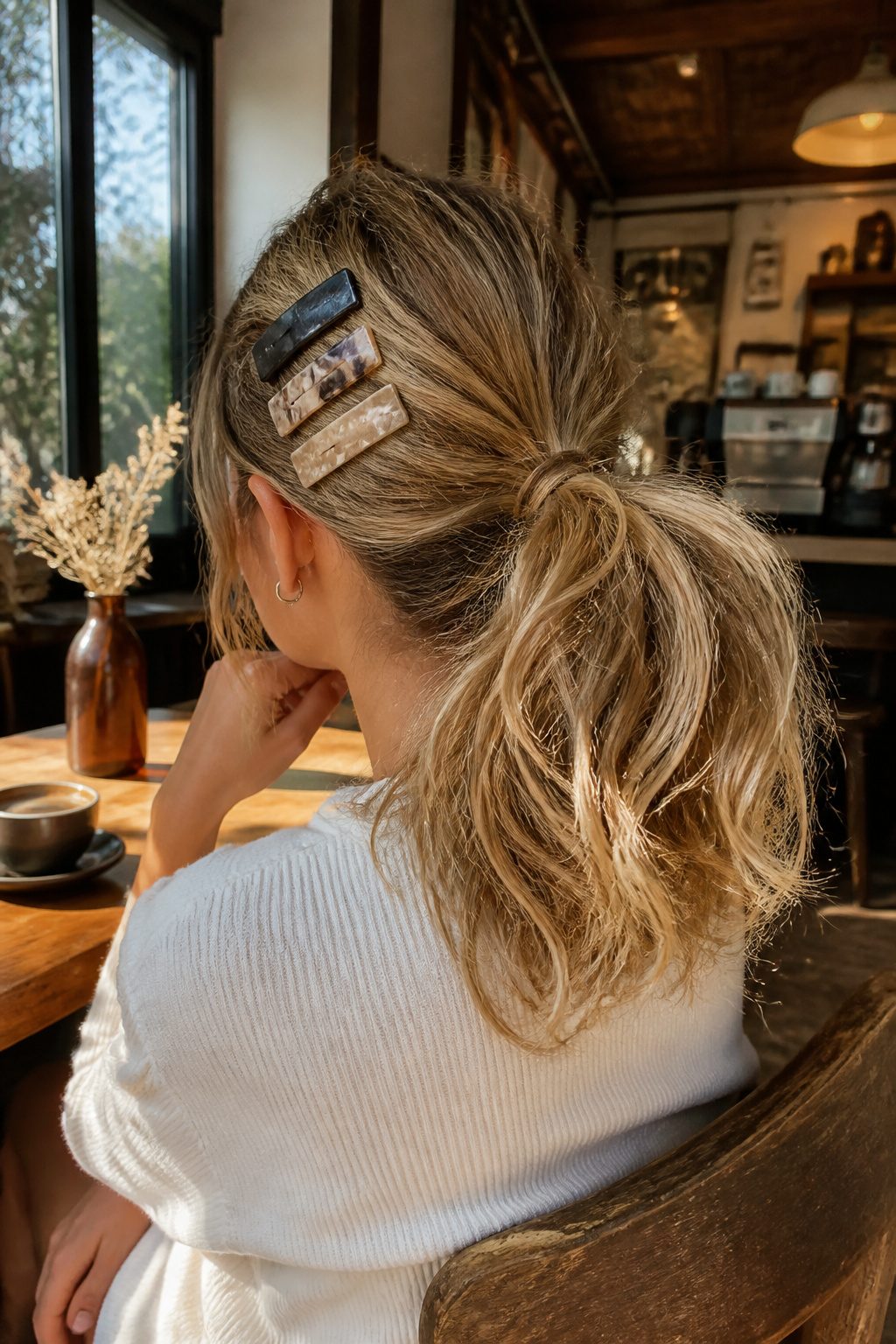
A messy ponytail with barrettes running up the side works best on hair that already has some grit.
I mist in texture spray and add loose curls with a curling wand first, then pull everything back with my fingers rather than a brush so the surface stays slightly uneven.
The barrettes go in right above the ear, lined in a row toward the ponytail base, and I wrap a small section of hair around the elastic to hide it before pinning the end underneath with a bobby pin.
For thicker hair that fights against smaller hardware, Jumbo Box Clips give the secure hold standard barrettes often lose by midday.
They grip more hair without sliding, and the larger frame keeps the line along your temple looking intentional rather than overcrowded.
The same placement applies: start at the ear and work upward, spacing them so each clip catches its own section without overlapping the last.
Barrette Types for Different Hair
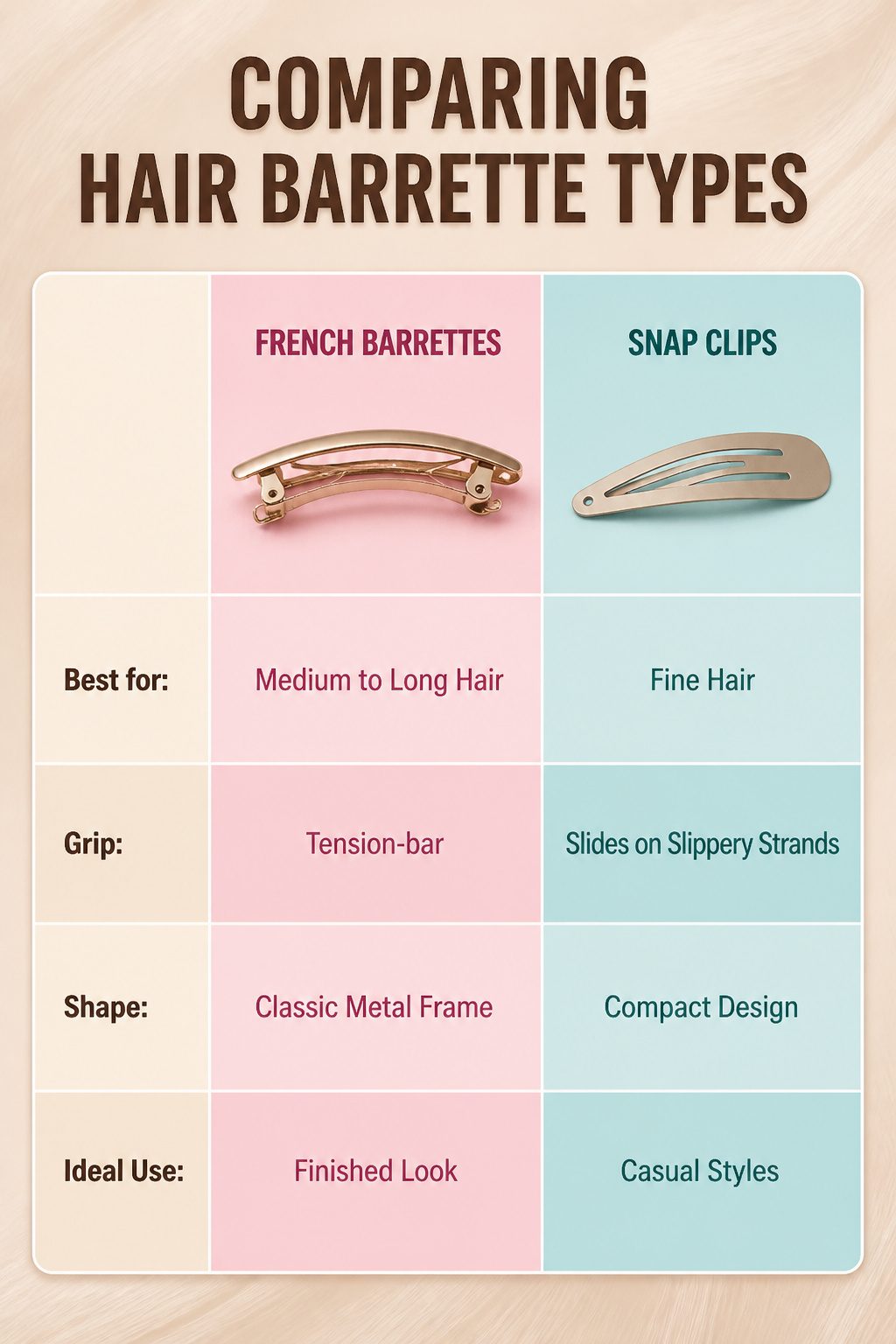
French barrettes with their metal frame and tension-bar fastener work best on medium to long hair that has enough length to anchor between the arm and the bar.
Snap clips grip fine hair without sliding out, which is why they show up on kids so often, but the same hold makes them useful for adults with slippery strands.
Alligator clips open wide enough to manage thick sections during styling, though they are usually a backstage tool rather than a finished look.
Claw clips hold full updos and have become the default for quick mornings. Banana clips shape ponytails vertically, which changes the silhouette compared to a standard elastic.
Bobby pins fix small sections and finish styles, though they disappear rather than decorate.
For thicker hair, larger barrettes like the Jumbo Box Clip actually secure the weight instead of slipping out after twenty minutes.
The Jumbo comes in Box and Oval shapes, and either can replace a hair elastic for low ponytails or anchor a French twist below its thickest point.
Small barrettes, such as the No. 3 size, only hold wisps or keep hair out of the eyes; stacking several changes the effect without adding much hold.
Prep and Texture Tips
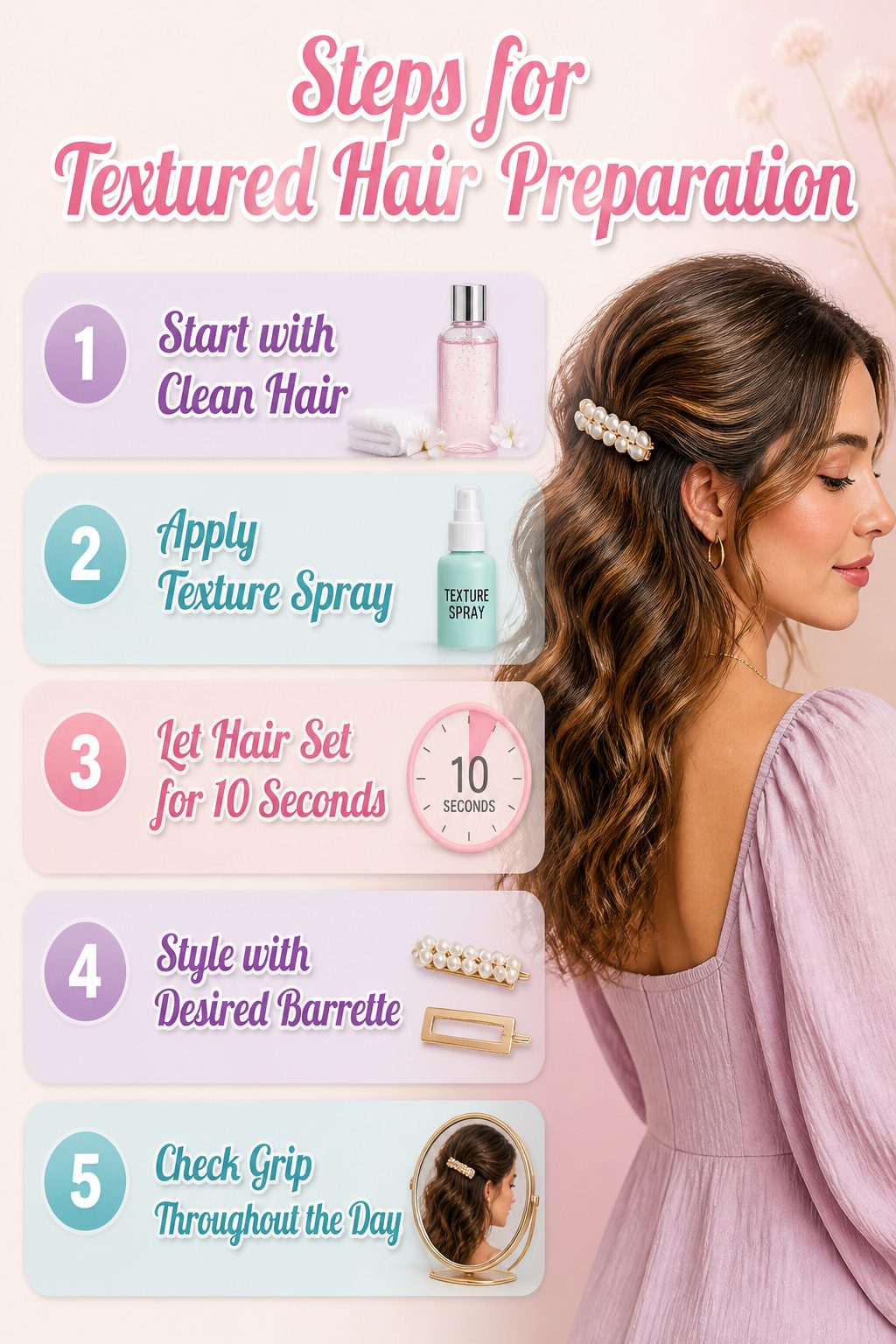
Clean hair and barrettes do not get along. The clips slide, the style falls, and by noon you are fishing them out of your bag instead of wearing them.
Texture spray or dry shampoo changes that completely: it gives the barrette something to grip so it stays where you put it.
I learned this the hard way after a morning of re-clipping the same section until the metal wore a sore spot behind my ear.
Barrettes are built for medium to long hair, and prep matters even more if you are on the shorter end of that range.
Shoulder-length hair has less weight to hold the barrette down, so the grip from product becomes the whole game. Longer hair gets some help from its own heft, but clean, slippery strands will still work loose by midday.
The texture does not need to look like day-three hair. A light mist through the section you plan to clip, ten seconds to let it set, and the barrette bites in without crunch or visible residue.
Skip this step and you are relying on tension alone, which is why so many people decide barrettes "just don’t work" for them.
Sizing and Stacking
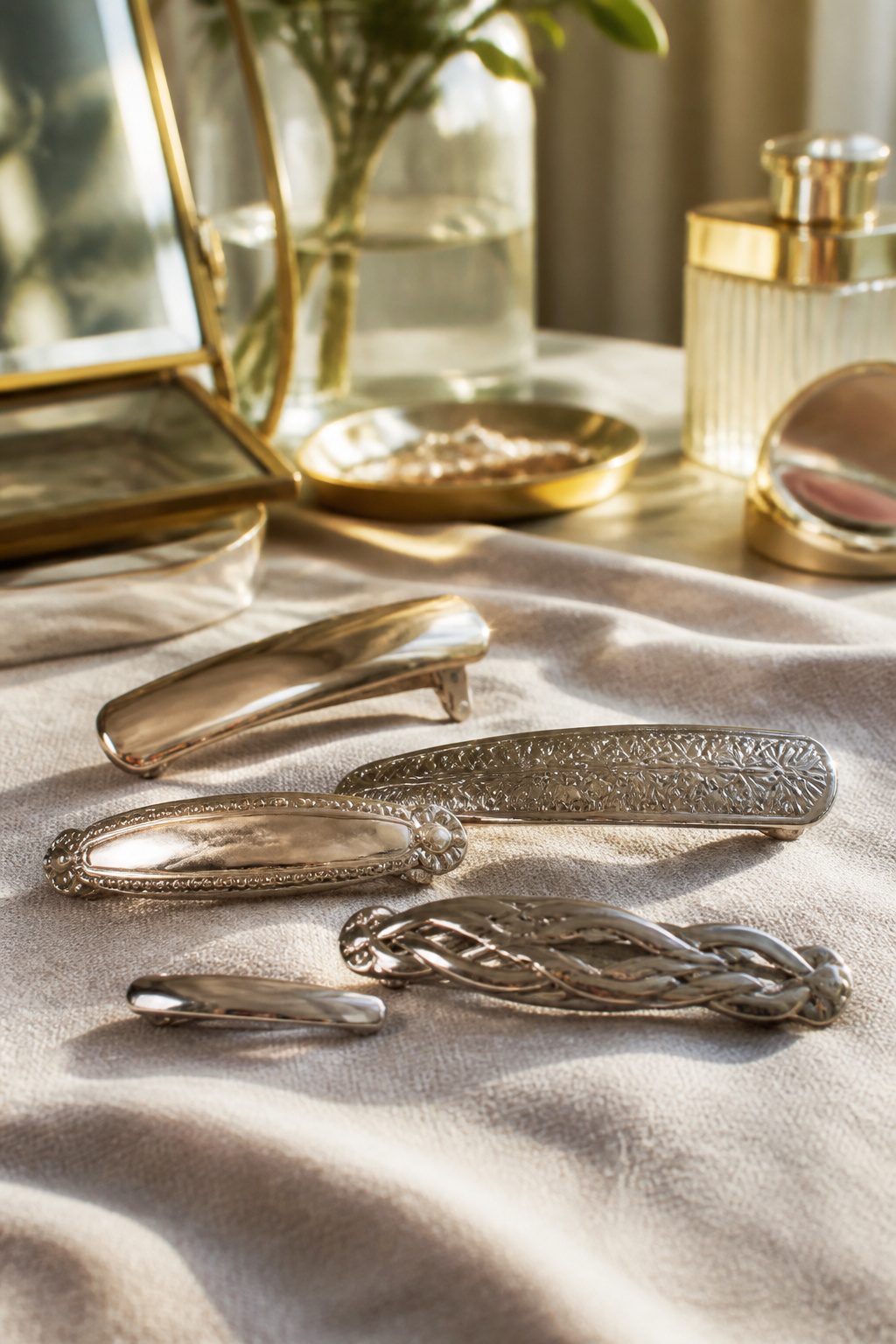
A small barrette keeps stray pieces out of your eyes without announcing itself, while the larger French barrette does the actual work of holding a twist in place.
The metal frame with its pop-open fastener gives you that classic look, but size is what determines whether the style stays put through a commute or slips by noon.
Stacking changes the equation entirely. Two or three smaller barrettes layered along one side read as intentional rather than backup-hair-mode, and the mix of widths creates a shape no single clip manages on its own.
I learned this after watching a friend do it with vintage silvery ones: the repetition made the hardware feel like jewelry instead of a fix.
The catch is hold. A Midi-sized clip matches thin to medium hair for a loose hanging ponytail or modified twist, but thick or textured hair needs the Grande to keep the same style from loosening.
Choose wrong and you are adjusting all day; choose right and you forget the barrette is there.
Frequently Asked Questions
How do I wear barrettes in long hair?
Pull the front back with a French barrette, sweep one side with a horizontal clip, or braid a top section and cover the elastic with a barrette for a finished look.
Longer hair gives barrettes actual length to grip, which is why styles like the half-back braid and messy bun with a side braid stay put better than on shorter cuts.
What types of barrettes are best for thick hair?
Larger barrettes like the Jumbo Box Clip secure thick hair without slipping, and the Grande size matches heavier texture for twists or low ponytails.
Small clips or standard sizes tend to lose hold within twenty minutes on dense hair, so sizing up keeps the style anchored.