A Van Dyke beard is a detached mustache paired with a goatee, cheeks kept completely bare. The gap between the two pieces of facial hair is what defines the style, and losing that gap turns it into an ordinary goatee. Anthony van Dyck, the 17th-century Flemish painter, wore it himself and painted it on King Charles I of England, giving the cut its royal pedigree. The style demands daily cheek shaving and weekly trimming to keep its sharp silhouette from collapsing into something accidental.
What a Van Dyke Beard Is

A Van Dyke beard is the combination of a detached mustache and a goatee, with the cheeks kept completely clean shaven. The name comes from Anthony van Dyck, the 17th-century Flemish painter who wore the style himself and painted it on European royalty, including King Charles I of England. That royal association gave it prestige across Europe before wigs took over and the look faded in Britain.
The style found new life in the United States during the 19th century, though not without critics. Columnist Edith Sessions Tupper, writing for the Chicago Chronicle between 1895 and 1908, attacked it alongside the goatee as the mark of a man "who was selfish, sinister, and pompous as a peacock."
This style of beard was popular in Europe in the 17th century. It died out in Britain with the Restoration, when French styles and wigs became popular.
What separates a Van Dyke from a standard goatee is the gap: the mustache and chin beard do not connect. That clean break between the two pieces of facial hair is what defines the style and what makes the trimming precise enough to matter.
Growing the Initial Hair
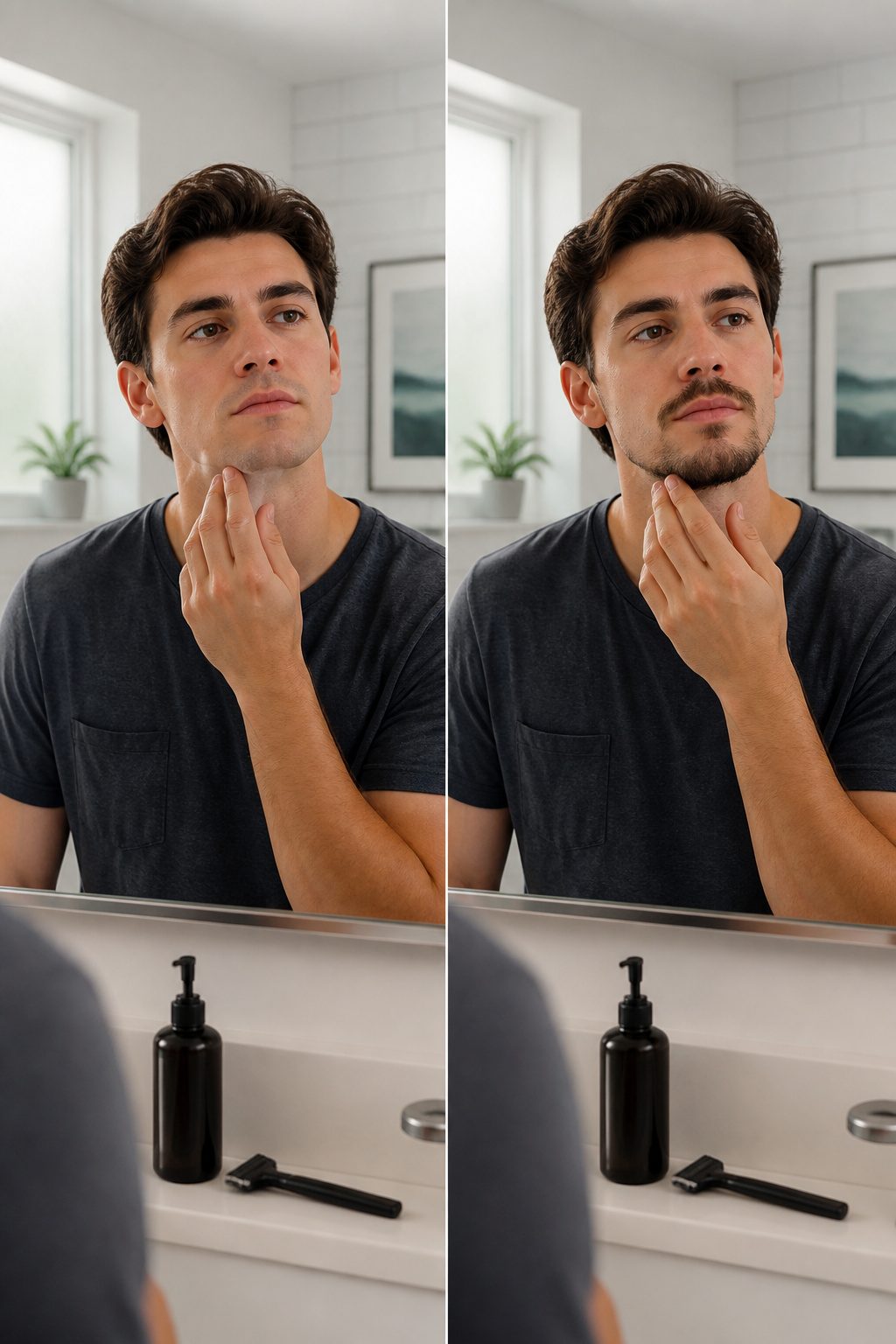
A Van Dyke lives or dies on contrast, so the cheeks stay clean from day one. Let the mustache and chin hair reach at least 1/4 inch (0.6 cm) before you touch anything with a trimmer. Starting with bare cheeks matters more than most people think: the gap between the mustache and chin tuft is what gives this style its sharp, deliberate look, and any stubble on the cheeks softens that separation into something accidental.
Some guides suggest growing everything out to 2 cm first, then carving the shape afterward. That works if you want to see your full growth pattern before committing, though it means living with uneven, transitional scruff for a few weeks. The cleaner route is shaving the cheeks daily while the mustache and chin fill in. Either way, patience is the only real tool here. The mustache and jaw growth need to hit roughly equal length before you can judge the final balance, and rushing that stage throws off every cut that follows.
Trimming to Even Length

A beard trimmer with adjustable guards is the tool that turns uneven growth into a workable canvas. I clip the mustache and chin to one uniform length before any shaping begins, running the comb against the grain first to catch every hair, then with the grain to smooth the surface. Skipping this step means chasing clean lines across a bumpy foundation, and the final silhouette ends up ragged no matter how careful the later edging. The King C. Gillette All-in-One Styler handles this well, its interchangeable combs locking in the length so both sides match. Once the bulk is even, the pointed goatee and the gap between mustache and chin become easier to sculpt with a precision blade. That even base is what separates a crisp Van Dyke from something that looks grown in by accident.
Defining the Shape
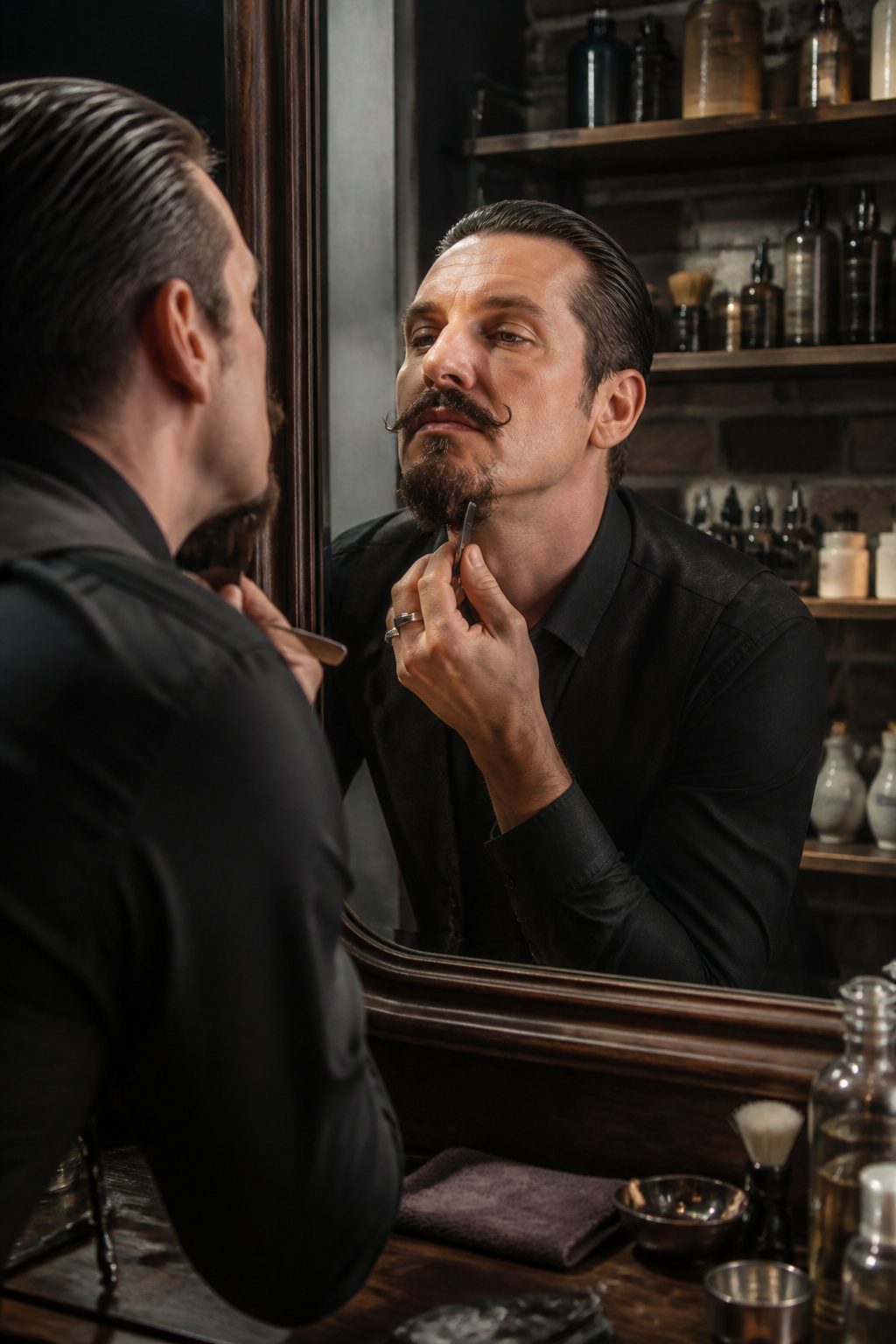
The third step is where the Van Dyke becomes unmistakable: everything between the mustache and chin comes off. A bare blade, not a guard, is the only way to get this gap clean enough. One pass too shallow and you leave a shadow that reads as a mistake; one pass too deep and the gap turns into a chasm and the style collapses into two unrelated pieces.
With the cheeks already cleared, the chin tuft needs its own decision. A pointed shape reads sharper and older, more deliberate. A rounded form softens the whole face and forgives a jawline that isn’t theatrical. The sources split on which is correct, and the truth is neither is: the pointed version wins on longer faces where you want to stop the eye from traveling down, and the rounded one balances a square jaw that doesn’t need more geometry.
Precision here costs time. The gap’s edges want daily attention, since stubble grows back fast enough to blur the line inside forty-eight hours. The chin tuft itself can hold for a week if you shaped it well, but the separation dies first and kills the whole look.
Checking Symmetry
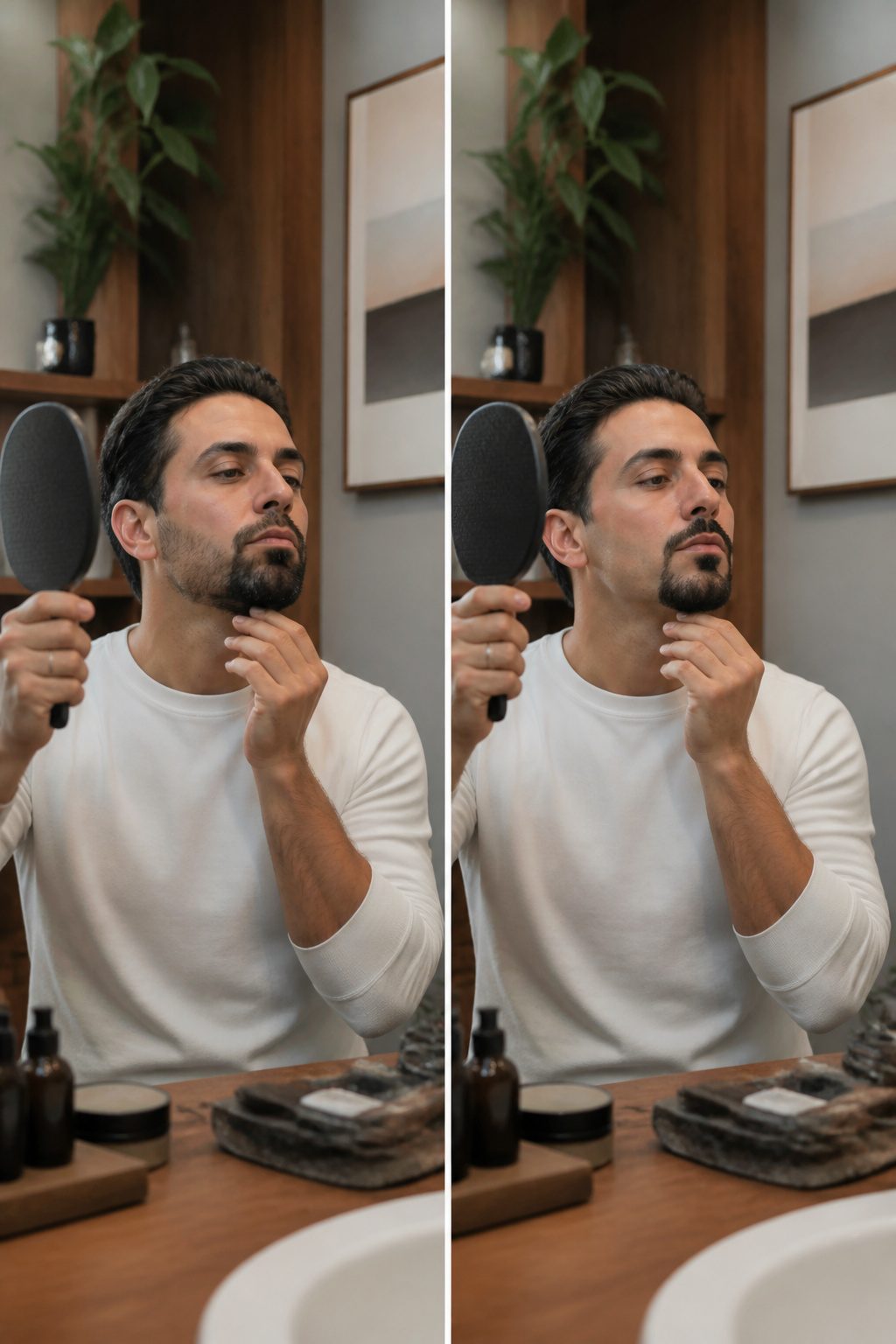
The Van Dyke’s sharp lines make any lopsidedness impossible to hide, so checking both sides from multiple angles belongs in the routine, not as a final once-over. Light from a single bathroom mirror flatters; the phone camera or a hand mirror held at cheek level tells a different story. I learned to pause every few snips, turn my head, and compare the mustache edge on the left against the right, then check whether the chin point still sits centered when viewed from below.
Trimming gradually matters more here than with fuller beard styles. Taking too much from one side of the mustache or flattening the chin tuft on one edge throws the whole look off, and the clean separation between mustache and goatee leaves no surrounding fuzz to mask the mistake. Small, frequent adjustments keep the shape balanced without the risk of over-trimming that forces a regrow.
Shaving the Cheeks
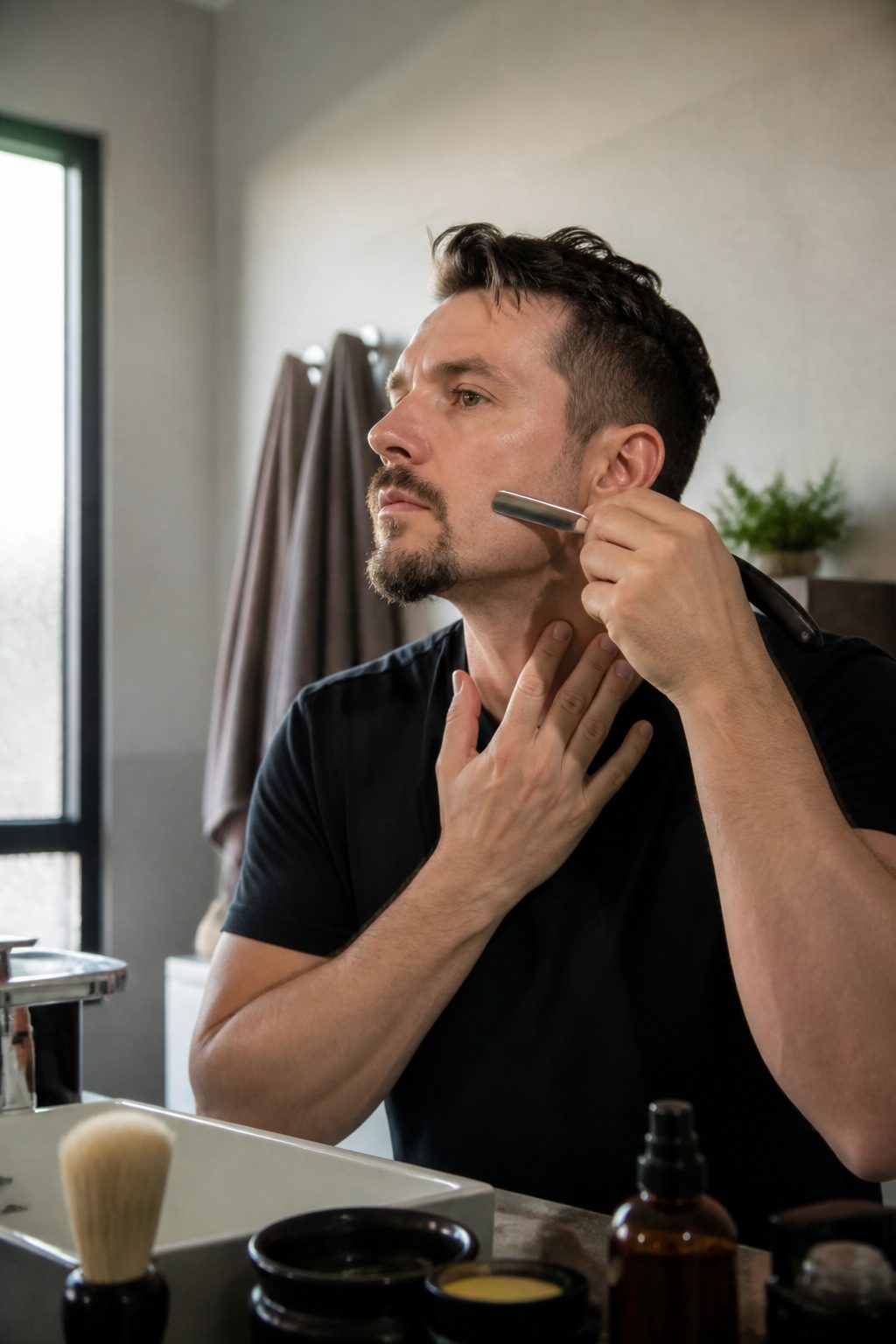
Clean cheeks are what separate a Van Dyke from every other partial beard, and the work starts fresh every morning. A sharp razor, not a trimmer, is the only tool that gives you the contrast this style depends on. I learned that distinction the hard way after weeks of trying to fade my cheek growth down to nothing; the stubble shadow killed the whole effect and the mustache-to-chin connection looked muddy.
The razor pass needs to hit the full cheek area, from the sideburn line down to the jaw and inward to where your mustache ends. Sources describe the gap between mustache and chin as a defining feature, so that strip of bare skin has to stay absolutely bare. Any regrowth there collapses the visual structure into a standard goatee.
This is not a step you finish once. Daily shaving is the maintenance loop that keeps the Van Dyke readable at conversation distance. Skip a day and the contrast softens; skip two and you are growing something else entirely. The chin tuft and the mustache stay sharp only when the negative space around them stays clean.
Regular Maintenance

The Van Dyke collapses into a standard goatee faster than most men notice, which is why weekly trimming of the mustache and chin matters more than the initial shaping ever did. I set a phone reminder for Sunday evenings after my third time letting the mustache grow over my lip and the chin point soften into a blob. Hairs that hang past the upper lip kill the style’s precision, and the chin tuft needs light refinement every few days to keep its point without sacrificing length.
Cheek shaving deserves equal attention. The clean-shaven cheeks create the contrast that defines this look, so skipping a day or two of razor work lets stubble blur the separation. Every one to two days keeps the boundary sharp. A precision trimmer handles the detail work on the chin, while a standard razor clears the cheeks. The routine takes under ten minutes once it becomes habit, and that small investment prevents the style from looking overgrown or unfinished.
Styling Products
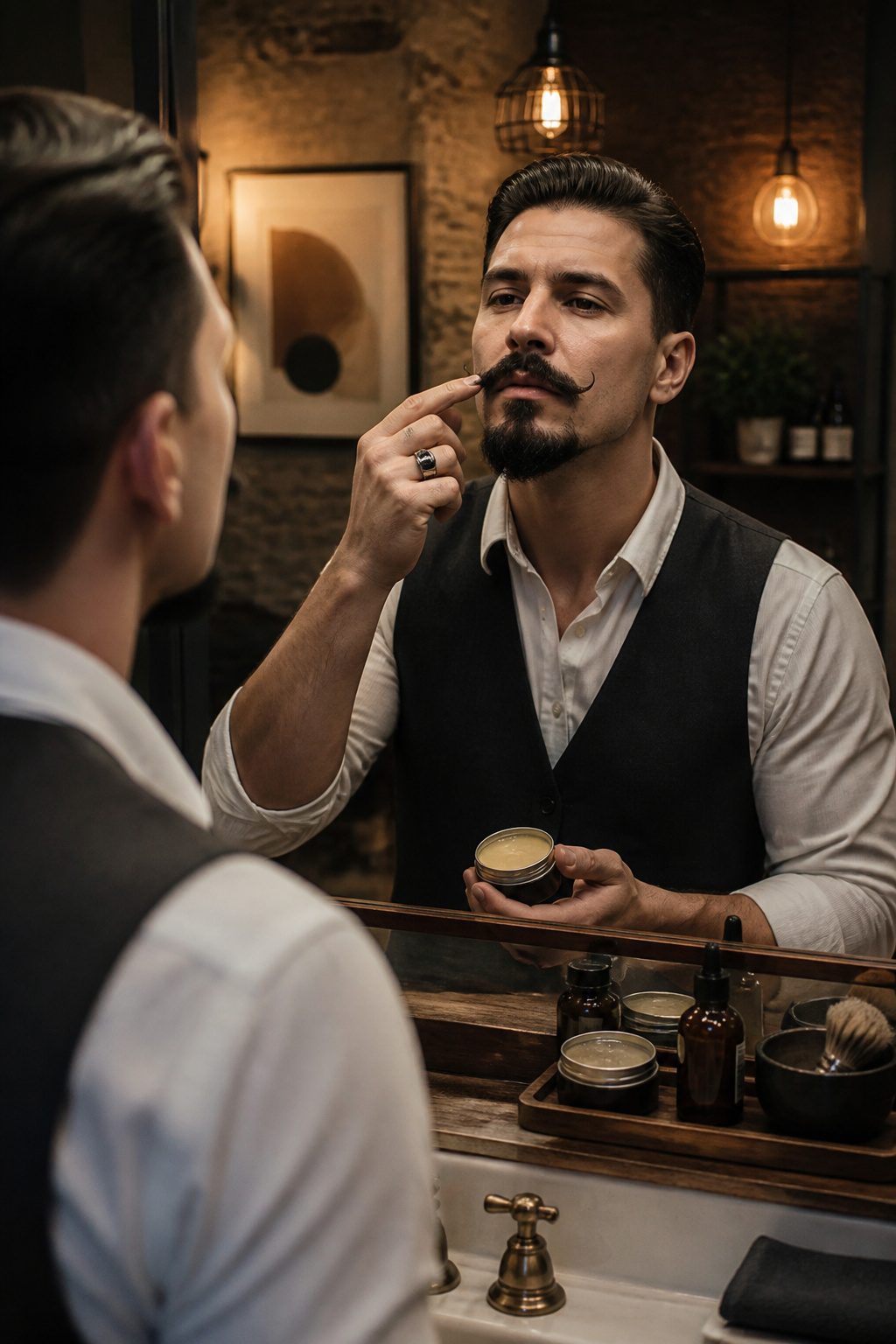
A finished Van Dyke lives or dies in the final details, and the mustache is where most men give up too early. Mustache wax is the step that separates a neat Van Dyke from one that looks intentional, and it matters most if you’re aiming for the curled or handlebar variations that extend the style’s historical range.
I apply a small amount to the thumb and index finger, warm it between them, then work it through the mustache from the center outward. The wax gives enough hold to train the hairs into a defined shape without the stiffness of a costume beard. For a basic Van Dyke, a light application just to keep stray hairs in line is plenty. If you’re growing the longer, pointed mustache that pairs with a more dramatic goatee, you’ll need the firmer hold and the daily practice of shaping it.
The step is optional, and plenty of men skip it. But the ones who complain that their Van Dyke looks "messy" or "thin" usually stopped at trimming and never added this layer of control. The wax also helps during the awkward growth phases, keeping the mustache neat while it fills in.
Traditional Van Dyke
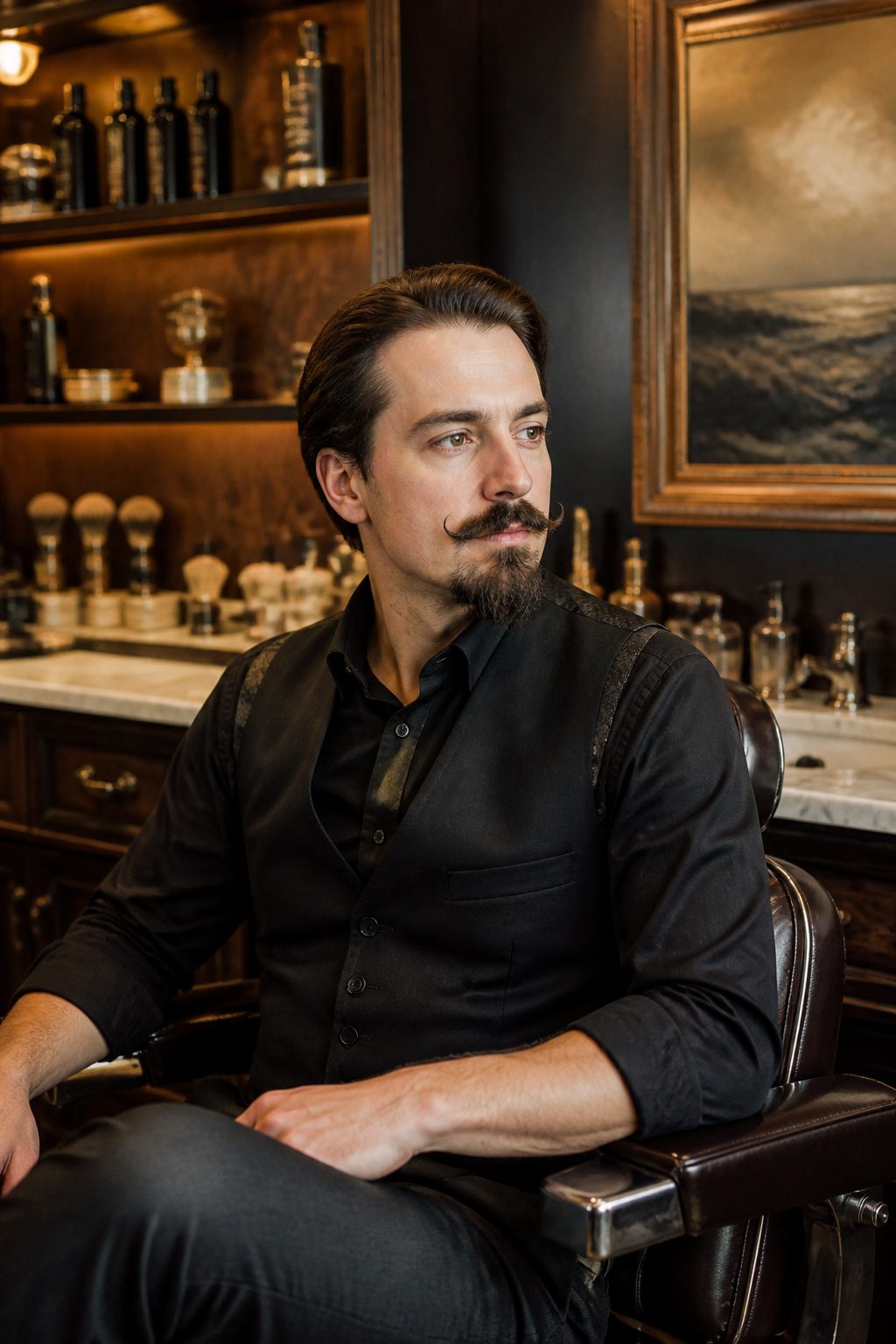
The pointed goatee with a fully detached mustache is the shape most people picture when they hear "van duke beard." Anthony van Dyck painted it on Charles I of England in the 1600s, and the style still serves as the default reference point against which every variation gets judged. Cheeks stay completely clean, which leaves a deliberate gap between the chin beard and the upper lip hair. That gap is the whole point: lose it, and you have a standard goatee instead. Some wearers add a soul patch, others skip it; the mustache may curl or lie flat. Either way, the separation remains the defining test. Historical names like "Pike-devant" or "pickedevant" have faded, but the visual standard they described never really left. When a barber today says "Van Dyke," this is almost always the cut they mean.
Doc Holliday Van Dyke

The Doc Holliday variation softens the traditional gap by pairing a modest soul patch, usually clipped as a trimmed inverted trapezium, with an Imperial handlebar mustache. Named for the dentist and gambler famed for his friendship with Wyatt Earp, the style showed up in 1993’s Tombstone and 1994’s Wyatt Earp through Val Kilmer and Dennis Quaid, and later on Tim Rozon in Wynonna Earp. General Custer and Frank Zappa wore it too, as did Ian McShane and Timothy Olyphant in Deadwood.
This is the easiest Van Dyke to maintain. Infrequent shaving actually helps; stubble feeds the Old West look. The mustache can be waxed into shape or left to grow naturally like a walrus or chevron, and the soul patch stays short or grows out nonchalantly. The real hurdle is growing the handlebar itself, since early mustache growth tends to tickle the nose and curl into the mouth.
Mistletoe Mustache

The mistletoe mustache is the rarest living branch of the Van Dyke family tree, and finding a clear photograph of one in the wild took longer than it should have. The style keeps the pointed soul patch and separated lower-lip tuft of a traditional Van Dyke, but the mustache itself is trained into two downward-curving lobes that meet beneath the chin like a closed pair of parentheses. Think of a chevron mustache that lost its way and kept growing south until it kissed the beard line.
Modern wearers are scarce enough that most barbers under forty will not recognize the name. What convinced me this was a real style and not a barbershop legend was spotting it in a 1976 grooming manual, where it sat between the English mustache and the walrus as a legitimate option for formal evening wear. By the 1990s it had already slipped into novelty territory, kept alive mainly by vintage enthusiasts and the occasional film set needing a very specific period face.
Growing one demands patience the standard Van Dyke does not. The mustache needs four to six months to reach the length where gravity and wax can cooperate on the downward curve, and the gap between mustache ends and beard point must stay shaved clean or the whole silhouette collapses into a circle beard. Most men abandon it at the awkward middle phase, which explains the scarcity. If you are committed, a stiff mustache wax with enough hold to defy the natural upward sweep of lip hair is non-negotiable; the cheap drugstore tubes will leave you with two sad commas by noon.
Face Shapes That Suit It
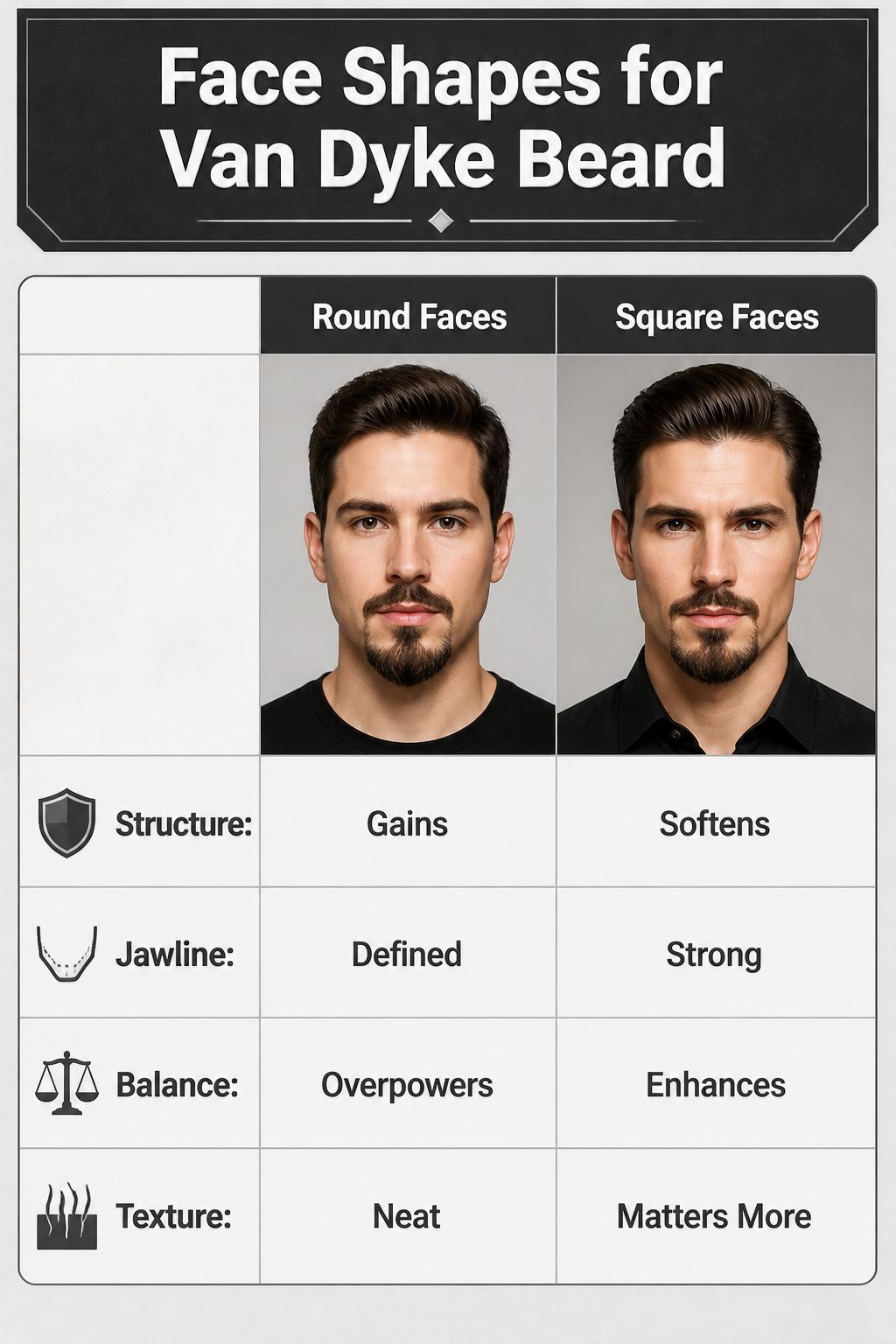
The Van Dyke beard lands differently depending on what you’re starting with. Round faces gain the most structure from this style: the pointed or tapered chin adds vertical length, and keeping the cheeks clean prevents any extra width from creeping in. Square faces work almost in reverse. The focused chin shape softens a strong jawline while still holding onto definition, so the face stays refined without turning boxy. Oval faces already carry balanced proportions, and the Van Dyke simply enhances that symmetry without overpowering what’s there. Diamond shapes benefit from the chin emphasis drawing attention to the center, which balances a narrower forehead and jaw. One point of real disagreement shows up here: some guidance suggests diamond faces need soft, bushy finishes to avoid over-emphasizing hard features, while other takes treat the shape as a natural fit. My read is that a diamond face can absolutely work, but the texture matters more than it does for round or oval. Keep the chin neat rather than sharp, and avoid a wide mustache that would push the cheekbones out further.
Cultural Marks

The Colonel Sanders branding probably did more to keep the Van Dyke in public memory than any red carpet ever could. That white goatee against the black ribbon tie turned a 19th-century style into a fast-food logo so familiar that most Americans can picture it without trying. What strikes me, looking back at those ads, is how little the company changed the cut across decades: the same pointed chin tuft, the same clean cheeks, the same disconnected mustache floating above it.
Doc Holliday on film carried the look in a different direction, giving it a gunslinger menace that the actual historical photographs only partly support. Val Kilmer’s version in Tombstone trimmed the beard tighter and the mustache waxed sharper than most period accounts suggest, but that screen image is what men now ask their barbers to reproduce. I have watched three separate friends bring in stills from that film as reference, never a history book.
These appearances arrive in clusters, then vanish for years. The style never sustained a continuous fashion presence the way a full beard or clean shave has. Instead it reappears: a cartoon villain, a period drama, a fried chicken bucket, each time reintroducing the shape to viewers who might never name it. That sporadic rhythm, I think, is why the Van Dyke still reads as distinctive rather than dated. It never hung around long enough to become boring.
Frequently Asked Questions
What is a Van Dyke beard?
A Van Dyke beard pairs a detached mustache with a goatee while the cheeks stay completely clean shaven. The defining feature is the gap between the mustache and chin beard; if they connect, you have a standard goatee instead. The style takes its name from 17th-century Flemish painter Anthony van Dyck, who wore it himself and painted it on European royalty.
How do I maintain a Van Dyke beard?
Daily cheek shaving and weekly trimming of the mustache and chin keep the style sharp. Stubble on the cheeks blurs the contrast inside forty-eight hours, so a razor pass every morning is non-negotiable. The mustache and chin tuft need light refinement every few days to keep the point and prevent hairs from growing over the lip.
Which face shapes suit a Van Dyke beard best?
Round faces gain the most structure from the pointed chin and clean cheeks, which add vertical length without extra width. Square faces soften their jawlines while keeping definition, oval faces simply enhance existing symmetry, and diamond shapes balance a narrower forehead and jaw by drawing attention to the center. Texture on a diamond face should stay neat rather than sharp to avoid overemphasizing angles.