You can cancel orange hair in one wash if you pick the right pigment, but most people grab purple shampoo and wait weeks wondering why nothing changes. The distinction that decides everything is whether your warmth reads carrot or banana: blue cancels orange, purple cancels yellow, and the color wheel is the entire logic. I learned this after leaving purple shampoo on my shelf for three weeks while my bleached ends stayed stubbornly orange. The fix starts with daylight, not the bathroom mirror.
1. Assess Your Hair Color

Purple shampoo sat on my bathroom shelf for three weeks while my bleached ends stayed stubbornly orange. The mistake cost me time, not money, but it stung all the same. I had read "toning shampoo" and stopped reading.
The fix starts with daylight, not the bathroom mirror. Take the hair outside or to a window and look for whether the warmth reads more carrot or more banana. That distinction decides everything. Blue cancels orange; purple cancels yellow. The color wheel is not decoration here. It is the entire logic: complementary colors opposite each other neutralize what you are seeing.
The key to fixing orange hair is usually to neutralise the orange with its opposite colour – blue.
What that means in practice: if your reflection shows orange, you need blue pigment. If it shows yellow, you need purple. Pick wrong and you will wait another three weeks wondering why nothing changed, same as I did.
2. Use Blue or Purple Shampoo

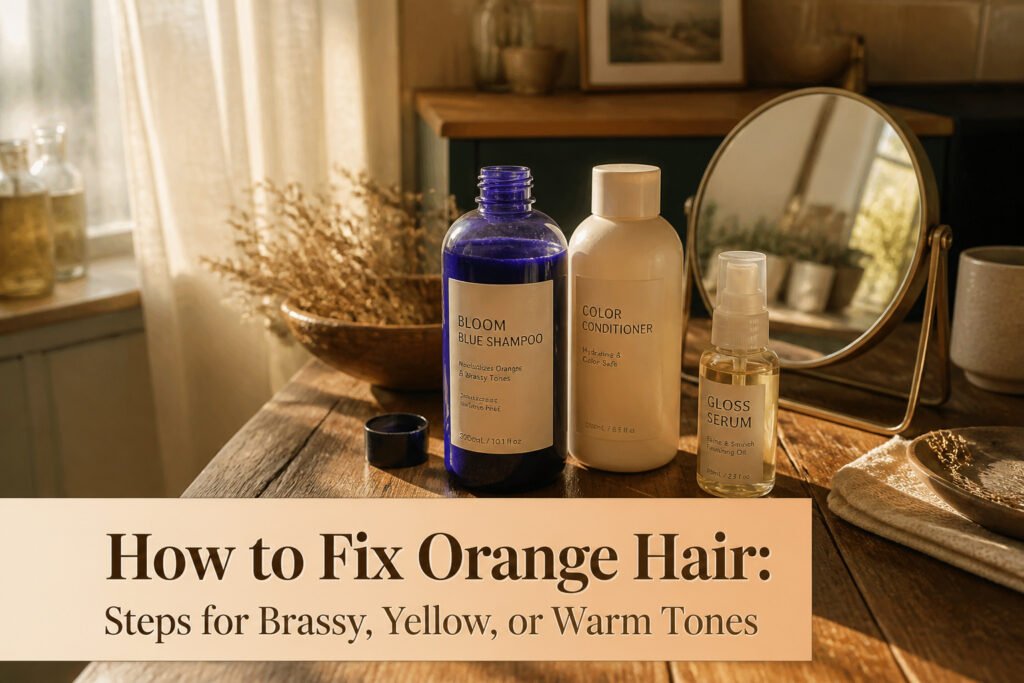
Blue shampoo deposits pigments that sit opposite orange on the color wheel, so those are the ones to reach for when brassiness reads more copper than yellow. Leave it on for 3 to 5 minutes before rinsing, then follow with a blue conditioner to push the deposit further and finish with cool water to seal the cuticle. Purple shampoo works the same way for yellow tones, since violet cancels out that particular warmth.
Clairol Shimmer Lights Shampoo is one of the older formulas that still shows up in salon back bars and bathroom shelves for a reason. I have seen it used as a regular wash and also applied to dry hair as a masking treatment when the tone needs a harder correction.
Once or twice a week is the usual rhythm, and that ceiling matters more than people expect. The pigments that neutralize orange can overshoot into ash or flatness fast, and hair that was lively a week ago turns dull and almost gray. The mistake is treating it like a daily shampoo instead of a precision tool.
3. Apply a Hair Glaze or Toner

Shampoo deposits pigment on the surface, but a demi-permanent toner lifts the cuticle so the color actually penetrates the shaft. That deeper deposit is what you need when the orange has set in past what a purple wash can mask. The trade is a low-level developer, which means some peroxide, so the hair takes another round of chemical stress. On already-bleached strands, demi-permanent is the gentler call versus permanent color: it fades out rather than committing you to harsh regrowth lines while your hair is still fragile.
The shade you pick should match the color you were chasing in the first place. Blondes need ashy, beige-rich toners; brunettes lean toward deeper cool chocolate. The wrong tone just layers another problem on top of the orange.
Do a strand test first, every time. Mix a small batch, apply it to a hidden section, and clock the result before you go near your whole head. Timing varies with how porous your bleach left your hair, and the box timing is written for average hair, not yours. Skip this step and you risk uneven color or a shade that turns muddy where your ends are most thirsty. I have read enough salon accounts to know this is where at-home jobs most often go wrong: the impatience, not the chemistry.
4. Dye Hair Darker

Sometimes the orange runs too deep for toning to pull it out, or the hair underneath is too compromised to take another round of lightening. When that happens, dyeing darker becomes the smarter repair instead of a surrender. Ash brown, cool dark blonde, or a mushroom brown deposit enough cool pigment to cancel brassiness without the fading that warmer browns invite back. A dark ash blonde or sandy dark blonde sits right at the threshold where orange gets buried but you do not commit to brunette if that feels like too far. Demi-permanent color does this gently; it will not keep lifting while it works, which matters on hair that has already been pushed. If you still want to reach lighter territory later, the wait is non-negotiable: two to four weeks before any re-bleaching, and longer if the strands still feel rubbery or snap in the stretch test.
5. Consider Salon Treatment

Some orange situations are past what a bathroom counter can fix. Severe color correction, thermal damage, or multiple rounds of missteps all fall into territory where a stylist’s trained eye and controlled formulas matter more than persistence.
A salon gloss treatment seals the cuticle tight, which prevents color fade and adds the kind of shine that reflects light away from brassiness. Many colorists use it as the final step in a service, and a follow-up gloss around four weeks later can keep unwanted warmth from creeping back in. For deeper problems, a color correction service may involve reapplying bleach to lift the orange fully, then toning with an ash or light beige to neutralize what remains. The stylist will likely finish with a deep-conditioning treatment to push moisture back into the length.
The honest limit is recovery time. After significant bleaching, hair needs at least a week or two to restore its natural moisture balance before it can survive another round of chemicals without breaking. Home attempts skip that waiting period because the temptation to fix it tonight wins. A stylist won’t, and that restraint is part of what you are paying for.
There is no shame in stopping the DIY cycle. The money spent on three boxes of wrong color and the hours spent watching it worsen both count toward the salon bill. The difference is the salon bill ends with hair you can leave the house in.
6. Try an Apple Cider Vinegar Rinse

An apple cider vinegar rinse is one of the gentler home remedies that can help shift orange tones without stripping hair further. Mix 2 tablespoons of apple cider vinegar into 1 liter of water and pour it over your hair after shampooing. Some people leave it in completely; others do a very light rinse with cool water so the scent does not linger. The acidity smooths the cuticle, which reflects light differently and can make brassiness look less pronounced, though the tonal change stays subtle. This is not a replacement for toner or dye. I would not do it more than once a week. Vinegar is still an acid, and repeated use will dry out strands that bleaching has already compromised.
7. Prevent Future Orange Tones

Bleached hair never fully recovers its original structure. The cuticle stays lifted, which means pigment escapes faster and warm undertones resurface with almost any stress. Three external forces make this worse, and they are all addressable.
Hard water is the silent culprit. Mineral deposits from unfiltered showerheads cling to porous strands and oxidize into brassy tones over weeks. A filtered showerhead strips those minerals before they settle, and the difference shows up in how long your toner holds. UV exposure works the same way, just faster. Direct sunlight pulls hidden warmth to the surface, especially on hair that has already been lightened. A hat covers it completely; a UV-protectant spray works when a hat is not practical. Pool chlorine and salt water oxidize hair too, so keeping strands dry during a swim is the only sure prevention.
Color-protecting shampoos without sulfates slow the fade, but they do not stop the underlying vulnerability. The real change is behavioral: filtered water, deliberate sun protection, and spacing bleaching sessions by at least two to four weeks, or eight to ten if the hair is already dry. The hair is permanently altered, so the maintenance is permanent too.
Why Hair Turns Orange

Darker hair carries more red and orange pigment than most people realize. Melanin gives brown and black strands their depth, but underneath that surface color, warm tones dominate. Bleach lifts through color in a fixed order: black, then brown, red, orange, yellow, and finally pale yellow. Orange is not a mistake; it is the predictable midpoint where the process stopped.
That order never changes. If you started with dark brown or black hair and tried to go more than two shades lighter with permanent color, you likely landed on orange because the product exposed the underlying pigment without lifting past it. The same chemistry explains why blondes can turn brassy too. Chemical or mineral buildup, seawater, and chlorinated pools leave residue that alters how light interacts with the strand, pulling out warm tones even when the original lift seemed clean.
Water quality, sun exposure, and heat styling speed the shift afterward, but the initial orange stage is pure color science. Knowing this reframes the panic. You did not ruin your hair; you simply paused at a stage that happens to everyone with enough natural pigment left to reveal.
Blue Shampoo vs. Purple Shampoo

Blue sits opposite orange on the color wheel, so blue shampoo cancels orange tones, while purple shampoo targets yellow. The assessment step matters here because grabbing the wrong bottle deposits pigment that does nothing for your problem or, worse, shifts the tone in a direction you did not want.
| Blue Shampoo | Purple Shampoo | |
|---|---|---|
| Cancels | Orange | Yellow |
| Hair stage | Brunette going lighter; darker pre-lightened hair | Blonde or pale yellow stages |
| Leave on | 3–5 minutes | Not specified in sources |
| Wrong tone result | On yellow hair, minimal orange correction | On orange hair, little to no neutralization |
I have seen the confusion play out in product reviews: someone with clearly orange hair posts that purple shampoo "did nothing." It did exactly what purple pigment does. If your hair turned orange after bleaching, blue shampoo is the one that belongs in your shower. John Frieda and Clairol both frame the split by original color, brunette versus blonde, but the practical check is the tone you see right now. Blue conditioner layered after the shampoo deepens the pigment deposit, and a cool-water rinse helps seal it into the cuticle.
When to Wait Before Re-Bleaching

Hair that has just been bleached needs time to rebuild what the process strips away. The minimum wait before lifting again is two to four weeks, though dry or damaged hair pushes that out to eight to ten weeks. Rushing back in with more bleach before then does not just risk breakage; it often drives the orange deeper because compromised cuticles refuse to lift evenly.
Between sessions, the focus shifts to protein and moisture in roughly that order. Bleaching dissolves the protein bonds that give hair its structure, so a weekly protein mask helps replace what was lost. Daily moisture follows, through a lightweight conditioner or leave-in, because protein without hydration turns hair brittle and snaps it just as fast as bleach would.
The stretch test tells you whether the timeline fits your actual head of hair. Take a single wet strand and pull gently. Hair that stretches and returns to length is ready. Hair that stretches and stays, or snaps outright, needs more weeks and more masks. I ignored this once on a set of highlights that lifted patchy, and the second round left me with gummy ends that had to come off entirely. The calendar is a suggestion; the strand test is the rule.
Why Hard Water Matters

Hard water leaves mineral buildup on bleached strands, and that residue makes brassy tones look worse than they are. The minerals themselves do not turn hair orange, but they coat the cuticle and reflect light in ways that emphasize warmth already sitting in the shaft. A filtered showerhead strips out those minerals before they ever reach your hair, which is why the change in tone after switching can feel dramatic even though the underlying pigment has not shifted.
Clarifying shampoo has a narrower role than marketing suggests. It removes surface buildup, including some mineral deposits, but it does not filter what comes out of your tap. I would use it as a reset between deeper treatments, not as a replacement for actually fixing the water. If you are serious about keeping orange tones in check, the showerhead matters more than the shampoo.
Frequently Asked Questions
What color cancels out orange in hair?
Blue cancels out orange. The two colors sit opposite each other on the color wheel, so blue pigment neutralizes the warmth you are seeing. Purple, which cancels yellow, will do almost nothing against orange tones.
Should I use blue or purple shampoo for orange hair?
Use blue shampoo for orange hair and purple shampoo for yellow hair. Blue deposits the pigment that actually counteracts orange tones, while purple targets the paler yellow stage that comes after orange in the bleaching process. Grab the wrong bottle and you will see little to no change.
How long should I leave blue shampoo on orange hair?
Leave blue shampoo on for 3 to 5 minutes before rinsing. Follow with a blue conditioner to deepen the pigment deposit, then finish with cool water to help seal the cuticle and lock in the tone. Using it more than once or twice a week risks overshooting into dull or ashy territory.
Can I fix orange hair without re-bleaching it?
Yes. Toning shampoos, demi-permanent toners, hair glazes, and dyeing darker with ash-based shades can all neutralize or cover orange without another round of bleach. An apple cider vinegar rinse also smooths the cuticle to make brassiness look less pronounced, though the change stays subtle.
How long should I wait to re-bleach orange hair?
Wait at least two to four weeks before lifting again, and stretch that to eight to ten weeks if your hair is dry or damaged. The real test is the strand test: wet a single strand and pull gently. Hair that stretches and stays stretched, or snaps outright, needs more time and more conditioning.