The bob that works on you depends on how much maintenance you will actually do.
A blunt fringe with straight-across bangs stays sharp only on relaxed or silk-pressed hair; natural curl fights the geometry until daily heat styling becomes a habit, not an exception.
Ciara’s version, cut above the brow like Michelle Pfeiffer in Scarface, looks archival because the line is that precise, and precision costs time.
1. Blunt Bangs
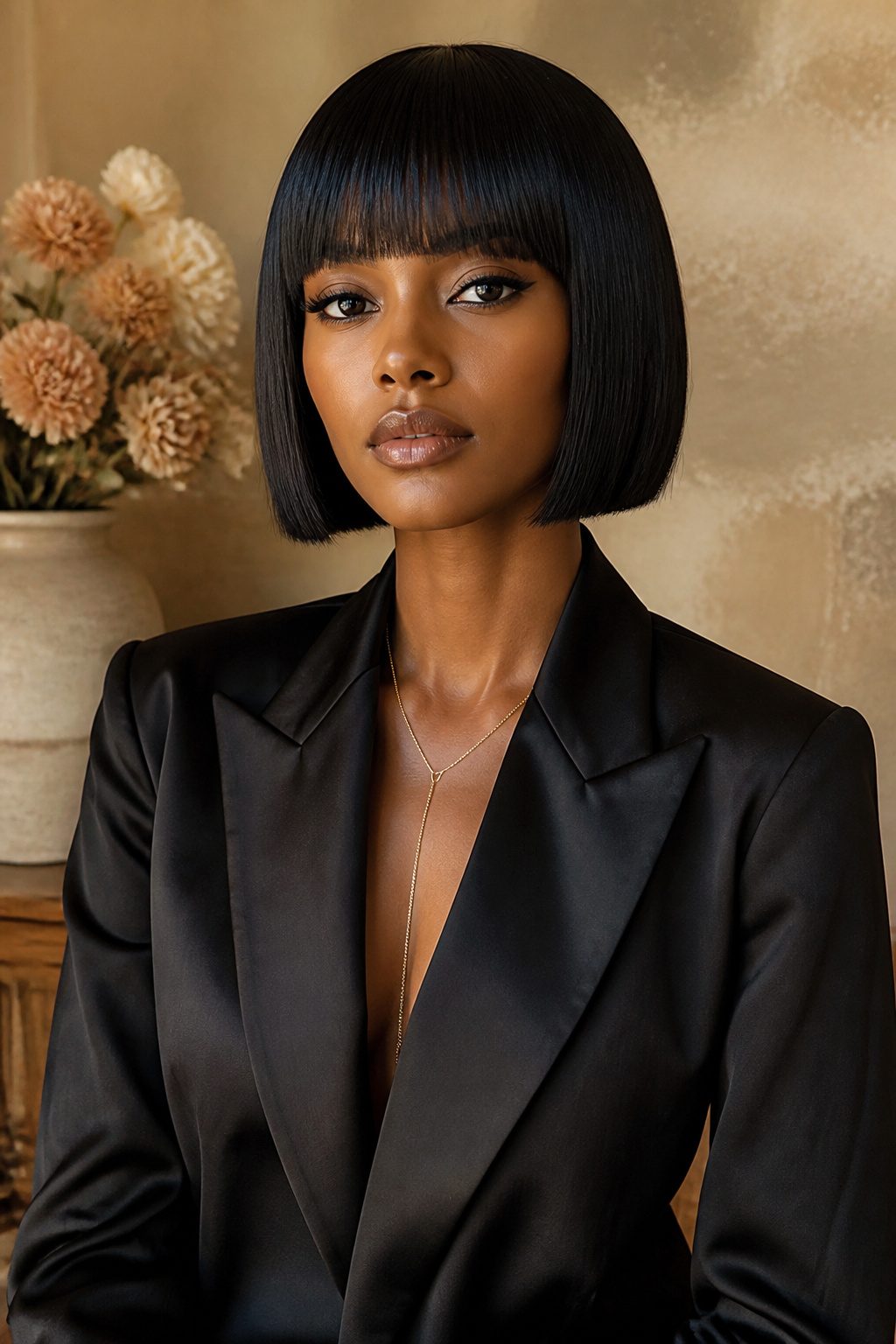
Ciara’s version of this cut lands with the precision of a style reference rather than a accident: those straight, above-the-brow bangs sit at a length that recalls Michelle Pfeiffer in Scarface, deliberate enough to feel archival rather than trendy.
The sharp fringe redraws the face entirely, shortening the forehead and pulling attention to the eyes and cheekbones in a way that softer, feathered bangs simply do not.
The line only holds, though, if the hair can keep it. Fine or relaxed textures tend to cooperate best here, since the blunt edge demands density without bulk and a surface that stays flat under its own weight.
Natural curl or coil patterns will fight the geometry unless heat-styled regularly, which turns a low-maintenance silhouette into a daily commitment.
For women whose hair already runs straight or holds a silk press well, this is the cut that makes a statement in the mirror and in photographs.
For everyone else, the bangs become a maintenance relationship to consider honestly before sitting down in the chair.
2. Sleek Swirl
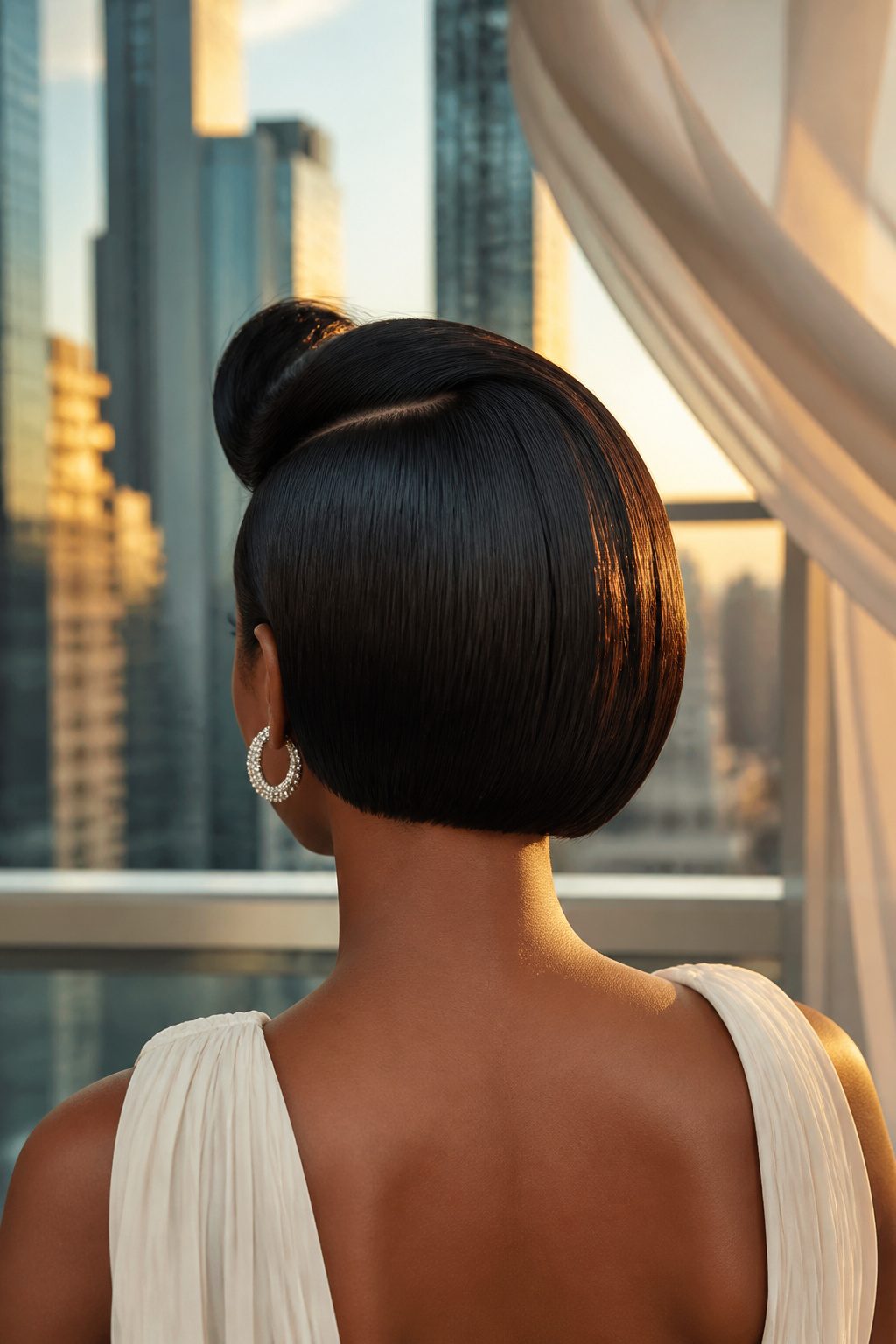
A sharp side part with one deliberate swirl turns a slicked bob into something with history.
Hairstylist Kiyah Wright set Kelly Rowland’s version with the swirl placed high on the crown, right where the part begins, so it reads as a design choice rather than a stray piece.
The rest stays flat and controlled, which makes that single curve stand out.
The contrast matters: crown slicked, ends loose with a slight flip. Without that flip, the whole thing goes helmet.
Without the hold at the root, the swirl drops by lunch.
Setting it takes a comb and a product with real grip, worked in while the hair is still warm from the blow-dryer.
The swirl gets shaped against the natural growth pattern, not with it, which is why the hold has to anchor at the scalp.
A light mist of spray after it cools locks the shape without the stiffness that would kill the flapper reference.
3. Old Hollywood Glam
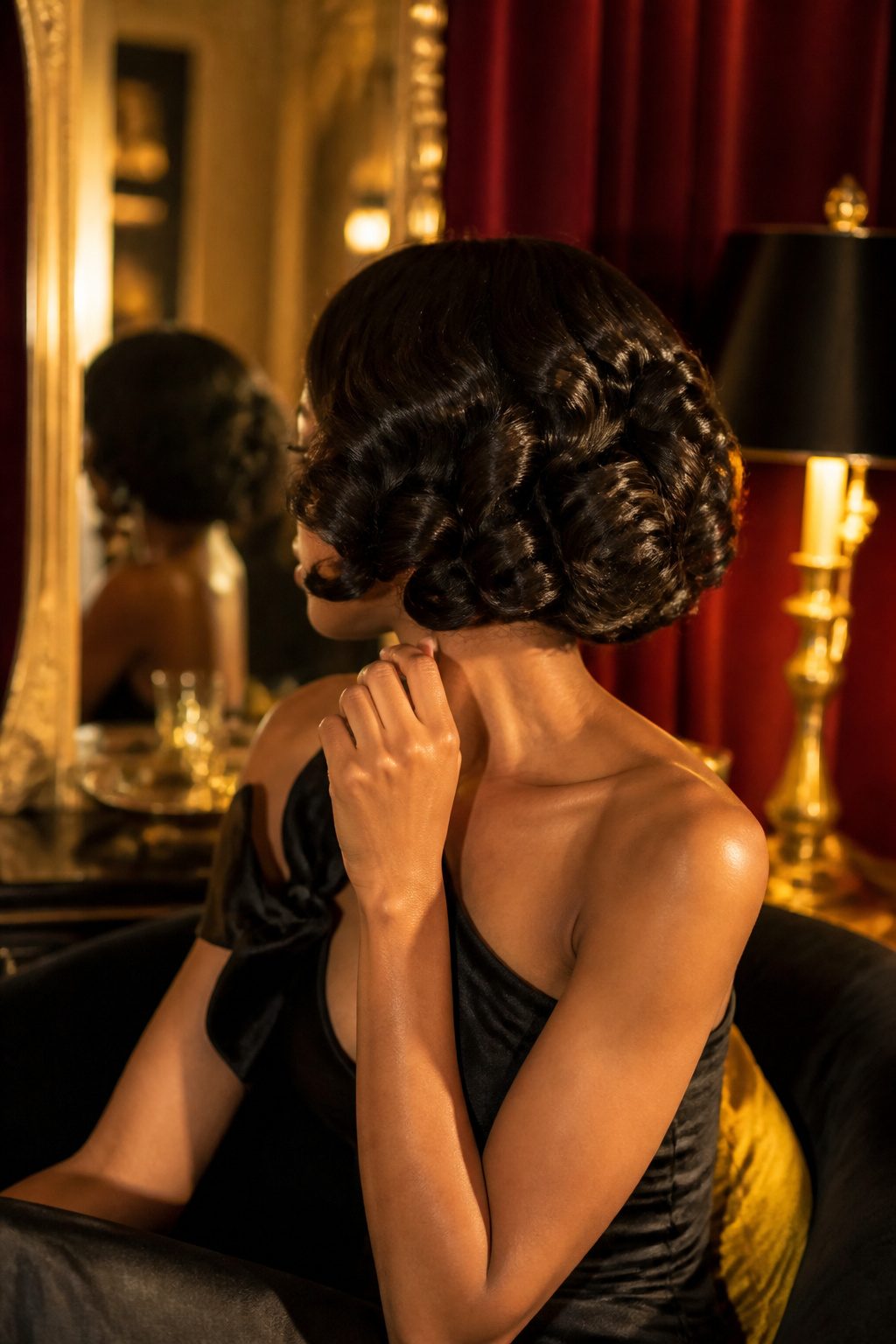
Curls set in a uniform spiral pattern give this bob its Old Hollywood structure, with each coil rolling under at the same length to create that rounded, brushed-out silhouette that stops right at the jaw.
The shape works on hair that is actually cropped to a bob or on longer lengths that get pinned into a faux version for one night.
For the temporary take, the pinning happens underneath: once the curls are cooled and brushed through, the ends get folded and secured with crisscrossed bobby pins at the nape, letting the top layer drape over to hide the mechanics.
The full cut carries better at a formal dinner or anywhere you will be photographed from the shoulders up, since the real shape holds through movement and wind.
The faux bob suits seated events like a theater opening or a gala table, where you are not reaching overhead or leaning back against a chair that could dislodge the pins.
I would not attempt the pinned version for a wedding reception unless I planned to stand the whole night; three hours of dancing tested that for me once, and the back had loosened into something closer to a lopsided ponytail by the time the cake arrived.
4. Silk Press Lob
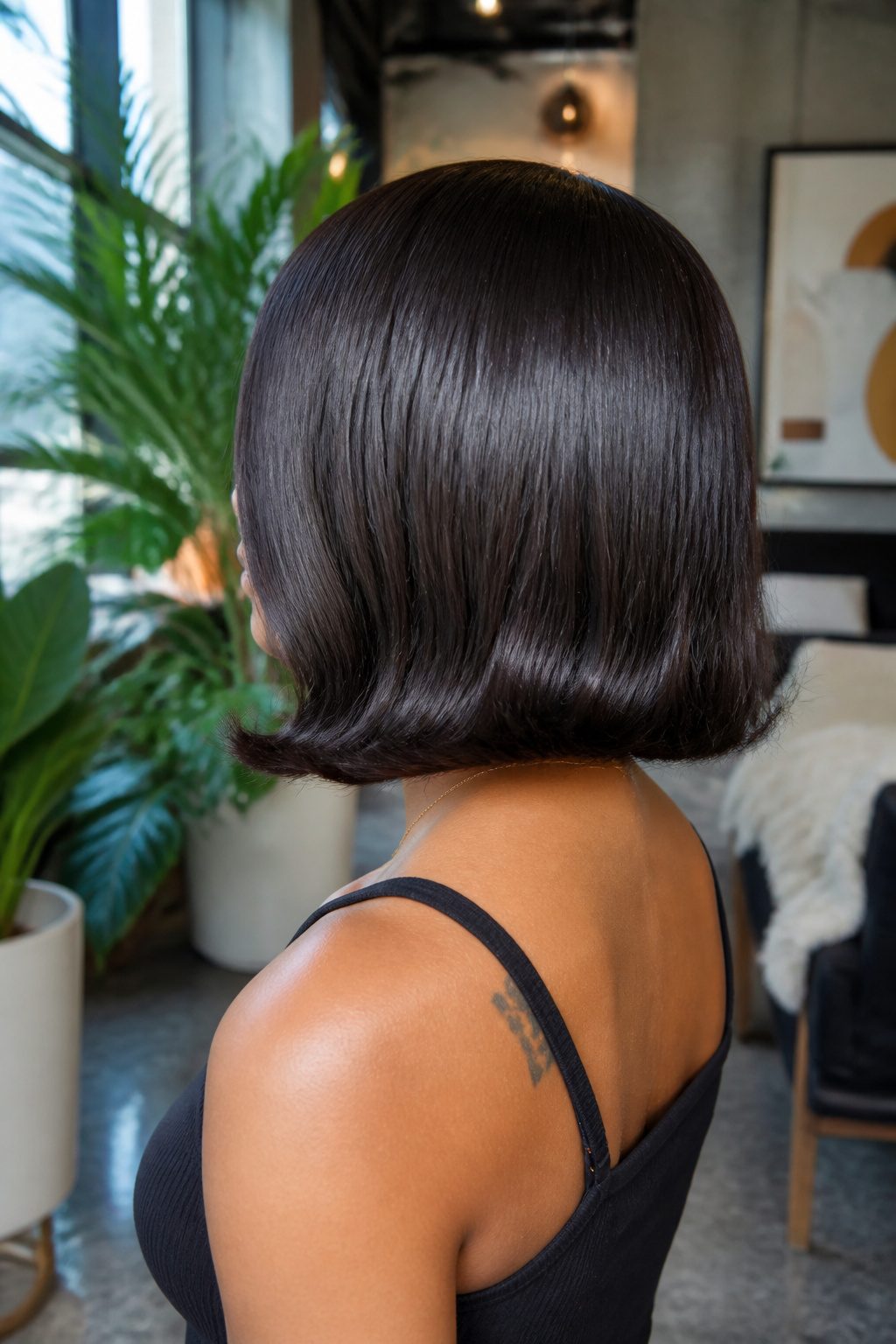
A silk press lob sits right at the edge of what counts as a bob.
The cut falls past the collarbone, which would normally push it into lob territory, but a slight bend at the ends keeps the silhouette grounded in bob shape rather than growing out into something longer.
Olympic gymnast Jordan Chiles has worn this balance well: the length reads as grown-up, but the bend stops it from looking like a mid-length cut that lost its way.
The bend itself matters more than most people expect. A full curl would turn the style into something else entirely, so the goal is a soft turn that catches light without adding volume.
That usually means wrapping just the last two inches around a large-barrel iron, or better yet, passing the ends through a straightener with a quick wrist flick.
The silk press base has to be smooth first; any texture left in the body will fight the clean line the bend is supposed to create.
Done right, the result moves like a bob even when the tape measure says otherwise.
5. Slicked Side
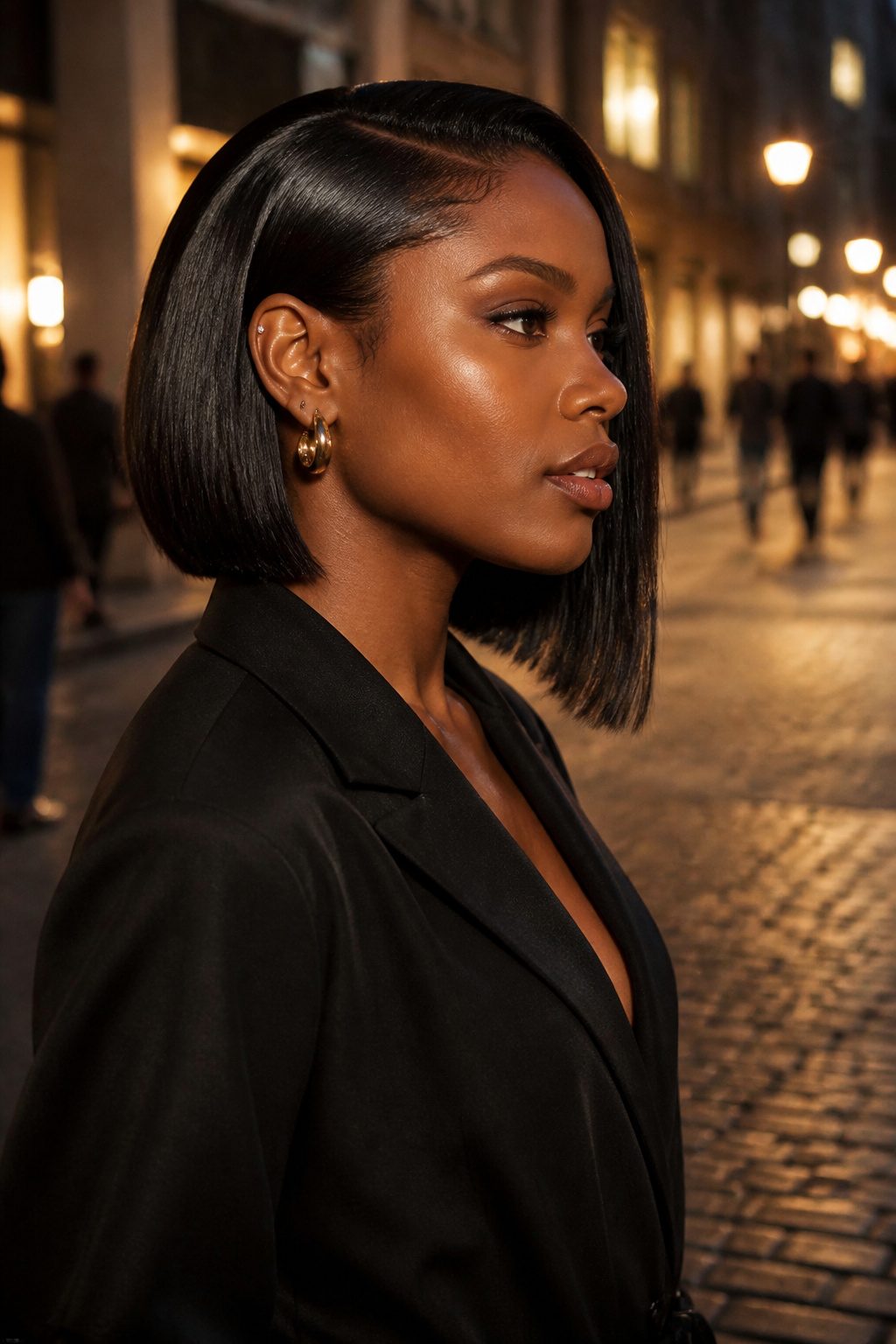
Tucking one side of a bob behind the ear changes the geometry of the cut entirely.
The exposed jawline and cheekbone create a diagonal line that a centered style simply doesn’t offer, which is why stylist Hos Hounkpatin used the move on Ryan Destiny’s short cut to let the glam stand apart from the hair.
The risk is flyaways breaking that clean edge.
A lightweight edge control gel or a small amount of styling wax, something in the range of a nickel-sized amount, will hold the section without the stiff sheen that heavier pomades leave behind.
The product weight matters because residue catches light differently on darker hair, turning what should read as skin and bone into a flaky outline.
Work it through dry hair, not wet, so the hold sits on the surface rather than soaking in and disappearing by noon.
The silhouette this creates is asymmetrical by default, even on a blunt bob. The tucked side recedes visually while the free side maintains its volume, giving the face a framing that reads intentional rather than lazy.
A deep side part amplifies the effect, but the ear-tuck alone is enough to shift the balance.
6. Sharp and Fiery
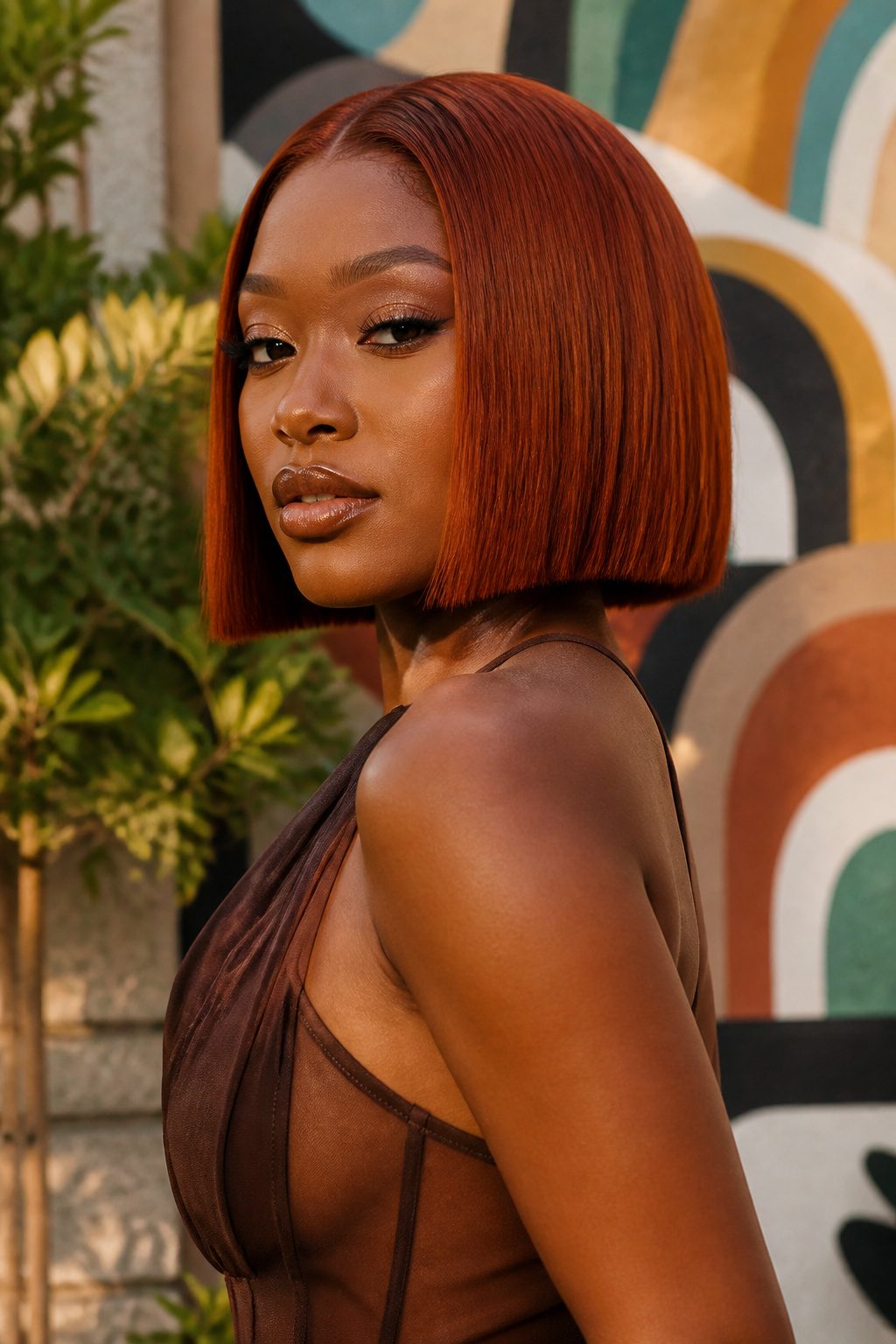
Keke Palmer’s reddish brown blunt cut lands differently than the same shade on lighter skin.
Against dark tones, the color reads warm and dimensional rather than dramatic, almost like a soft spotlight that moves with her instead of announcing itself from across the room.
The bluntness does the real work here. A straight-across edge with a center part gives the cut its architecture; the shade just fills in the lines.
Without that sharp perimeter, the reddish brown would sit flat and read as a single-note dye job rather than a shape with depth.
Blunt cuts on relaxed or silk-pressed hair demand precision. The line has to be clean enough that the color variation shows in the swing, not just the surface.
Ask your stylist to keep the weight at the bottom and avoid hidden layering, which would break the silhouette that makes this style sharp rather than safe.
7. Layered Ends
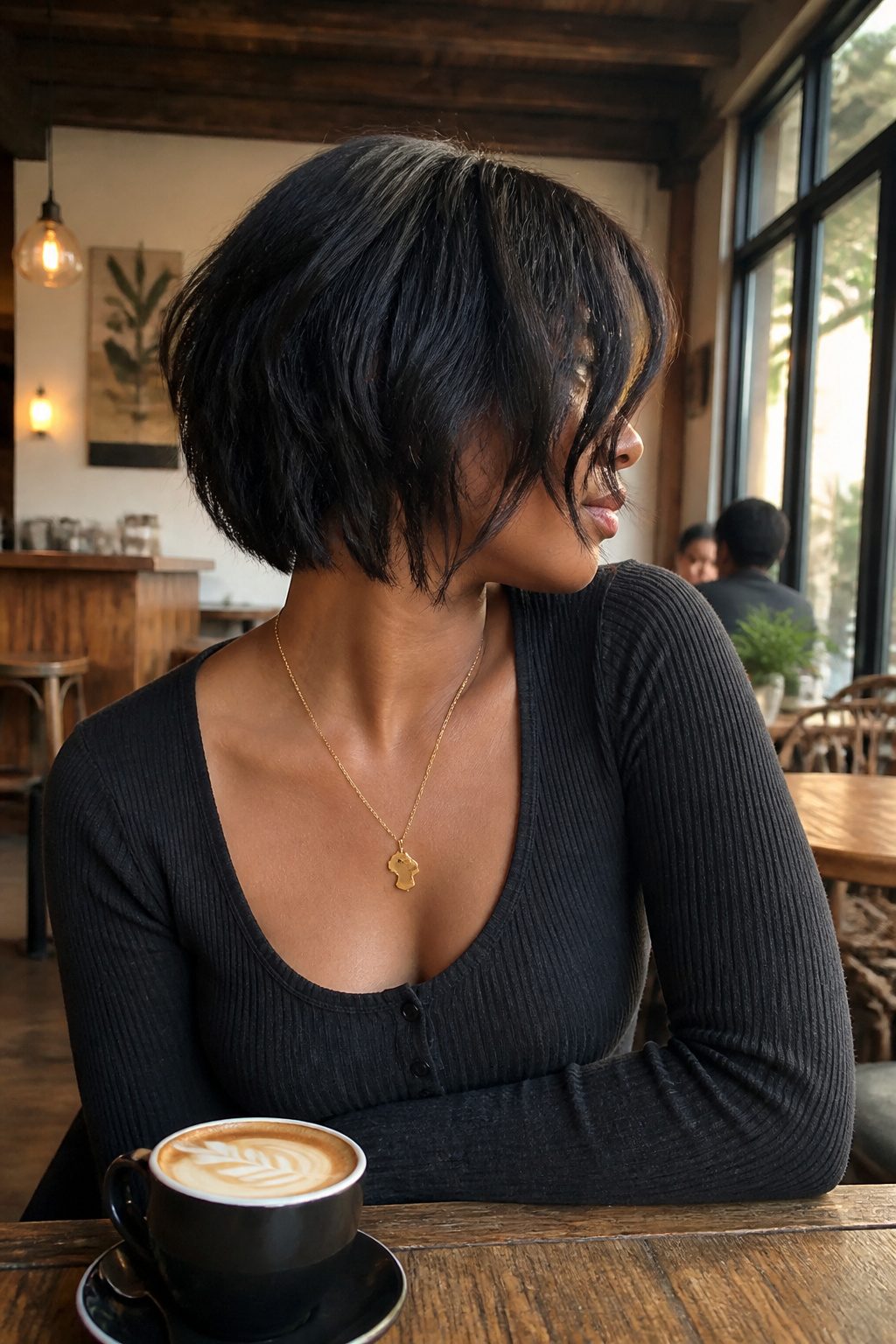
Curtain bangs with choppy layers around the jawline add texture without the stiffness of a sharp center part.
The layers start low, framing the face where the jaw begins to curve, and move outward in broken pieces rather than blending into a single line.
Choppy ends on textured hair read as deliberate separation, each piece distinct and weighty, while feathered ends thin out toward the bottom and can disappear into finer textures.
A stylist can adjust where the choppiness begins, higher for volume at the crown or lower to keep the shape close to the head.
Ask for the choppy finish rather than feathering if your hair is coily or kinked, since feathering relies on hair that lies flat and shows gradation, and textured hair often swallows that effect whole.
8. Roller Bangs
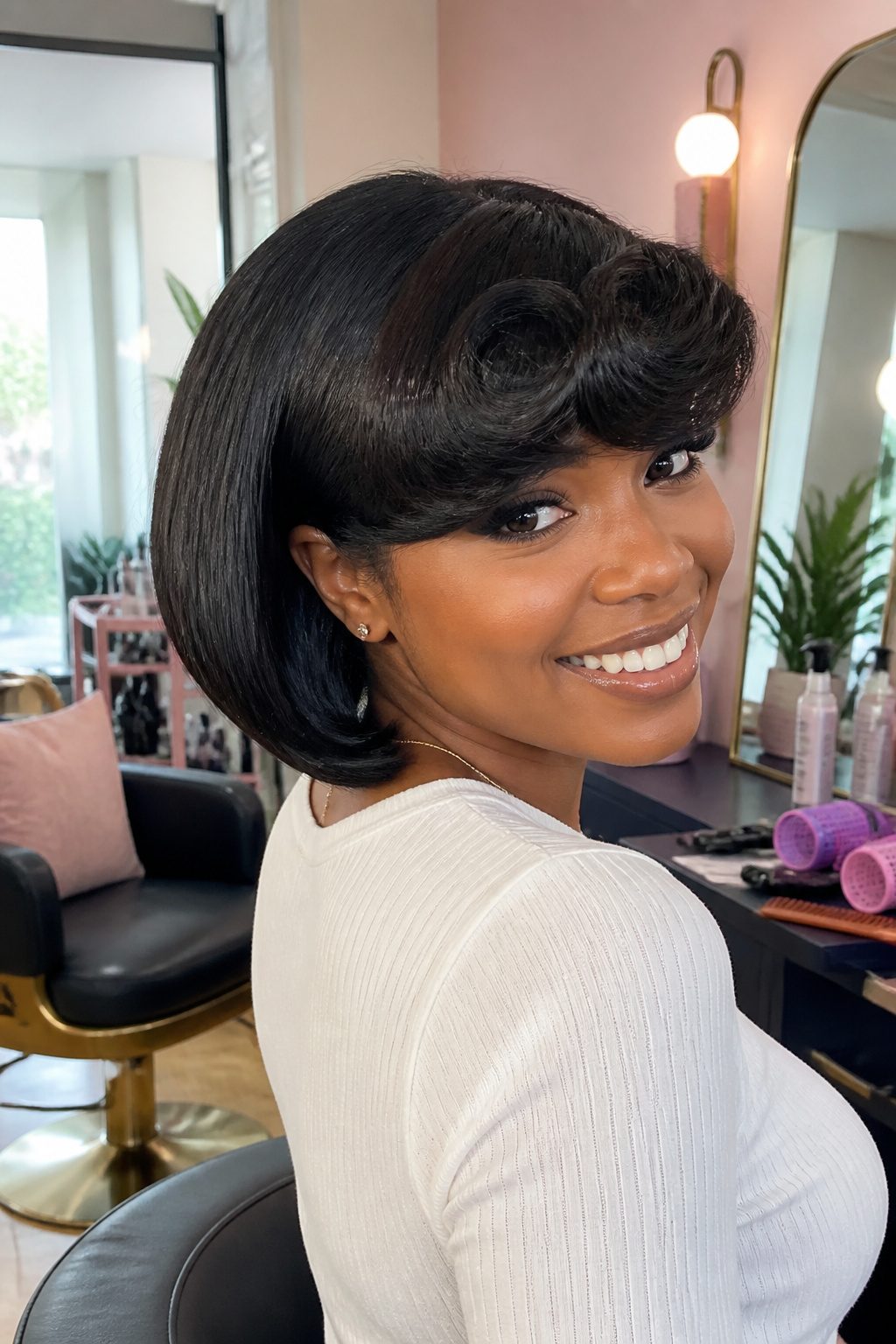
Roller bangs bring a shape you do not see on every bob. The curl starts at the root and sweeps across the forehead in one continuous spiral, pinned to the side rather than falling straight down.
A 1-inch roller, wrapped away from the face and toward the temple, gives the tightest arc that still reads as a bang and not a curl falling loose.
The direction matters because wrapping toward the face collapses the spiral against the skin and kills the lift that makes the style read as a bob rather than a grown-out roller set.
Setting the bangs while the rest of the hair dries, then pinning them flat until fully cool, locks the curl pattern in place.
Humidity resistance comes from that cool-down; the cuticle seals around the shape and the spiral stays defined through damp weather.
On fine hair the roller set alone may drop by midday, so a light mist of holding spray before unpinning adds structure without the stiffness of product applied after.
The finished look pairs best with a bob cut blunt at the jawline so the curl has a clean horizontal to contrast against.
9. Braided Part
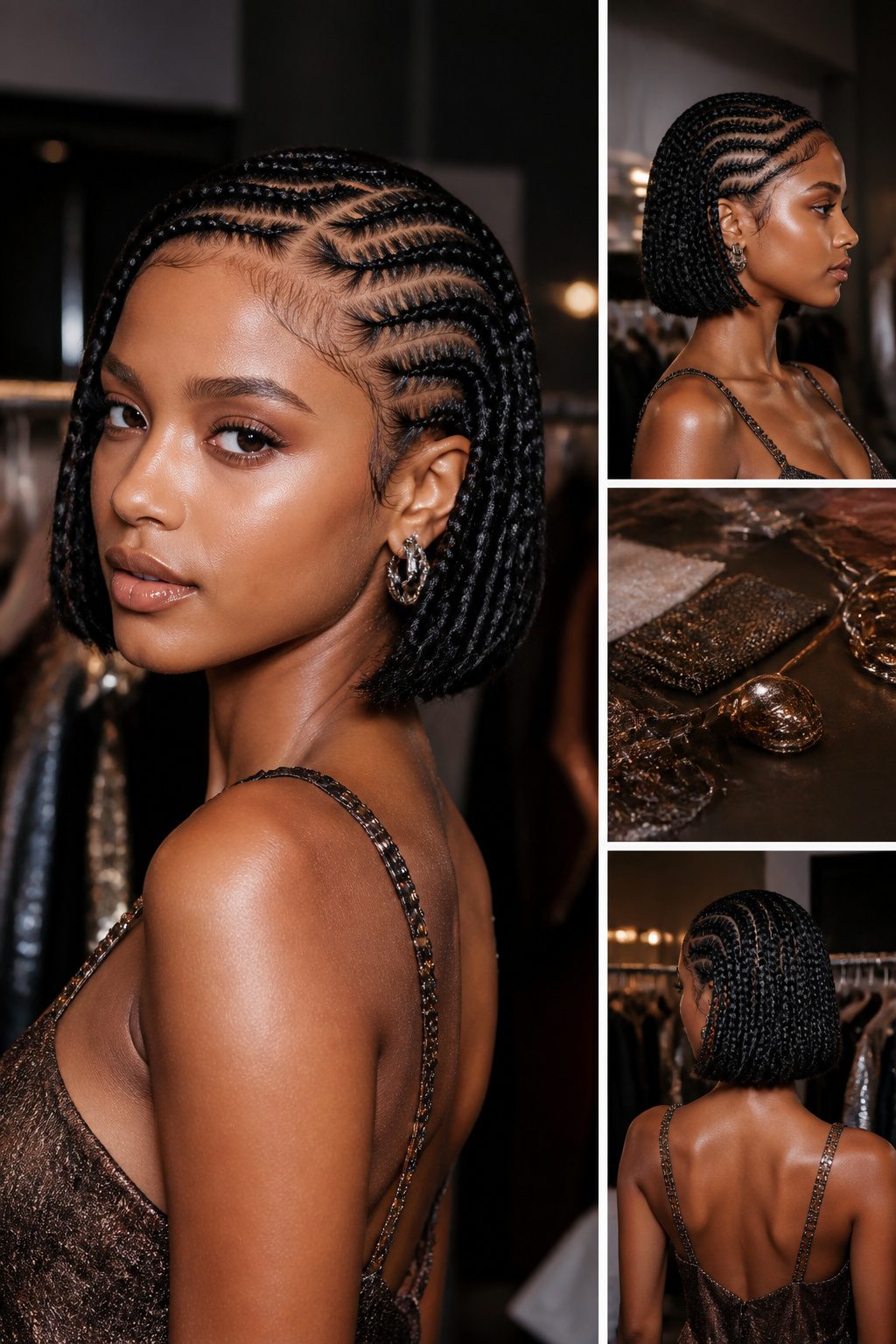
Tyla’s 2025 VMAs appearance made the braided part bob impossible to ignore.
Her stylist Yusef, who also works with Rihanna, sliced a deep V into her straight bob and wove two cornrows within that part for texture that read as architecture rather than add-on.
The braids sat flat against the scalp and disappeared into the bob’s base, so the length itself stayed smooth and swingy rather than fighting the braided foundation underneath.
Two cornrows frame the part cleanly without crowding the face; three or more start to read as a full braided style rather than a detail within a bob.
The cut sits at jawline or just below, long enough to veil the braid roots where they end and the unbraided hair begins.
What sells the look is that transition: the braids do the visual work of a deep side part or undercut, but the bob still moves like a bob when you turn your head.
10. Tousled Wave

Halle Berry’s version of this cut proves the line between tousled and tangled is intention, not effort. Her waves look like they woke up that way because each one was placed with a specific tool, then left alone.
The difference matters. Tousled reads as volume and movement; tangled reads as neglect.
The tool that keeps them separate is a large-barrel curling wand, usually around 1.25 inches, used on alternating sections toward and away from the face. Two passes maximum per section, then a cool-down without touching.
Brushing out is where most people lose the look; a wide-tooth comb or just your fingers keeps the separation that sells the beach effect.
The natural texture of Black hair automatically adds volume to a bob and gives it dimension that requires a lot more styling and manipulation to achieve on finer hair.
— Elle
That built-in dimension means the tousled wave needs less heat and less product than the tutorials suggest for other textures. The work is in restraint, not layering.
11. Subtle Texture
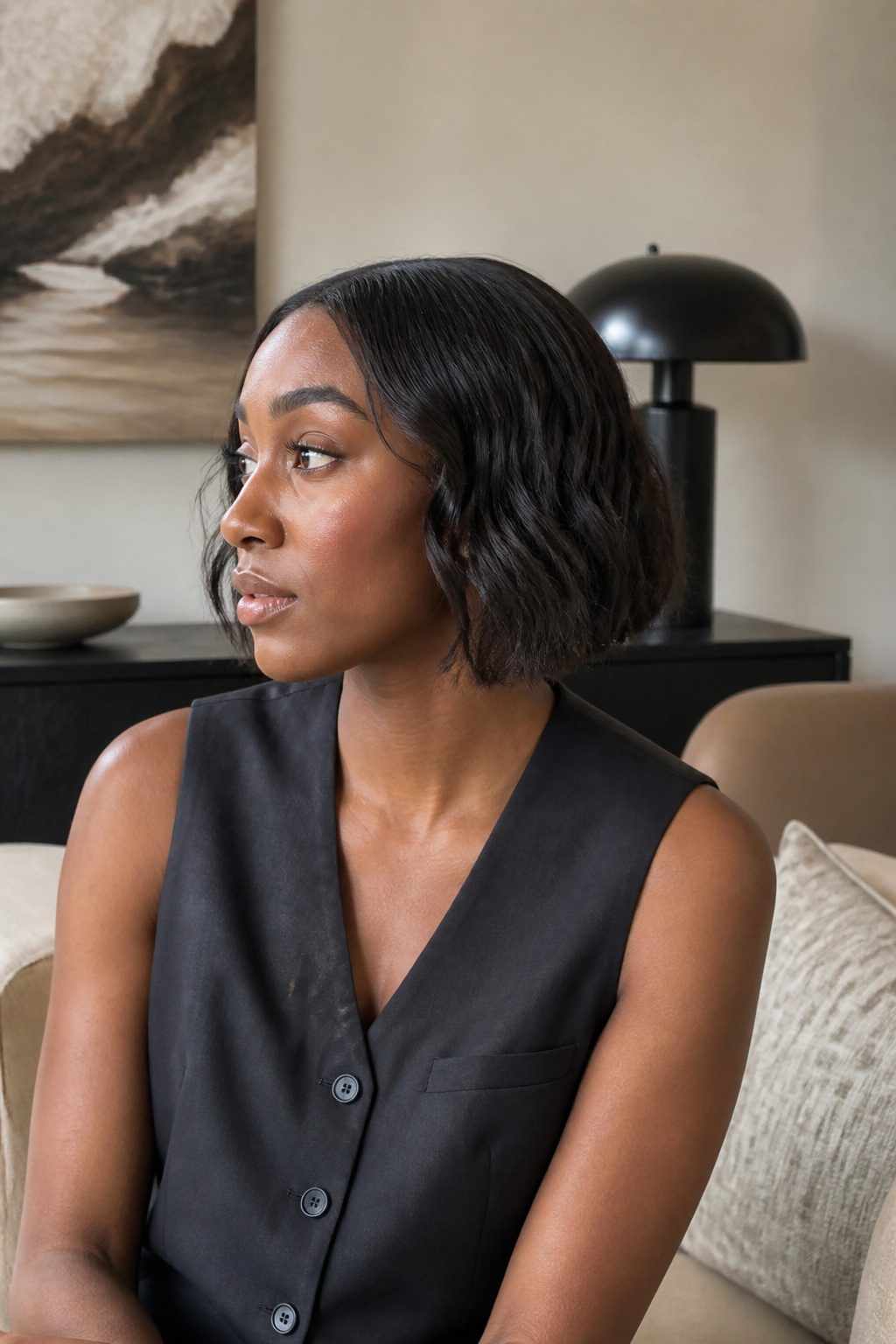
Ayo Edebiri’s version of this cut keeps the base slick and blunt, then lets the texture start around the browline and fall in loose waves from there. The straightness at the root does the intentional heavy lifting.
It reads as a choice because the line is so clean, so deliberate, that the shift into movement looks plotted rather than like a curl that fell out or a wave that never fully set.
I’ve watched this same logic work on wigs and natural hair both. The contrast is what sells it: the eye catches the precision first, then registers the softness as a countermove, not an accident.
If the whole head waves, it is a different style entirely. Keeping the area from the part to just above the eyes flat and smooth creates the frame; the waves become the picture inside it.
For anyone bringing this to a stylist, the placement matters more than the curl size.
Ask for the straight section to run to the brow or slightly past it, with the wave beginning in the mid-lengths rather than at the ends.
That overlap, where straight meets curve, is what keeps the shape from looking like a bob that was curled halfway and abandoned.
12. Well Rounded
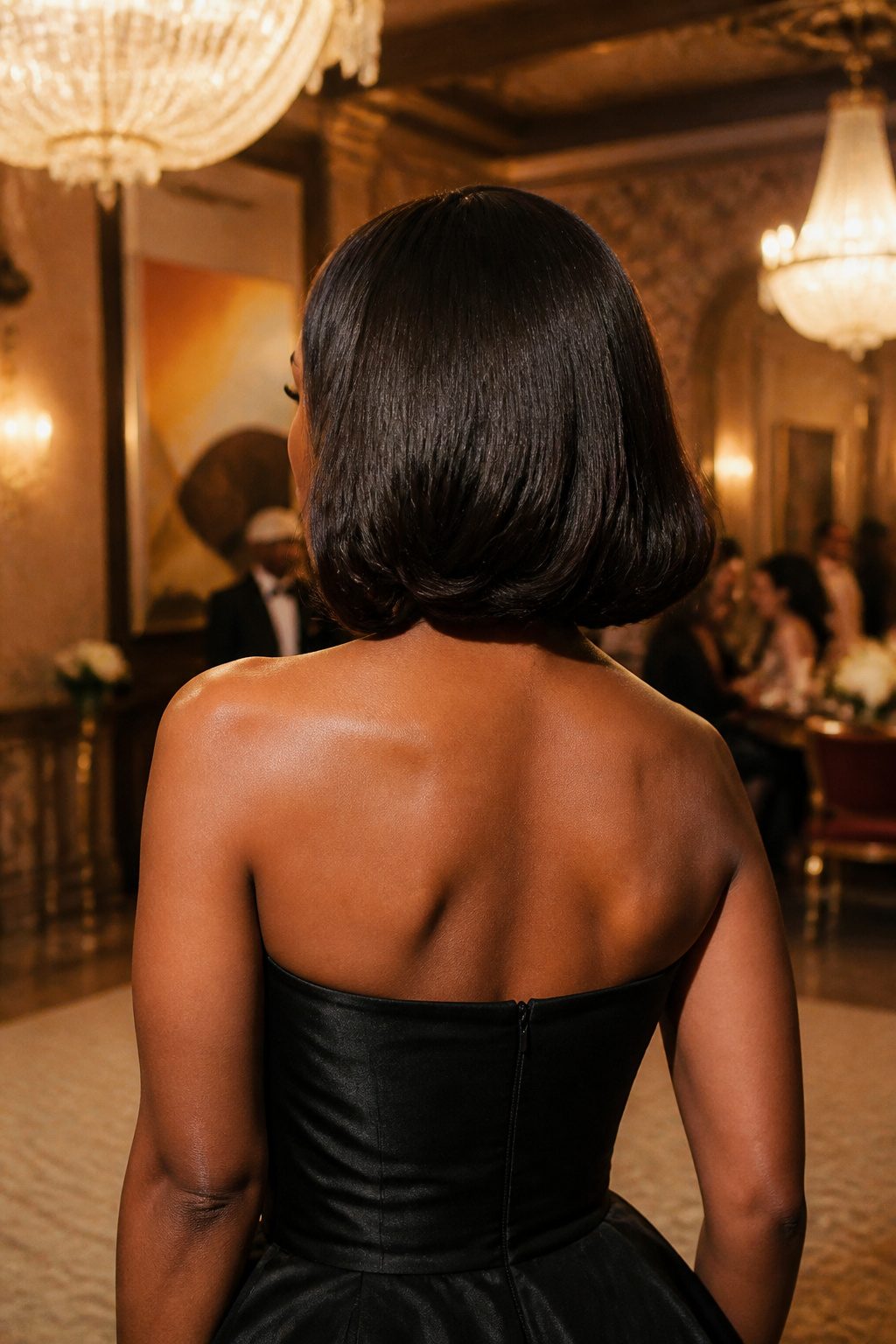
A smooth, curved finish on a bob borrows its silhouette straight from the 1960s and the Old Hollywood of the 1950s, the decades that treated the round brush as the main styling tool rather than an afterthought.
Kerry Washington’s slightly rounded lob kept its bounce because the ends were rolled under at the curve, not flattened against the neck.
Karrueche Tran’s version pushes that same idea fuller, combining the vintage shape with enough body that the line reads as rounded from every angle rather than just the front.
The round brush builds the curve in sections, working from the nape upward with tension at the root and a slow pull through to the ends.
Heat sets the bend, but the brush diameter matters: too small and the curl tightens past the bob’s intended half-moon; too large and the ends barely lift.
What separates this from a simple blowout is the continuous arc, no breaks or flicked-out pieces, which is why the technique shows up most often on hair that has been pre-smoothed with a light pass.
13. Micro Bangs
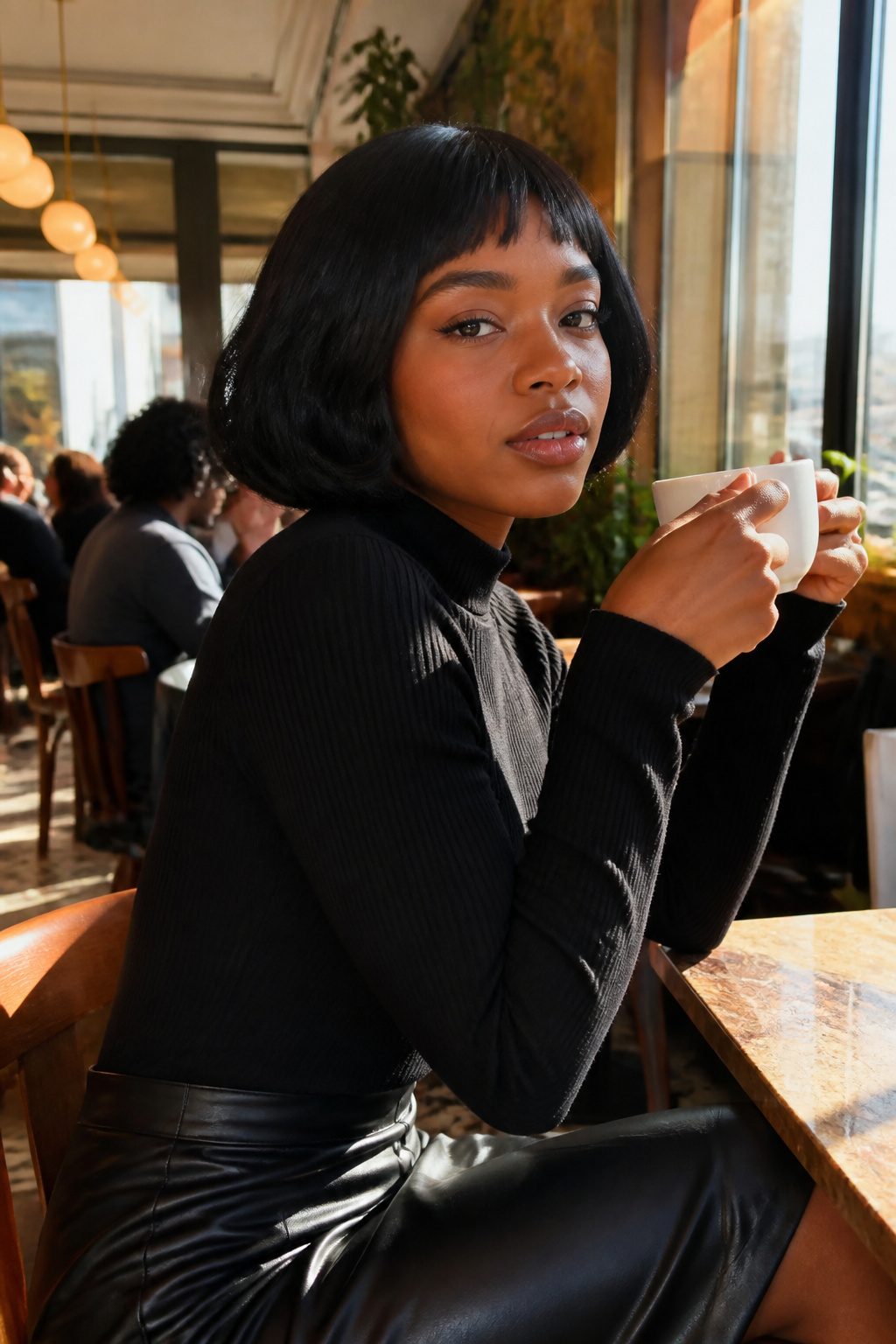
Micro bangs sit an inch or two above the eyebrow, short enough that they read as deliberate architecture rather than a trim gone wrong.
The wind-flipped finish is something you build on purpose: a small round brush pulled through damp bangs, then a quick pass with a concentrator nozzle aimed from below so the ends kick up and away from the face.
The result looks like you stepped off a rooftop into a gust, except the shape holds.
This version works best on straighter textures or relaxed hair where the flip keeps its structure through the day.
On a bob, the short bangs open up the forehead and draw the eye to cheekbones, which is the whole point of going this severe with the length.
I have seen these go wrong when the bangs are cut too wide; they should sit narrow, almost like a fringe panel rather than a full curtain, or the proportions turn helmet-like.
Styling takes maybe four minutes in the morning, but the cut itself needs refreshing every three weeks. Growth this short shows immediately, and a heavy brow line creeping back in ruins the effect fast.
14. Centered Staple
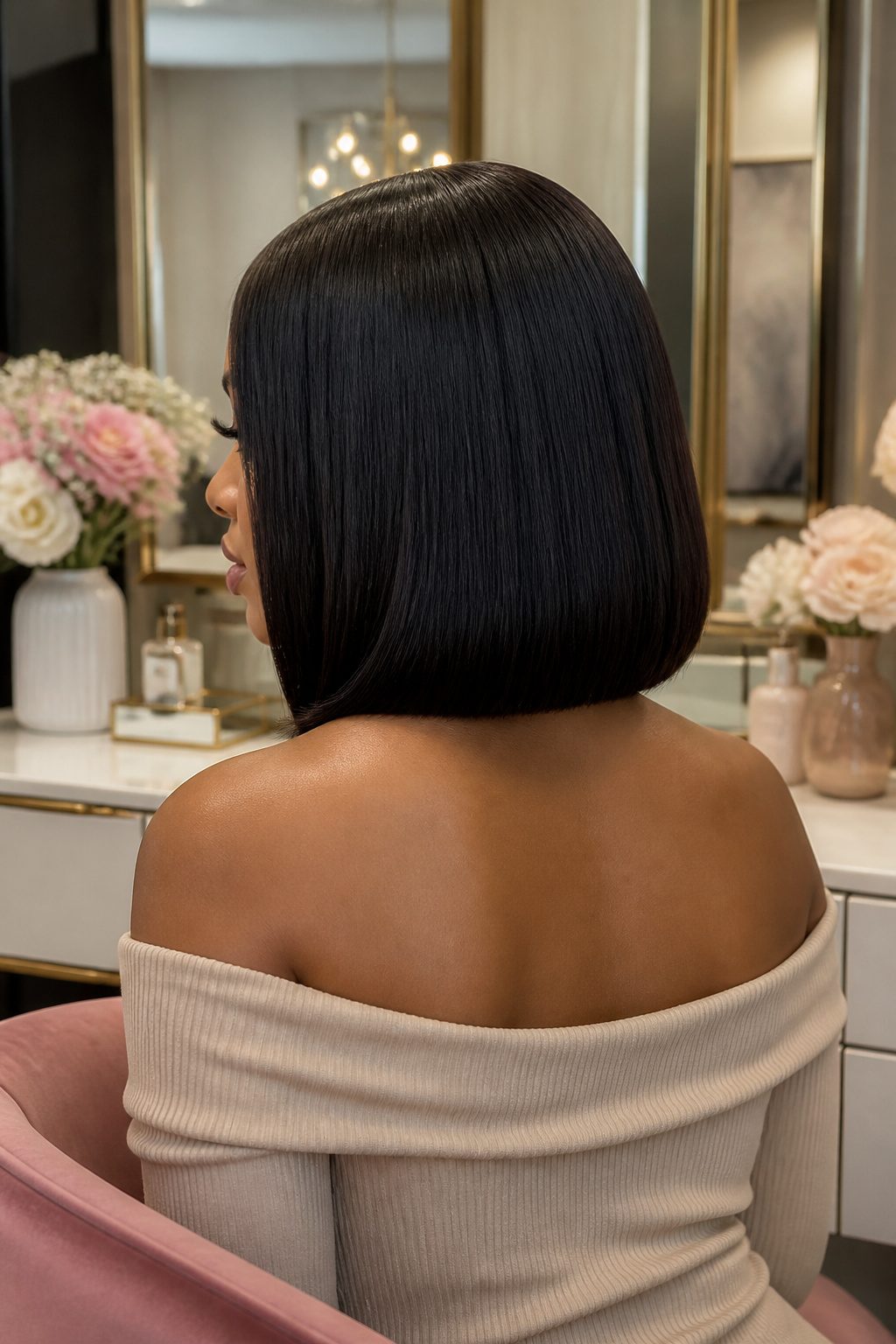
A smoothed-down lob with rounded ends and a true center part sits right where the collarbone meets the shoulder, a length that frames without crowding the face.
The part falls dead center, not the slightly off-center placement that reads as accidental; this symmetry is what gives the style its quiet authority.
The rounding happens at the very ends, a soft curve inward that takes the edge off a blunt line without dissolving into a flip.
Ask your stylist to hold the iron at a slight diagonal on the last two inches, rolling under just enough to create that subtle C-shape.
Too much curl and you lose the bob’s architecture; too little and the ends read as grown-out rather than intentional.
The center part demands even density on both sides, so if your hair is finer in front, a light set of hidden layers at the crown keeps the part from falling flat.
I have seen this cut fall apart when the rounding starts too high, turning a lob into something helmet-like. Keep the curve low, controlled, and the line stays clean.
15. Bowed Bob
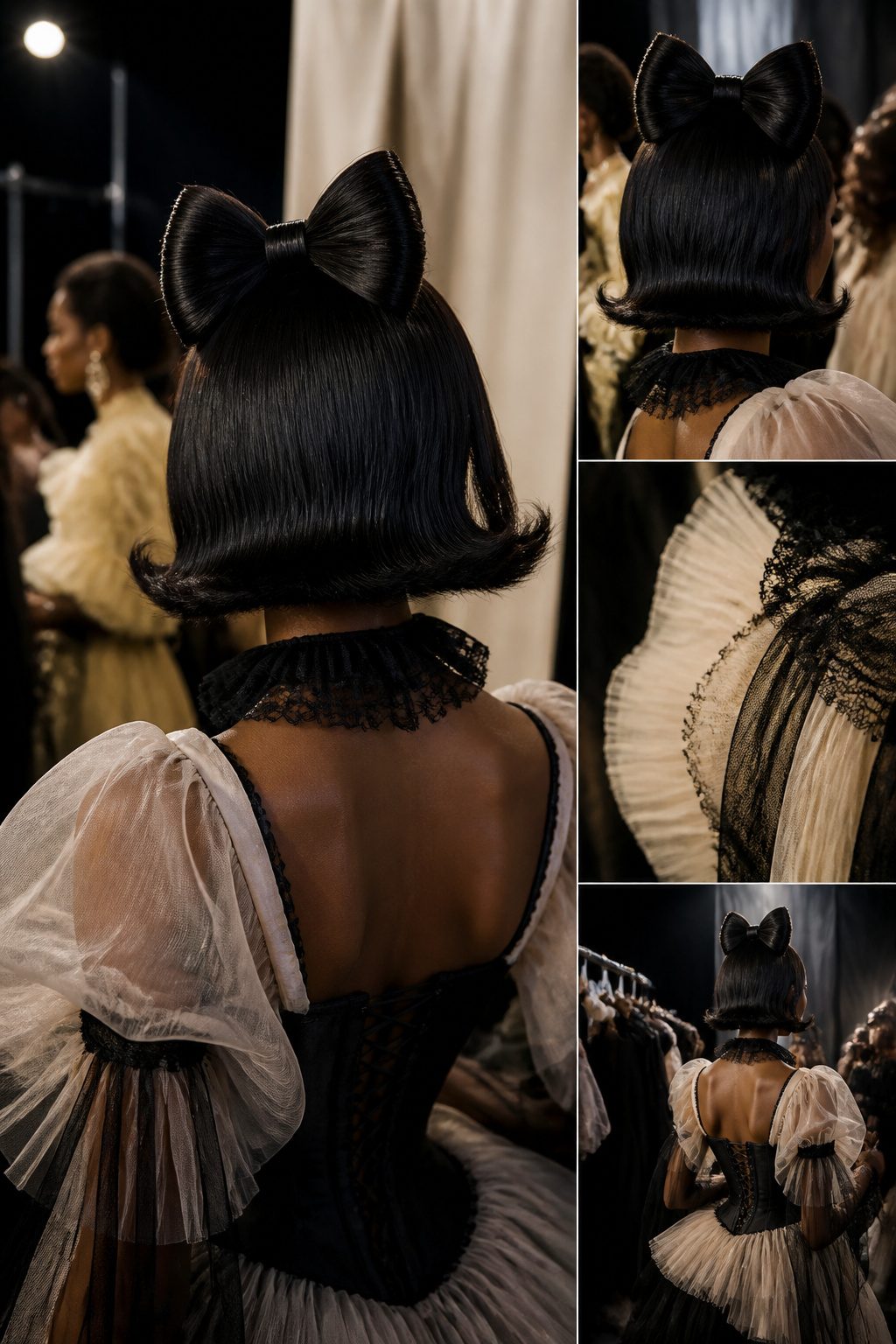
The bowed bob that walked Wiederhoeft’s spring/summer 2026 show at New York Fashion Week is a faux bob built from Victorian-era twists, not a cut at all.
Oribe Principal Artist Kien Hoang worked with model hair to create the illusion of short length through an intricate twisting pattern that coils the natural hair upward and inward against the scalp.
Each twist feeds into the next, forming a dense, sculptural roll that sits at the nape and follows the classic bob line to just below the jaw.
The bow itself is the finishing move, and it is made from the model’s own hair rather than ribbon or accessory.
Sections are pulled from the twist structure, looped, and secured into a bow shape that crowns the upper back of the head.
Underneath, the remaining length is pinned flat and hidden against the neck; no hair is cut to achieve the silhouette, which makes this a commitment-free option for anyone wanting to test a bob shape before the scissors come out.
The style reads formal and period-inspired, better suited to an event than daily wear, though the pinning technique could be adapted for a softer, less structured day look.
16. Braided Lob
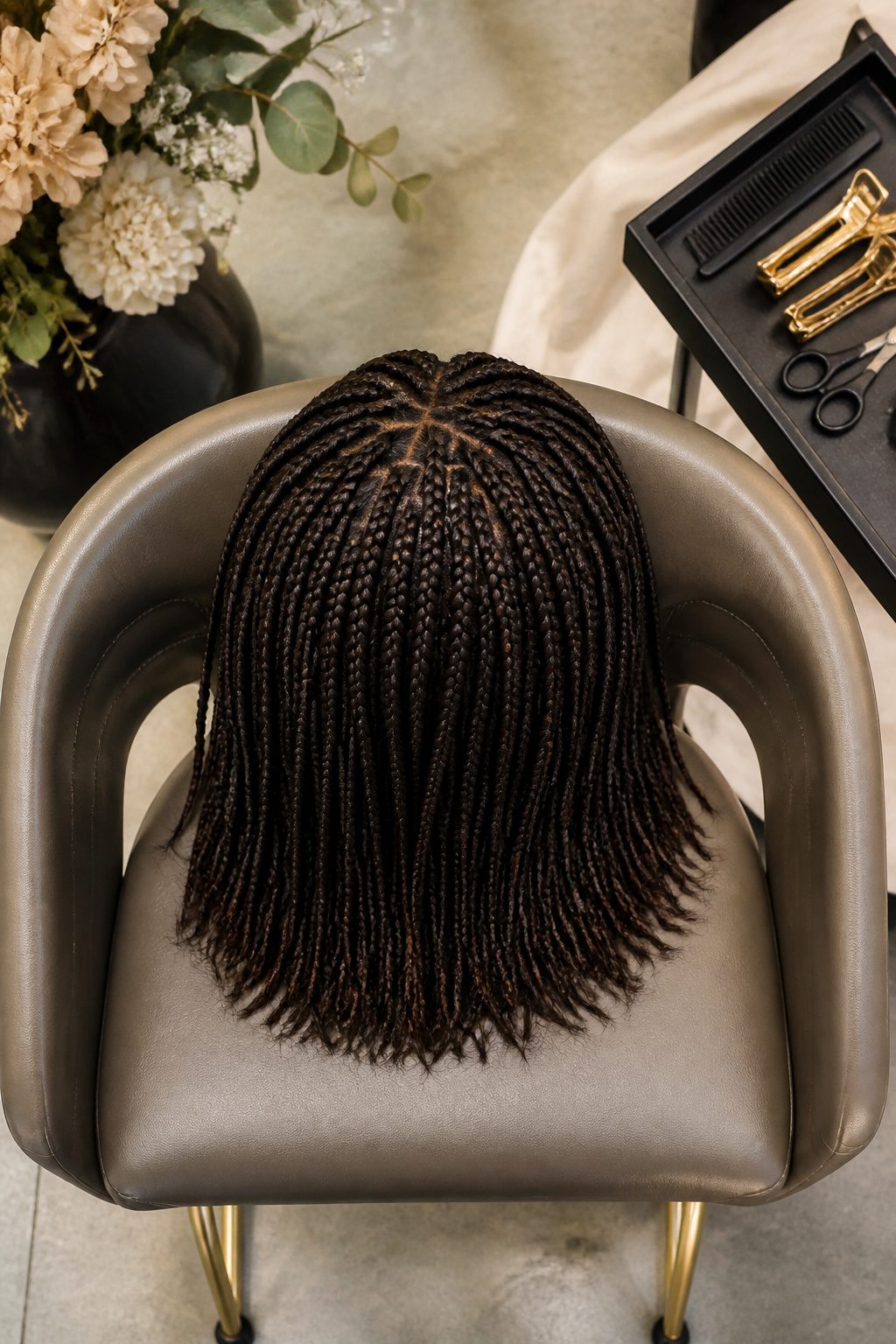
Micro braids at about the width of a grain of rice shift a lob from everyday to something that reads deliberate.
The part matters here: a center part no wider than a pencil line keeps the symmetry clean without looking too labored. Anything wider and the scalp starts to dominate what should be a braid story.
The lob length carries weight differently than shorter box braids. At collarbone or just past, the braids have enough length to swing, which means the tension at your roots becomes the whole issue.
Too heavy at the ends and you are carrying that pull for six to eight weeks.
Ask your braider to taper the last inch or two, or switch to slightly larger braids below the ear to cut the load without losing the look.
A center part with micro braids also exposes more scalp than side-swept styles, so edge control and a light scalp oil become part of the maintenance, not an afterthought.
The payoff is versatility: the braids hold a middle part straight, but you can still flip them deep to one side for a dinner out without the style fighting back.
17. Highlighted Waves
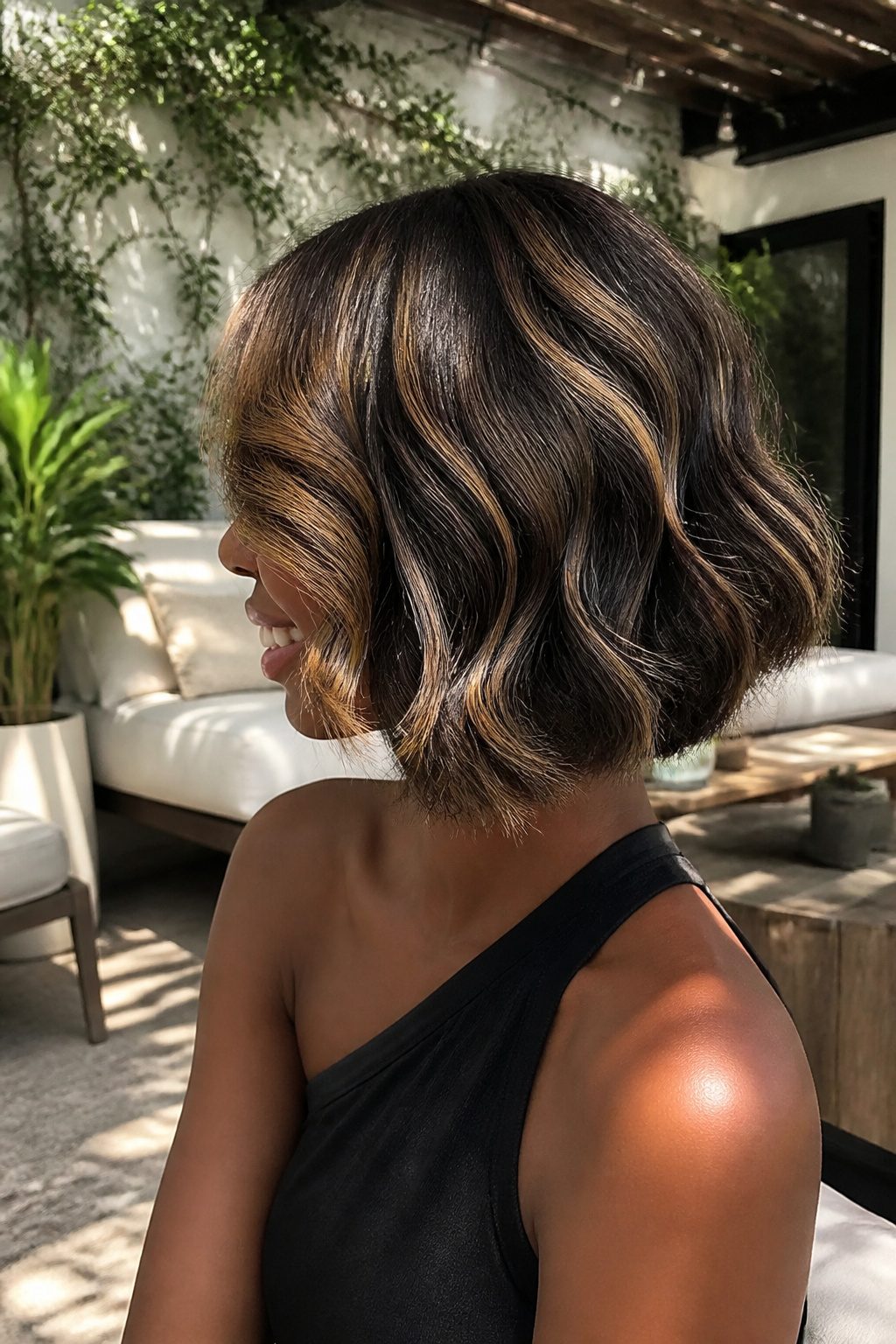
Chunky highlights on a bob live or die by the width of each ribbon. Anything under half an inch reads as a stripe, which is the opposite of the dimensional glow this look wants.
The sweet spot sits between half an inch and an inch wide, laid in uneven panels so the color catches light like natural sunning rather than salon geometry.
Coiffed waves mean setting with intention, not sleeping on wet hair and hoping. I roll two-inch sections on large hot rollers, direct every wave away from the face, then brush through with a boar-bristle paddle once they cool.
The result holds that polished bend without falling into costume territory. Kami Crawford wore this exact pairing, and the waves sat high enough to lift the ends above shoulder level, which visually shortened longer hair into a true bob line.
The highlights did the rest, breaking up solid color so the shape read as intentional rather than grown-out.
18. Split Personality
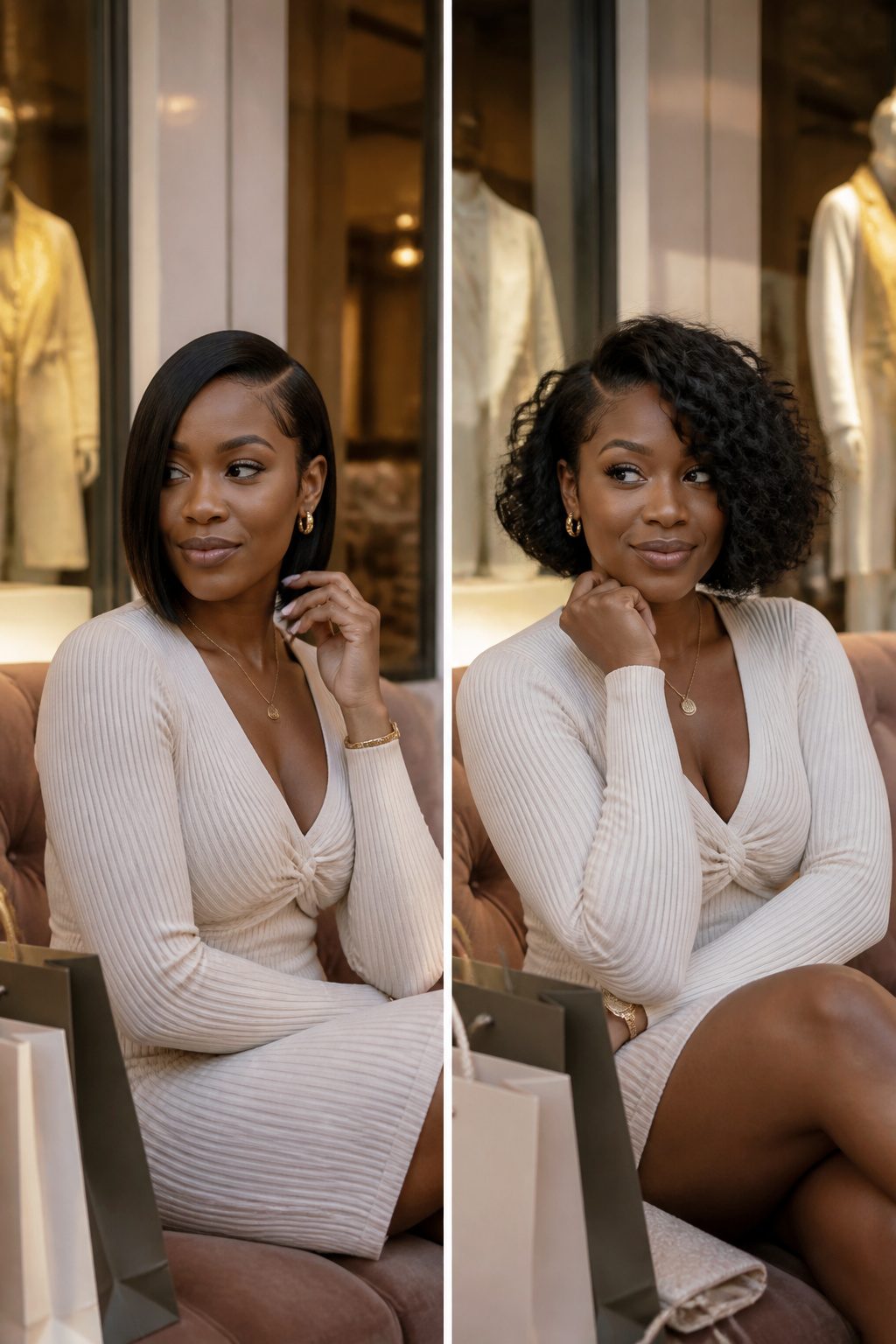
The split happens at the part, not somewhere vague in the back.
One side gets pressed flat to the head with a hot comb or flat iron, the other side is set on a medium-barrel iron with the curls brushed out so they swell against the jaw.
Karen Pittman wore it this way: smooth and blunt on one half, loose curl and volume on the other.
The contrast only reads if the boundary stays crisp, so the sleek side needs a strong gel or edge control laid down at the root before heat, and the curled side wants a light holding spray after brushing so the wave keeps its shape without going stiff.
By midnight the danger is the sleek side lifting at the part or the curls dropping to match it.
A silk scarf tied close to the scalp for the twenty minutes before you leave the house sets the gel hard enough to survive.
19. Deep Side Part
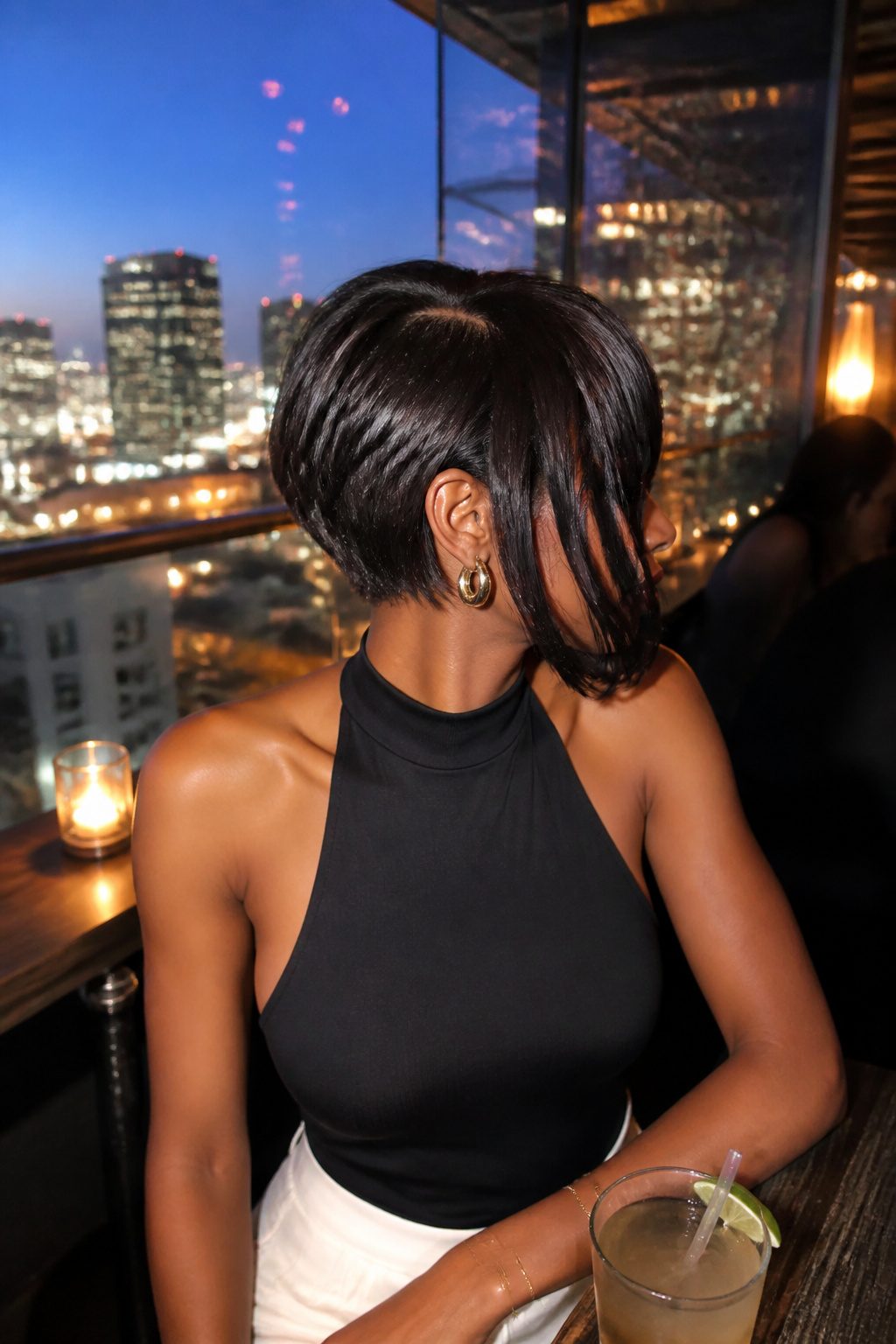
Shifting the part from center to side is the fastest way to make a familiar bob feel like a new cut.
The part travels about two to three inches off center, enough to throw most of the volume onto one side while the other stays flatter against the scalp.
On my own bob, that move took the style from balanced and office-appropriate to something looser, still pulled together but less deliberate.
The volume shift is what sells it. One side gains height at the crown; the other side drops and sweeps across the forehead or tucks behind the ear.
The bumped ends that work so well with a center part still read here, but the asymmetry keeps the shape from looking too controlled.
I find this works best when the deeper side has enough length to actually sweep, so the balance doesn’t tip into lopsided.
A bob that hits right at the jawline or slightly below gives you that room; anything shorter and the part fight the natural growth pattern without enough hair to weight it down.
20. Tucked In Tricks
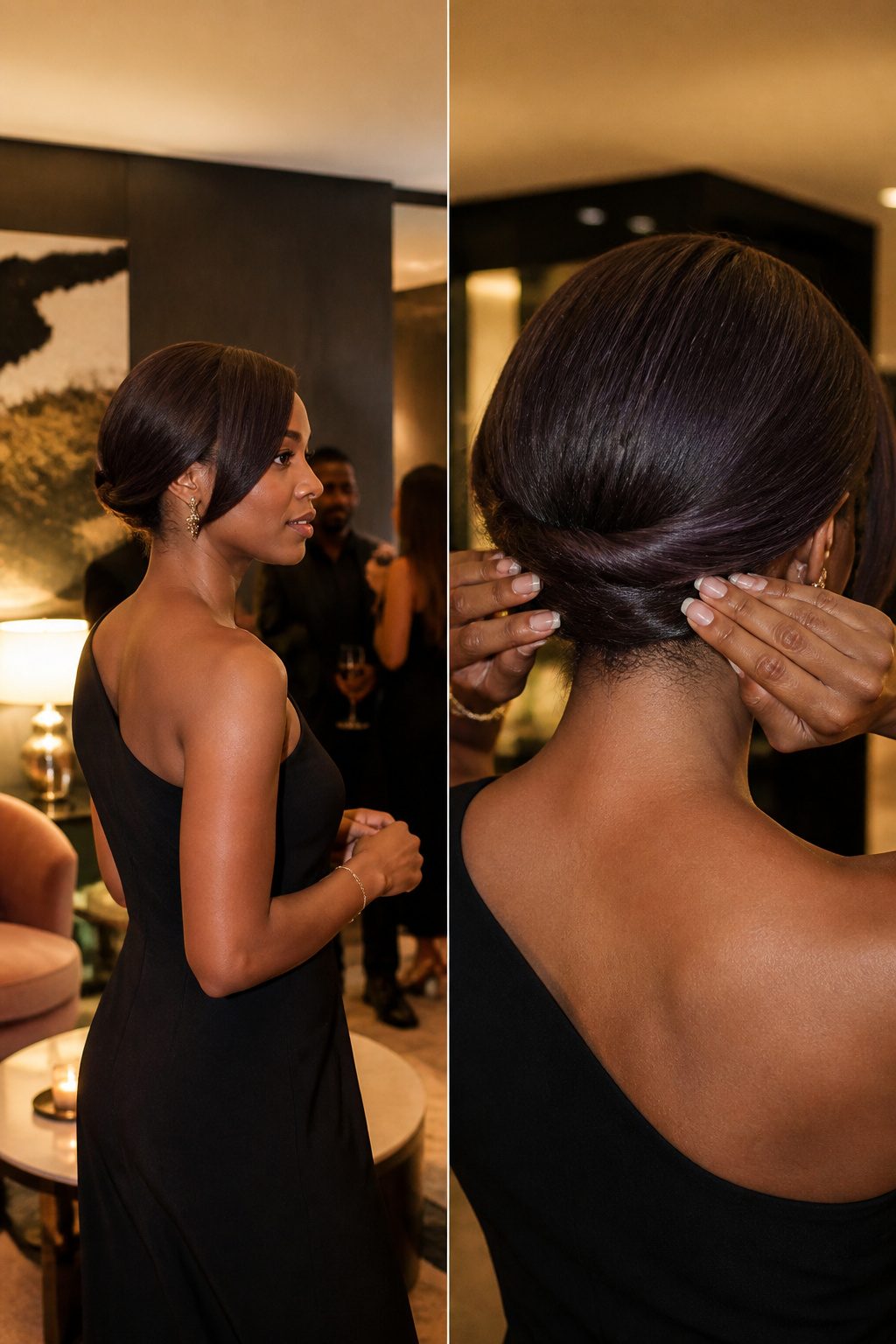
A faux bob created by tucking hair under solves the commitment problem for anyone testing the look before scissors touch the neck.
The tuck point sits right at the nape, where longer strands fold upward and inward to create the illusion of a blunt edge.
Two or three large hairpins, the flat kind that do not poke through to the scalp, hold the fold against the head; they slide in horizontally where the folded section meets the skull so the pin itself disappears into the bulk.
The neck hair is where this falls apart if you rush it.
Shorter pieces at the nape need to be caught into the fold rather than left to slip down, which means brushing them upward first, letting them ride inside the tucked section, and pinning through all layers together.
A light mist of water or setting lotion on those underside pieces before you start gives them enough grip to stay put without stiffness.
In humid weather the whole arrangement loosens faster, so the faux bob works best on days when you will not be moving between heavy air conditioning and outdoor heat.
21. Chic Bob
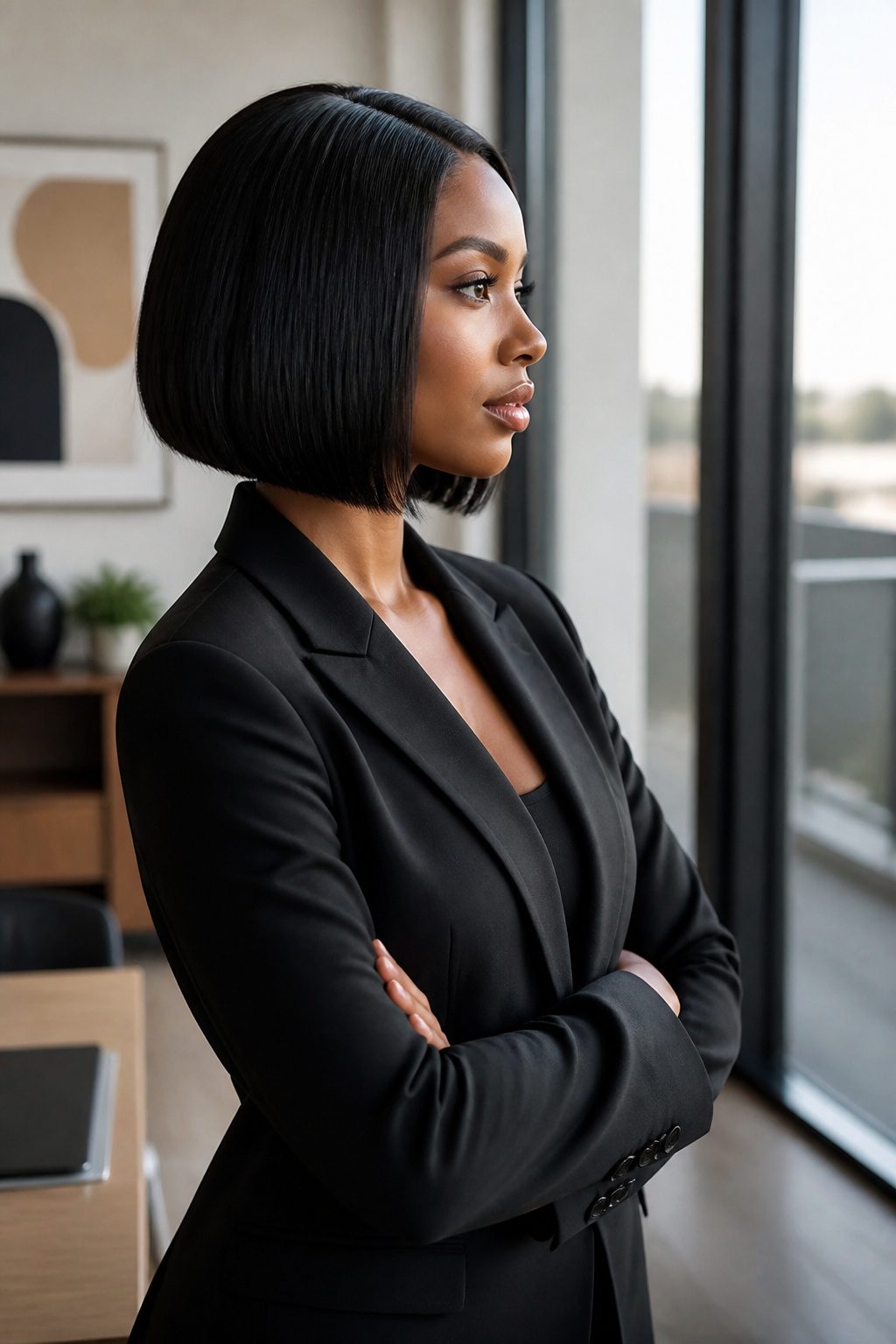
A chic bob earns its keep through restraint, not effort. The cut sits between jaw and collarbone with a clean perimeter and minimal layering, which keeps the silhouette sharp even as it grows out.
What separates this from a bob that merely looks current is proportion: the line of the cut relates directly to the wearer’s neck length and shoulder width, not to whatever TikTok declared last month.
Maintenance is where most bobs lose their polish. The chic version demands a trim every six to eight weeks, which sounds demanding until you realize the style does almost nothing else.
No daily heat styling required if the cut is precise; a round-brush blowout on wash day and a silk wrap at night preserve the line.
The mistake I see repeated is over-styling: adding curls or excessive product fights the very simplicity that makes the bob read as sophisticated.
Color should stay within two shades of the natural base. High contrast or heavy balayage shifts attention to the color processing rather than the architecture of the cut.
The chic bob is essentially a frame for the face, and frames are not supposed to announce themselves first.
22. Protective Bob
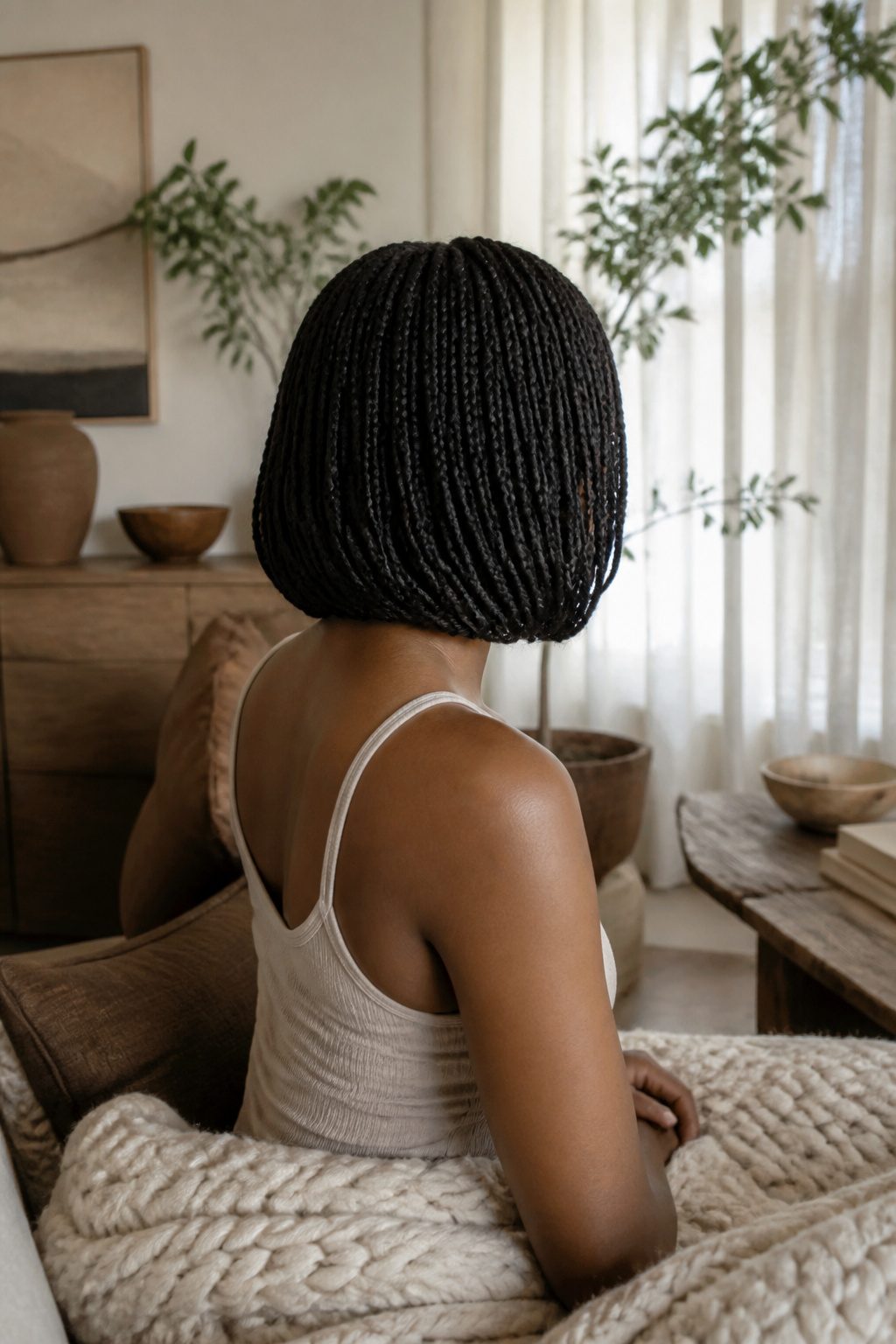
A bob that keeps your ends tucked away works harder than any weekly deep-conditioning mask. The less your tips brush against coats, car seats, and cotton pillowcases, the less breakage you fight.
I learned this the winter I wore a collarbone-length blunt cut with the bottom two inches rolled under daily; my retention doubled against the previous year when I wore my hair blown out and grazing my shoulders loose.
The shape matters more than the product. A rounded bob, one that curves under at the jaw or collarbone, creates a built-in shield.
The ends curve inward rather than splaying outward where they catch friction. A lob with weight left at the perimeter does the same job while giving you more styling room.
Blunt lines protect better than layers here. Layers expose more ends to the air, to your hands, to every scarf you pull on.
One solid line means one line to seal and one line to monitor for splits.
Growth from this approach shows up in length, but also in density. Hair that is not breaking at the same rate it grows starts to look thicker at the hemline rather than wispy.
The bob itself does not speed growth; it simply stops the loss that makes growth invisible.
Why Bobs Work on Natural Hair
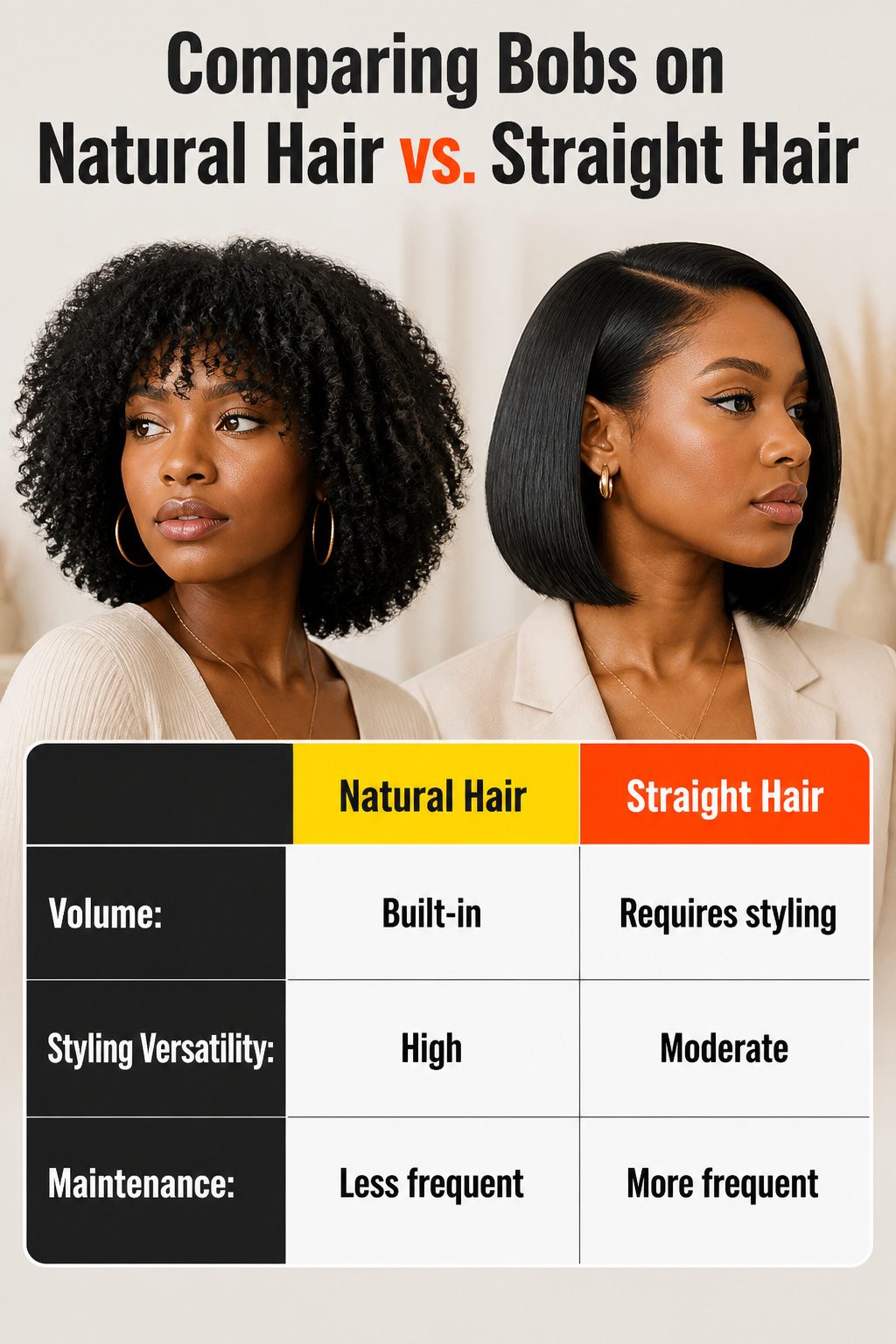
The natural texture of Black hair gives a bob built-in volume and dimension that finer hair types spend serious styling time trying to replicate.
Where someone with straight hair might need layers, teasing, or volumizing products to keep a chin-length cut from falling flat, the density and coil pattern of natural hair does that structural work automatically.
That same foundation lets one cut shift across radically different looks without touching the scissors again.
The bob can stay sleek and silk-pressed for a Monday meeting, then spring back into a curly silhouette with micro bangs by Thursday, or get slicked behind one ear for an evening out.
The ’90s box braids bob that resurfaced recently works the same underlying shape, just threaded through with extensions for a protective option.
The versatility is structural, not stylistic. The length frames the face at every variation, so the change happens in how you style it, not in what your stylist cuts.
For women building a wardrobe that has to work across occasions without buying separate pieces for each one, that efficiency matters. One bob, pressed or curled or braided, covers the week.
Maintenance That Fits a Schedule
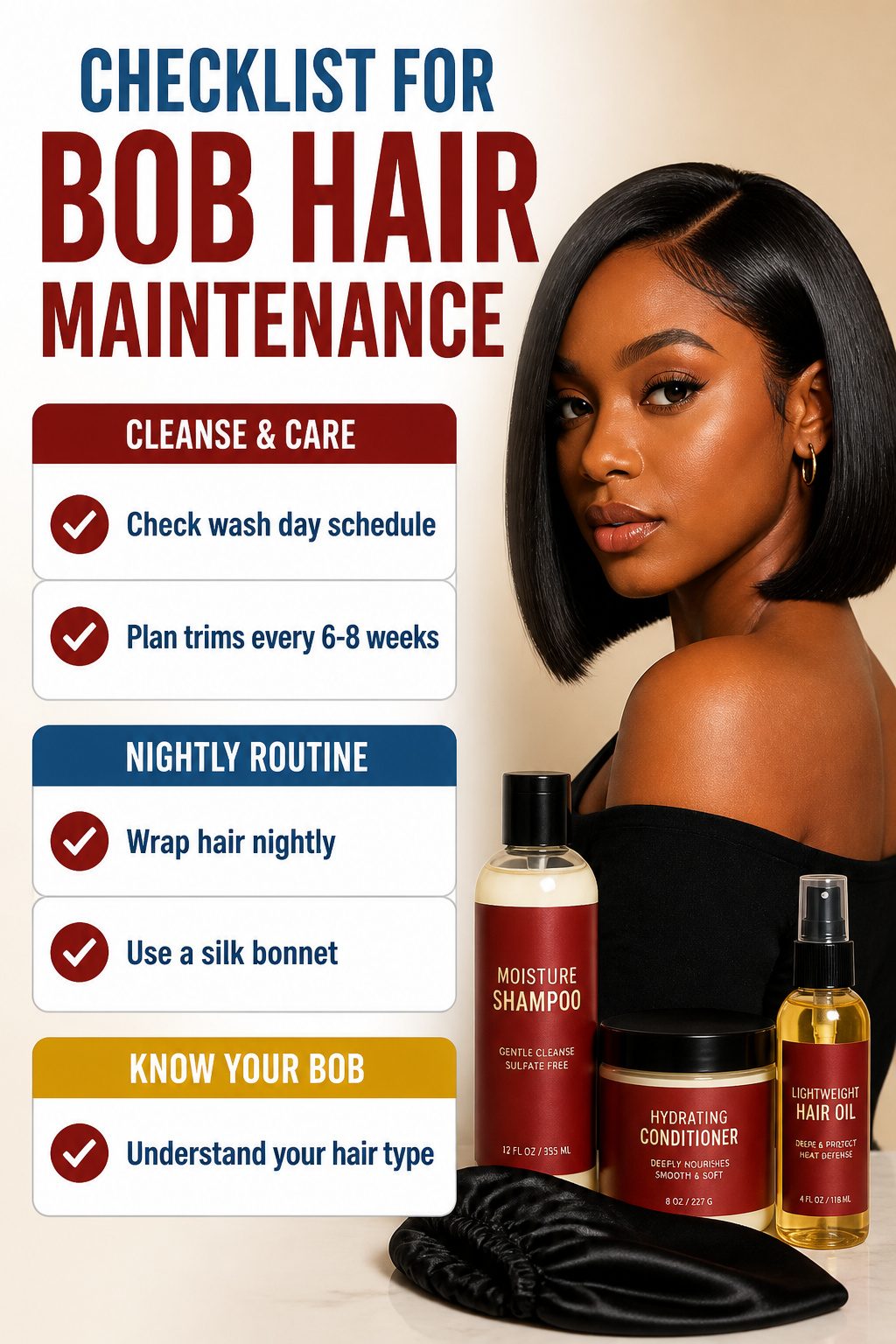
A bob only stays easy if the schedule actually fits your life. What convinced me, reading through a dozen of these style guides, is that wash day lands every 7 to 10 days for most Black women wearing a bob.
Stretch it further and product buildup fights the shape; wash too often and the cut loses its intended fall.
Trims matter more on a bob than on longer styles. The perimeter shows every quarter-inch of growth, so plan a trim at 6 to 8 weeks to keep the line clean.
At home, a nightly routine of wrapping or a silk bonnet takes maybe three minutes. That is the real measure of easy: not zero effort, but a routine shorter than the time spent choosing an outfit.
The mistake is treating all bobs the same. A silk press lob needs that bonnet; a textured bob with more movement forgives a missed night.
Know which one you signed up for before you commit.
Celebrity Bobs to Bring to Your Stylist
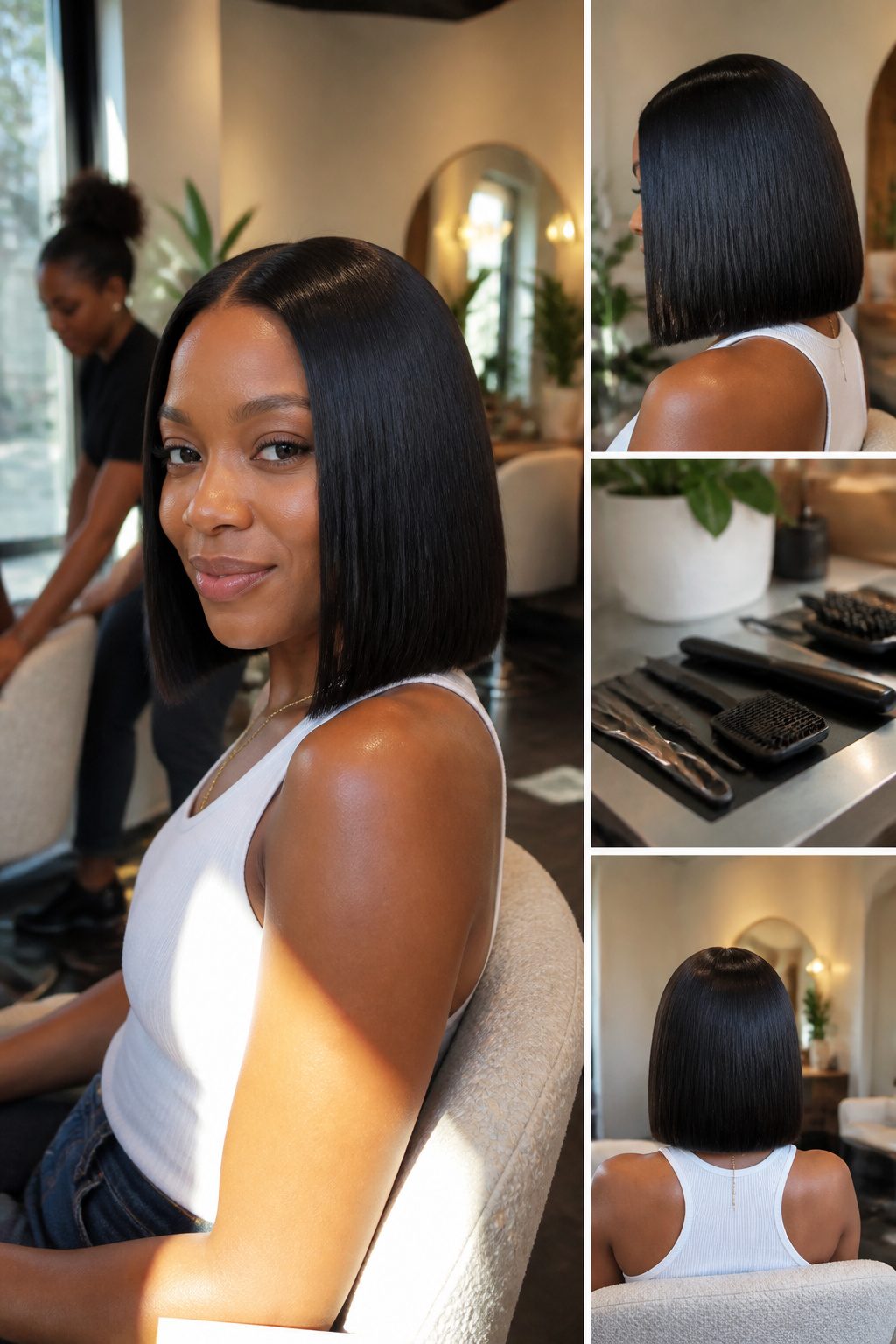
A photo of Ciara’s blunt, above-the-brow bangs is usually enough to settle the fringe debate in under thirty seconds.
The reference communicates exactly how high and how heavy the cut should sit, and most stylists know the Michelle Pfeiffer in Scarface comparison by heart.
For the rest of the consultation, these five names cover the main decisions:
- Keke Palmer’s classic blunt cut shows what happens when the perimeter is kept dead straight with no layers. Ask for this when you want density at the bottom and a shape that does not rely on styling to look finished.
- Jordan Chiles’s silk press lob sits on the longer side of bob territory, but the slight bend at the ends keeps it from reading as simply long hair. The reference is useful for explaining that you want movement without full curl, and that the press should still read as a bob, not a blowout.
- Tyla’s braided part works for conversations about how the hair is directed and controlled at the root. The detail to point out is the precise, clean division; the braid itself is secondary to the geometry it creates against the scalp.
- Halle Berry’s tousled wave is the right counterexample when a stylist starts pushing too much uniformity. The texture is intentional and irregular, which communicates that you want the cut to look lived-in, not helmeted.
Frequently Asked Questions
What are the best bob hairstyles for black women?
The best bob hairstyles for black women include blunt bangs, sleek swirls with a high crown curl, Old Hollywood glam with uniform spiral curls, silk press lobs with a slight end bend, slicked-side asymmetry, sharp and fiery blunt cuts in reddish brown, layered ends with choppy jawline framing, roller bangs with a root-to-forehead spiral, braided parts with two cornrows, tousled waves built with a large-barrel wand, subtle texture that stays straight at the root, well-rounded 1960s-inspired curves, micro bangs with a wind-flipped finish, centered staple lobs with rounded ends, faux bowed bobs from Victorian twists, braided lobs with micro braids, highlighted waves with chunky half-inch to one-inch panels, split personality styles with one sleek side and one curled side, deep side parts shifted two to three inches off center, and tucked-in faux bobs pinned at the nape.
How do I maintain a bob hairstyle?
Maintenance depends on the specific cut. Blunt bangs need refreshing every three weeks since growth shows immediately on short fringe.
Sleek styles require edge control gel or styling wax worked through dry hair, not wet, so the hold stays on the surface. Roller sets need a full cool-down before unpinning so the cuticle seals the shape.
Silk press lobs need the base fully smooth before any end bend, since leftover texture fights the clean line.
For braided lobs, ask your braider to taper the last inch or two to reduce root tension over six to eight weeks.
Can I create a faux bob?
Yes. One method curls and pins the ends under to simulate a bob without cutting, which works for Old Hollywood glam styles.
Another folds longer strands upward and inward at the nape, held with two or three large flat hairpins slid horizontally where the fold meets the skull.
The bowed bob technique from Wiederhoeft’s spring/summer 2026 show uses Victorian-era twists coiled against the scalp and pinned into a sculptural roll, with no scissors involved.
The tucked-in version needs enough length to actually fold and hide the remaining hair against the neck.