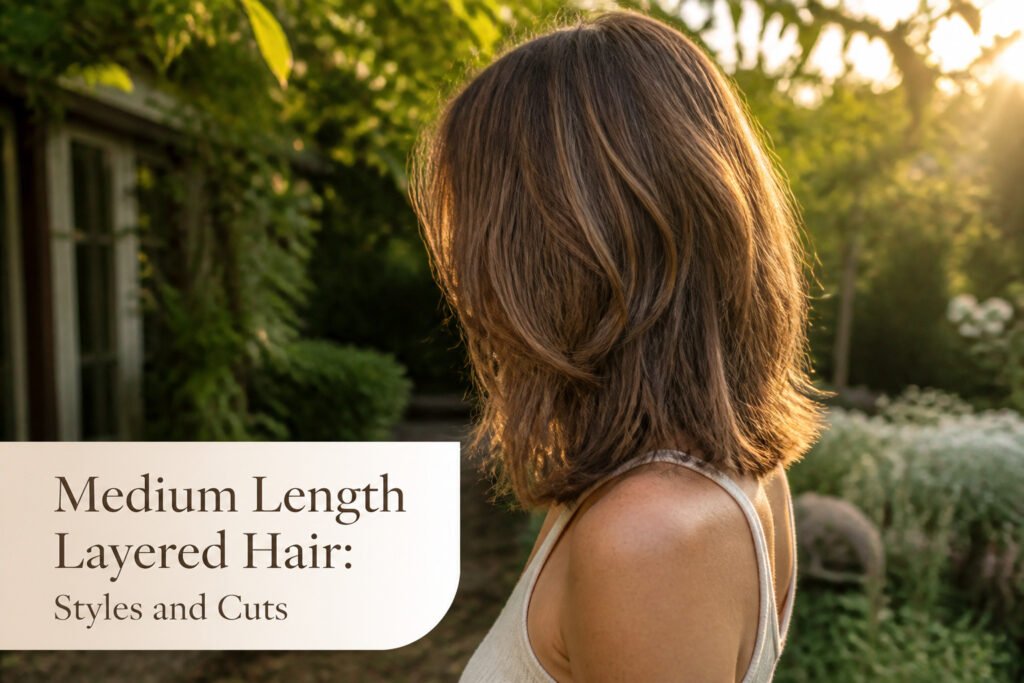
Medium length layered hair sits at the shoulder, long enough to pull back but short enough to hold its shape through humid afternoons. The cut only works, though, if the layering is placed where your texture and face shape actually need it: a lob that reads polished when blown out and barely-there when air dried, or a wolf cut that collapses into a grown-out bob if the crown won’t hold volume. The difference between a cut that lasts six weeks and one that fails by week two is whether your stylist checked the layers dry, parted where you actually wear it.
The Lob

A lob that skims the shoulders sits right where medium length layered hair becomes most useful: long enough to pull back, short enough to hold shape through humid afternoons. The cut lands somewhere between collarbone and shoulder, and the layering changes everything about how it behaves.
Blunt edges give the lob a strong silhouette that reads as thicker and healthier, especially on fine hair. The hair falls straight and deliberate, almost architectural. Add layers, and the same length loosens up; the ends move, the shape softens, and straight or wavy texture both find their footing without much intervention. I have watched this cut shift from polished to barely-there with nothing more than a change in part or a quick pass with a straightener.
The soft-structured style is a long bob that hits around the collarbone, but instead of sharp, blunt ends, the edges are slightly softened and curved. It keeps some structure so it doesn’t look messy, but the ends have a bit more movement so the hair naturally falls into place.
— Glamour
That softened edge is what makes the lob wearable past the first week out of the salon. The structure stays, the precision goes, and the hair does more of the work on its own.
Wolf Cut

The wolf cut lands right where a shag and a mullet overlap, and on medium length layered hair it keeps enough length to feel wearable without losing the attitude. Volume sits highest at the crown, where shorter layers stack up and push the hair outward, while the ends stay longer and looser. Wispy bangs frame the face and break up the weight line so the whole thing reads as intentional texture rather than grown-out shape.
This cut flatters wavy or curly hair most naturally. The built-in layers let those textures spring up where they should and lie flatter where they should, giving you that undone, rock-chic finish without much styling work. Straight hair can wear it too, but you’ll need to build the texture in: a dry texture spray worked section by section gives the effect of backcombing without the damage, and brushing out at the end of the day keeps it from going flat. The crown volume is the whole point; if your hair falls limp there, the silhouette collapses into something closer to a grown-out bob.
Face shape matters less than you’d think. The wispy bangs soften a strong jaw, and the vertical lift at the crown adds length to rounder faces. What actually disqualifies someone is fine hair that won’t hold the structure, or a reluctance to visit a salon for the initial cut. This is not a shape you freehand at home.
Textured Layers

Textured layers give medium length hair the movement that blunt cuts fight against. A stylist builds these by cutting into the ends with a point-cutting technique rather than slicing straight across, which removes bulk while leaving the length intact. The result is hair that falls in soft separation instead of a solid block, and that separation is what catches light and creates the dimension that makes layers read as fuller than they are.
The daily styling is where the cut proves itself or doesn’t. On my own mornings, air-dried waves take about four minutes of hands-off time and hold the texture through the day. A blow-dry changes the finish entirely: the layers stack and lift at the crown, then curve under in a way that reads polished without looking helmet-stiff. The same cut handles both because the internal texture gives the hair something to grip as it sets. Finer hair gets the visible benefit here, since the point-cut ends don’t weigh down; thicker hair loses the pyramid shape that straight-across layering can build. Between washes, a texture spray at the ends revives the separation without starting over.
Butterfly Cut

The butterfly cut builds its shape from two distinct lengths working against each other. Shorter layers cluster around the face while longer ones fall toward the back, and that gap between them creates the spread that gives the style its name. Where standard layering trims evenly through the whole head, this cut keeps the face-framing section deliberately disconnected, so the hair opens outward like wings in motion rather than falling in a single line.
That separation is what produces the volume. The shorter front pieces lift away from the cheeks and jaw, drawing attention upward, while the back maintains the visual weight of longer hair. For medium length layered hair, the effect is fuller than a uniform layer cut without reading as two different haircuts stitched together. The longer back layer still reads as your length; the shorter front layer does the shaping work.
The cut suits anyone who wants face-framing that actually moves rather than sitting flat against the skin. Ask your stylist to keep the shortest front layer no higher than cheekbone level if you pull your hair back often; anything shorter becomes a separate bang you have to style around. The back layer should fall at least four inches below to keep the contrast clean.
Blunt Shoulder Cut

A blunt shoulder cut lives on straight lines, not feathered ones. The hair is cut straight across at the back for a bold, strong shape that reads as deliberate rather than soft. That flatters fine hair especially, since blunt ends make strands look thicker and healthier than they are.
The tension with layered hair is real. This cut keeps layering minimal by design, worn sleek so the blunt edge stays the whole point. Straighteners do the work, and heat protection matters up to 220°C if you are working with fine hair that dries out fast.
When to add even minimal layers? Only where the face needs breaking up. Subtle face-framing pieces around the cheekbone can keep the look from turning helmet-like, but the back stays one clean line. Hidden texture underneath helps the hair move without disturbing that straight-across silhouette. The choice is blunt with a whisper of softness, or blunt all the way through.
Shaggy Layers

Shaggy layers live in the space between polished and slept-on. The cut itself uses soft blended layers that melt together rather than sitting in distinct steps, which gives medium length hair that relaxed, grown-out energy even fresh from the salon. Styling is where the mood gets set: a messy blow dry, working in sections with the dryer angled down and fingers or a brush creating a slight flick at the ends, produces the cool, undone finish that defines the look.
The practical difference from textured layers comes down to intent and result. Textured layers are cut to create separation and dimension, piece-y definition that helps waves clump or gives finer hair visible lift at each tier. Shaggy layers want the opposite: they aim for a single, cohesive shape that moves as one. Where textured layers might leave you counting the distinct pieces, shaggy layers should read as one soft cloud with movement at the perimeter. If your morning routine leans toward ten minutes and a prayer, shaggy layers forgive more readily; textured layers reward the extra effort with deliberate structure.
Modern Mullet

The modern mullet keeps the same short-front, long-back geometry that made it notorious in the 1980s, but the execution has softened dramatically. Where the original stacked vertical volume with stark contrast, today’s version blends the transition so the shape reads as subtle edge rather than statement. The short layers at the front frame the face and add lift; the longer layers at the back keep length and movement without the party-in-the-back bluntness.
This shift makes it wearable for medium length layered hair in ways the original never was. The blending matters more than the length ratio itself, and the result suits a wider range of textures than the teased, sprayed version ever could. A volumizing mist at the roots before blow-drying gives the front layers the lift they need without recreating the 1980s silhouette. The style now reads editorial rather than costume, which is why it keeps resurfacing on shoulders rather than just on nostalgia runways.
Asymmetrical Bob

An asymmetrical bob keeps one side longer than the other, and that imbalance does more than look modern. It shifts where the eye lands, so the shorter side opens up the jawline while the longer sweep drags the gaze downward, elongating the neck in a way a symmetrical cut rarely manages. Helen Reavey, the trichologist and stylist behind Act+Acre, notes that tailoring a lob with a side part or slight angle can soften angular features or add length to rounder ones. The same principle applies here, but more dramatically.
The styling routine splits in two. The short side needs heat or a round-brush pass to sit flat and intentional; any puff reads as grown-out, not designed. The longer side gives you more room to wave, tuck, or leave slept-on, since the weight carries the shape even when texture goes messy. Sleek finishes read sharp and editorial; rougher texture turns the same cut into something softer, almost accidental. Either works, but the cut demands a choice every morning. Frizz is not forgiving on a line this deliberate, so damp hair needs a leave-in conditioning spray before any heat goes near it, or the asymmetry collapses into fuzz.
Beach Waves

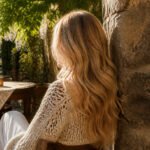
Beach waves are a styling approach, not a cut, and that distinction matters when you’re deciding what to ask for at the salon. The loose, soft waves add volume and texture that enhance whatever layers are already there, bringing out dimension in the color and giving the whole style a natural, lived-in finish.
What convinced me, reading through the guides on this, is how deliberately the waves work with the cuts listed elsewhere. Textured layers in particular fall more naturally into gentle separation when you wave them, and the combination balances thicker hair while giving finer hair a fuller, lifted appearance. The beach wave finish is what makes that movement visible rather than just structural.
For the style itself, a lightweight nourishing hair oil absorbs instantly and leaves the hair silky and glossy, which is the particular glow beach waves are known for. The same oil also shields against sun damage, making the summer connection more than just a name. The real trick is timing the wave: too tight and it competes with the layers; too loose and the texture disappears. A 1.25-inch curling wand, wrapping away from the face and leaving the ends out, usually hits the right looseness for shoulder-length hair.
Medium Length Side Part

A side part on medium length layered hair does more than shift where the hair falls. The part line itself creates lift at the roots by redirecting how the weight distributes across the scalp, and when the cut already has layers, that lift travels through the lengths instead of flattening out by midday. The deeper the part, the more dramatic the asymmetry: one side carries the visual weight while the other opens up the face, which is why this reads as a deliberate style rather than just hair pushed aside.
Celebrity stylist Kiley Fitzgerald notes that shoulder-length cuts work on nearly every hair type and texture, and the side part is where that versatility shows. For straight or fine hair, the part gives you a place to build volume at the crown without teasing that collapses by lunch. For textured or curly hair, the asymmetry lets the curls spring into their natural pattern on the lighter side while the heavier side stays controlled. Gregga Prothero, who founded Gregga LA salon, points out that shorter angles around the face draw focus to the cheekbones; paired with a side part, that framing becomes directional, sculpting the face instead of just surrounding it.
The maintenance is minimal if the cut is right. A blow-dry with the part set while the hair is still damp holds the shape, or you can let it air-dry and simply rake the part in with your fingers. The real trick is having your stylist cut the layers to move with the part, not against it: layers that fall from a center part will fight a side shift and look bulky on one side. Ask for the layering to be checked dry, parted where you actually wear it, so the balance holds once you leave the chair.
Face Shape Matching

A mirror and a phone are the only tools you need to find your face shape. Pull your hair back, look straight on, and note which points are widest: forehead, cheekbones, or jaw. If length clearly exceeds width, you have an elongated face that needs horizontal volume; if width matches or exceeds length, roundness is the shape to work with.
For longer faces, shorter layers and angles do the balancing. A lob that hits at or just below the collarbone with a slight wave or side part adds width across the middle. Helen Reavey, the trichologist behind Act+Acre, points out that this vintage-inspired cut softens angular features by breaking up vertical lines. I have seen this cut go wrong when the layers start too low; the face keeps looking stretched. Ask your stylist to begin face-framing pieces no lower than the chin.
Rounder faces need the opposite: longer layers that pull the eye downward. The butterfly cut works here because its shorter layers sit around the face while longer ones fall toward the back, creating the illusion of length. Without that back length, the shorter pieces alone would only emphasize width. The sleek, straight lob Reavey mentions elongates rounder shapes for the same reason; the clean vertical line counters softness.
Shoulder-length hair in general adapts to most face shapes because the length itself is neutral. The deciding factor is where the layering begins and whether the perimeter is textured or blunt.
Daily Maintenance

Shine spray belongs in the bathroom of anyone with a blunt, heavy line and no texture, since that polished structure lives or dies by reflection. I learned this the hard way after months of wondering why my own blunt cut looked flat in photos: the matte texturizers I loved for piecey styles were eating the light that a blunt edge needs to read as thick and deliberate. Riawna Capri at Nine Zero One in LA puts it plainly: trade the matte stuff for shine spray if you want that sleek, structured finish to hold up past noon.
Heat protection sits earlier in the routine, not later. For fine hair especially, a spray rated to 220°C goes on before straighteners touch a strand. Without it, the blunt shoulder cut that is supposed to make hair look thicker and healthier does the opposite: heat opens the cuticle on already-delicate hair, and the breakage shows at the ends first, ruining the clean line you paid for.
Texture spray and shine spray are not interchangeable tools. The polished lob and the blunt shoulder cut want gloss and restraint; shaggier styles might still want dry texture spray for separation. Knowing which finish your cut is built for saves you from buying both and using the wrong one out of habit.
What Versatility Actually Means

Medium length layered hair earns its reputation as the most forgiving length to live with, not because it works for everyone in the same way, but because it can be cut to work for nearly anyone. The ten cuts I looked at all sit in that shoulder-skimming zone, yet they handle different hair structures by changing where the layers fall and how heavy they stay at the ends.
For straight or fine hair, the right layering removes enough weight that the roots can actually hold lift. A blunt shoulder cut with hidden texture inside, or a lob that reads long in front and shorter in back, gives the illusion of density without requiring daily heat styling. On textured or thick hair, the same length behaves differently: interior thinning and more aggressive layering let curls spring up tighter and keep the overall shape from turning into a triangle. The wolf cut and modern mullet both use this, pushing volume toward the crown while tapering below.
Face shape matters in where those layers start. Shorter angles around the face draw attention to cheekbones, which helps elongate longer faces. Rounder faces need the opposite strategy: longer layers, maybe a side bang, anything that builds vertical lines rather than reinforcing width. The asymmetrical bob and medium length side part both create that asymmetry deliberately.
What makes the length versatile day to day is styling range. The same cut can be blown out smooth, air-dried for texture, or waved with a flat iron for something beachier. A lob specifically reads long or short depending on how you style it, which is why it survives trend cycles when shorter or longer cuts fade.
Frequently Asked Questions
What are the best shoulder-length hairstyles?
The lob, wolf cut, textured layers, butterfly cut, blunt shoulder cut, shaggy layers, modern mullet, and asymmetrical bob all rank among the most wearable options for 2026. Each shifts volume and layering to suit different textures, from fine hair that needs blunt edges to look thicker, to curls that spring up when interior weight is removed. The right choice depends on how much daily styling time you want to commit and whether you prefer polished or undone finishes.
How do I style medium length layered hair?
Match your product to the cut’s intended finish. Blunt and polished styles need shine spray to keep light reflecting off that clean edge; textured or shaggy cuts want dry texture spray for separation and movement. Heat protection rated to 220°C goes on before any hot tool touches fine hair, since damage breaks the ends and ruins the line you paid for. A 1.25-inch curling wand, wrapping away from the face and leaving ends out, hits the right looseness for beach waves on shoulder-length hair.
Are shoulder-length haircuts suitable for all hair types?
Yes. Straight or fine hair gains density through blunt ends and hidden interior texture, while curls and thicker hair respond to more aggressive layering and thinning that lets them spring up without turning triangular. The length itself is neutral; what changes is where the layers start and how heavy the ends stay. A stylist simply adjusts the interior structure to the hair’s natural behavior rather than fighting it.