The right fringe depends on how much daily styling you will actually do, not how much you imagine yourself doing. Some of these cuts need a round brush and ten minutes every morning; others air-dry into something presentable because the irregular lengths were built that way on purpose. Curtain bangs earned their staying power by being the lowest-commitment option, forgiving enough to push aside on a bad hair day and grown out without the awkward blunt line heavier bangs leave behind.
1. Curtain Bangs

Curtain bangs earned their reputation through the center part and outward sweep that frames the face instead of covering it, which is exactly why they work on nearly every face shape. The feathered cut creates a mussed-up, cool-girl look that feels lived-in from day one.
The styling routine is straightforward: blow them out curling under toward the face, then part and blow each side outward. A round brush handles this easily. What makes them the lowest-commitment option on any list of different types of bangs is how forgiving they are at every stage. You can push them to the side on a bad hair day, and growing them out happens without the awkward blunt line that heavier bangs leave behind. Made famous by Brigitte Bardot in the ’70s, they still carry that retro charm while fitting both casual mornings and dressed-up evenings.
2. Blunt Bangs

Blunt bangs are cut straight across from the outside corner of each eye, a horizontal line that spans the full forehead. That severity demands commitment: plan on a trim every month or two to keep the edge sharp, and count on daily flat iron work to maintain the sleek finish these bangs need to read intentional rather than overgrown.
The bold line can pay off on longer face shapes, where it adds width and draws attention to the eyes. Rounder or shorter faces tend to get visually shortened by that heavy horizontal, so the consultation with your stylist matters more here than with softer fringe styles. Ask specifically whether the cut will accentuate your face shape or compress it.
Stylist Dhiran Mistry notes you can soften the effect slightly by cutting into the section with a smaller amount of hair, though at that point you are drifting toward wispy territory. For true blunt bangs, the drama is the point. Constance Wu has worn the look with that modern edge; paired with a bob or pixie, the style reads sleek and timeless if you have the patience for the ironing and the trim schedule.
3. Side-Swept Bangs

The diagonal sweep of side-swept bangs cuts across the forehead at an angle that breaks up roundness and adds the illusion of length, which makes them the first stop for anyone whose face needs asymmetry rather than more width. The longest pieces should hit the tops of your cheekbones, where they slim the roundest part of the face.
Styling starts with a round barrel brush and a blow-dryer. Dry from left to right, following the shape of your head, and finish with a flexible hold hairspray to lock in the smoothness. A Wet Brush Shine Enhancer will get you that polished finish if your hair tends to frizz.
What sold me on this style, reading through the recommendations, is how forgiving the grow-out is. The longer, softer bits blend into the rest of your hair without that awkward in-between phase that blunt bangs hit. You can wear them full across the forehead for a vintage look, then sweep them aside as they lengthen. For rounder faces, ask for a wider bang with extra length; for curly hair, keep weight in them so they don’t spring up shorter than you planned.
4. Wispy Bangs

Wispy bangs carry about half the density of a blunt fringe, with feathered ends that barely graze the brows. That lighter weight makes them the safest first bangs for anyone nervous about commitment: push them aside on a lazy morning and they blend into the rest of your hair without a pinned-down line across your forehead. A round face benefits more than most here, since the soft, broken edge adds vertical length rather than the horizontal emphasis you’d get from a thick, straight-across cut.
The maintenance stays manageable if you keep a detangling comb at hand and dry them flat on low heat. Montoya, who works with these textures regularly, finishes with Ouidad Clean Sweep Dry Shampoo to keep the strands from clinging to skin as body heat builds through the day. You’ll still need trims to hold the brow-skimming length, but the grow-out is forgiving; the feathered ends disappear into layers more gracefully than a blunt cut’s solid line would.
5. Curly Bangs

Curly bangs are typically cut longer than straight-across fringe to account for curl shrinkage, which can pull the hair up a full inch or more as it dries. A stylist who works with texture regularly will leave extra length across the forehead so the final shape lands where you want it, not above your eyebrows.
Hair texture matters here more than with almost any other bang style. Tighter coil patterns shrink the most and need the most length built in; looser waves can get away with less insurance. The cut itself is usually blunt, but the proportions have to be adjusted for your specific curl pattern, and a stylist who does not routinely shape curly hair can leave you with an odd, uneven silhouette.
Maintenance is where the work shows up. A dime-sized amount of curl cream works for fine, thin curls; thicker, coarser hair needs closer to a quarter-sized amount. Smooth it in below the roots so you do not flatten the volume at the crown. A diffuser helps set the shape without frizz, and regular trims keep the ends from splitting and disrupting the curl pattern. A weekly hair mask keeps the moisture in, which is what keeps the bounce.
6. Layered Bangs

Layered bangs blend gradually into the rest of your hair instead of stopping at one hard line, which makes them the most forgiving entry point if you’ve never committed to bangs before. The feathered, gradual blend means there’s practically no awkward grow-out phase, since the shortest pieces simply become face-framing layers as they lengthen. You can part them down the middle, wear them straight, or sweep them to either side without fighting a blunt edge.
The softness works across nearly every face shape, but it particularly benefits round and square faces that need angles broken up rather than emphasized. A hard blunt line can look almost too perfect, especially on wigs or textured hair; the feathery cut adds visual depth that reads as natural movement. For styling, a round brush helps keep the layers behaving, with a larger diameter for longer pieces and a smaller one if your bangs sit above the brow.
7. Choppy Bangs

Choppy bangs trade the solid wall of a blunt cut for piece-y, irregular ends cut at varying lengths. That texture adds definition without the heaviness, and the slightly uneven edge reads as intentional rather than sloppy, which makes them forgiving if your hairline is rounder or your morning styling routine is minimal.
The cut works best when there is already some natural texture to support the separation. On very fine, poker-straight hair with zero natural movement, those same choppy ends can look sparse instead of edgy. Stylists typically use a point-cutting technique to create that chunkier finish, and the bangs are usually styled straight to emphasize the layered length. A heat protectant and a quick pass with a hair straightener do the job.
For styling products, reach for something that encourages separation rather than polish. The goal is a soft, undone silhouette that pairs with messy buns, tousled waves, or a shaggy bob without looking like you tried too hard. Choppy bangs can sit above or below the brow, and they work with both short and long hairstyles, so the length is flexible. What matters is keeping the edge textured enough to avoid a accidental mullet territory when the rest of the cut is layered.
8. Micro Bangs

Micro bangs sit one to two inches from the tip of your forehead, landing well above the eyebrow and making even baby bangs look generous. The cut is typically choppy and piece-y rather than blunt, which keeps the line from reading too severe against so much exposed face.
The commitment is steep. These follow the hairline from temple to temple, so there is no sweeping them aside when the mood shifts; you are working with what is essentially a permanent statement until they grow. Sources describe the grow-out as months of looking like a home trim gone wrong before you reach a standard bang length again.
The retro reference is deliberate. This length channels 1920s and 1960s fringe, the kind that frames the face with dramatic openness and puts your brows on full display. Oval and longer face shapes carry it best; the cut opens the face and emphasizes cheekbones, but on rounder or shorter structures the proportion can skew off.
Maintenance is daily. Washing them every morning is non-negotiable if you want them to lie flat, and frequent trims keep the intended shape from collapsing into something accidental. Cowlicks or an uneven hairline are genuine disqualifiers here; without a cooperative root pattern, you risk the scattered, sticking-up effect that reads as mistake rather than style.
9. Bottleneck Bangs

The bottleneck curve starts narrow at the center part and widens as it moves toward the temples, skimming past the eyes to land somewhere around the cheekbone. That hourglass shape is what makes these universally flattering across face shapes: the narrow center softens a wide forehead without hiding it completely, while the wider pieces below draw the eye outward and balance the jaw.
A middle part works best to keep the symmetry. Montoya recommends drying strands away from the face at a 90-degree angle with a round brush until smooth, then hitting the cool shot on your dryer to set the curve. Skip that cool-air step and the bangs fall flat against the skin instead of holding their frame.
For texture, a salt spray like EIMI Ocean Spritz gives straight or wavy hair the tousled movement that keeps the style from looking too done. Bronde highlights layered underneath add dimension that helps the bottleneck shape read even when the hair isn’t freshly styled.
10. Baby Bangs

Baby bangs fall just a couple inches from the forehead, landing above the eyebrows with a blunt or choppy edge that stays flat against the skin. The look carries serious editorial weight, the kind of cut that opens up the face and puts cheekbones and brows on full display. That exposure is exactly what makes the style so polarizing.
The maintenance commitment runs high. These bangs need washing daily to keep them cooperating, and frequent trimming is non-negotiable since any growth immediately breaks the precise line. Cowlicks or an uneven hairline make the cut risky, the kind of risk that ends with pieces sticking up at odd angles. Growing them out is its own project, a few months of awkward in-between length before they settle into a standard fringe.
Face shape matters here in conflicting ways. The cut can elongate rounder faces by opening up the center, but the exposed brow line also demands enough vertical real estate to balance the proportions. Oval and longer face shapes tend to carry it more naturally. If your forehead is on the shorter side, this probably is not the bang for you.
11. French Bangs

French bangs carry a specific geometry that sets them apart from the blunt, uniform cuts most of us grew up with. The center sits short, grazing the brow bone, while the lengths graduate outward toward the cheekbones, creating a soft curve that frames the face rather than boxing it in. That graduated shape is what gives the style its Parisian, slept-in quality; the edges are feathered, not blunt, so the bangs read as an extension of the haircut rather than a separate piece pasted on top.
The architecture flatters wider foreheads because the longer outer pieces draw the eye sideways, visually breaking up horizontal width. Where straight-across bangs can turn a broad forehead into a solid wall, the French version creates diagonal lines that narrow the face. Styling for that graduated shape means working with the natural fall, not against it. A slight part in the center, left a little loose rather than forced into perfect symmetry, keeps the look from going too precious. The texture should read shaggy, almost grown-out, like the reference points the style still draws from: the Jane Birkin fringe, the Jeanne Damas look, the Louise Follain vibe of hair that looks like it was cut well and then left alone.
12. Shaggy Bangs

Shaggy bangs carry the same textured, lived-in quality that makes a shag haircut work: irregular lengths that read as tousled rather than messy. A stylist builds them with point-cutting, snipping into the ends at an angle so no two pieces fall at exactly the same line. That irregularity is what lets them air-dry into something presentable instead of demanding a round brush and ten minutes of attention.
The density shifts across the section, heavier through the center and tapering toward the temples so the fringe doesn’t form a solid wall across your forehead. Bottleneck shaping, shorter in the middle and longer at the sides, pairs naturally with this cut if you want the full retro reference. For styling, a texturizing spray scrunched into damp or dry hair keeps the separation between pieces without crisping them into helmet territory. The whole thing is forgiving: grow-out blends in, a bad night of sleep looks intentional, and the only hair type that struggles is very fine, straight hair with zero natural body, where the choppy ends can read sparse rather than deliberate.
13. Braided Bangs

Braided bangs give you the look without the commitment of a cut. You can braid your own fringe into a small plait along the hairline, or take longer braids and loop them forward so they hang like bangs over your forehead. Cornrows work the same way for natural hair, sitting sleek and protective right at the front. Some people add chunky beads, though if you do, ask your stylist to keep the ends snipped above your lashes so the weight does not swing into your eyesight.
The style lasts exactly as long as you want it to. Wear it to a festival, take it out for work Monday. That reversibility is the whole point: you get to test whether bangs actually suit your face before any scissors touch your hair. A headwrap helps the transition, letting a few braided ends peek out while the rest stays tucked and tidy.
14. Feathered Bangs
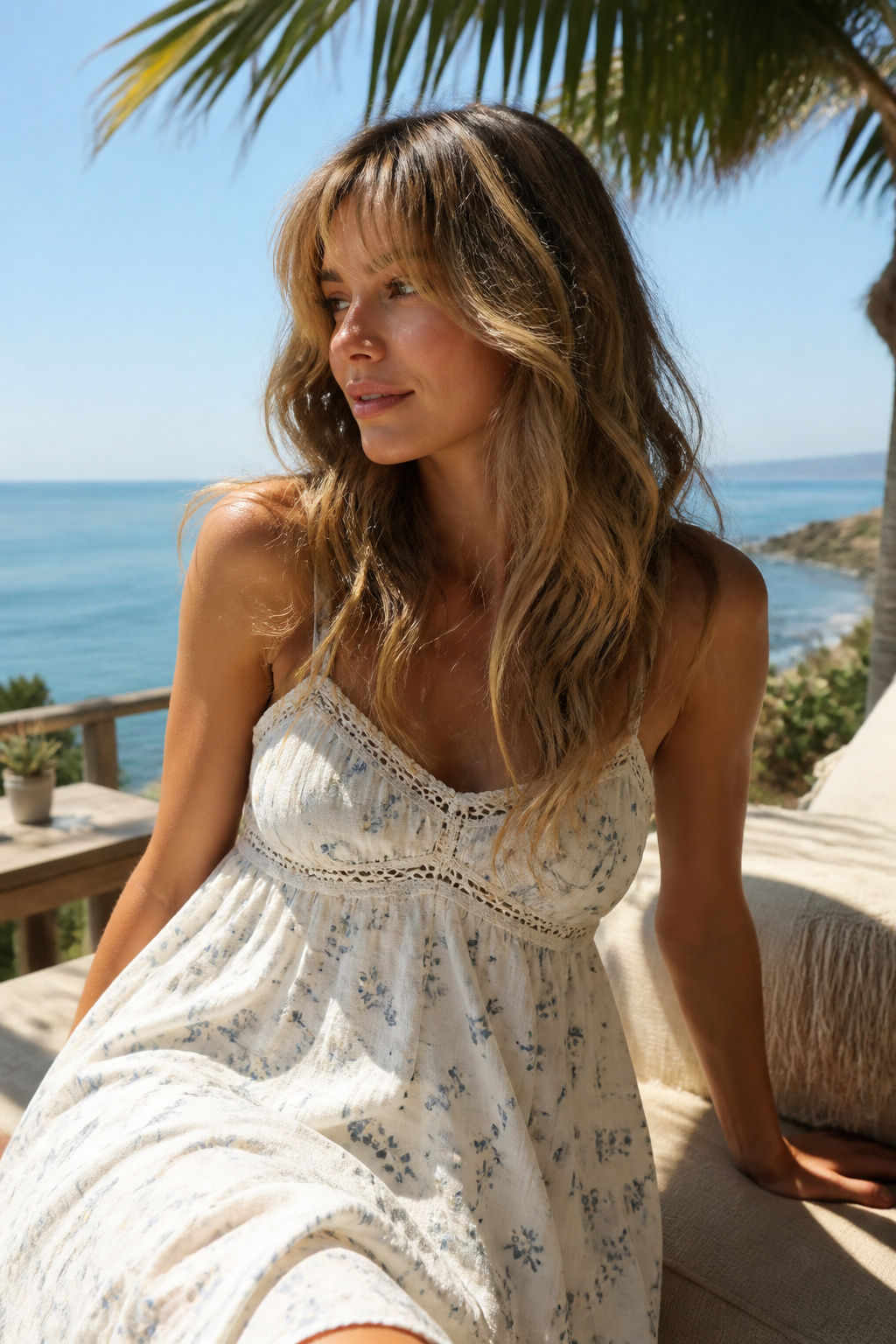
Feathered bangs build their shape from lots of layers and tapered cutting, so the fringe gradually melts into the face frame rather than stopping at a hard line. The 1970s reference point still holds: this is the Farrah Fawcett effect, center-weighted with longer sides that curve under and blend outward. A round brush and blow-dryer are non-negotiable for that curved-under shape; you roll the brush under at the ends while drying, which sets the feathered arc that distinguishes this from straight-across styles. Oval and round faces benefit most here, since the softness keeps a round face from looking fuller and the width balances a longer oval. Finer hair works better than you might expect, because the wispy ends remove bulk rather than adding it. If your hair is thick, ask for a razor cut through the front section to take out weight before you start styling, or the round-brush step fights you the whole way.
15. V-Shaped Bangs

A sharp center point with longer sides falling away creates the inverted geometry that defines V-shaped bangs, an angular cut that lands closer to the alternative end of the spectrum than most fringe styles. The shape draws the eye to the forehead’s center and can add drama to long, layered hair where the point echoes the vertical line of the face.
The cutting geometry matters more here than with softer bangs styles. The point has to be deliberate, not a grow-out accident, and the sides need enough length to read as a V rather than a simple center part. Too short on the sides and the shape collapses into something closer to micro bangs with an awkward gap.
Facial proportions interact with this cut in fairly specific ways. The center point emphasizes forehead width and brings attention to the brow ridge, which reads as edgy on some face shapes and simply unbalanced on others. Longer faces tend to carry the vertical emphasis better; rounder faces can find the geometry fights against softer features rather than working with them. The sources note these pair particularly with long, layered locks where the bangs’ drama meets the hair’s movement, though that pairing also demands more styling commitment than a wash-and-go fringe.
16. Butterfly Bangs

Butterfly bangs sit somewhere between curtain and layered bangs, and the hybrid is worth knowing if you already like either of those but want more movement. The cut keeps the hair short through the center part and lengthens toward the sides, with the ends flipping outward in a wing-like sweep. That outward motion adds volume right at the cheekbones, which is the specific payoff of this shape.
Medium to thick hair carries the style best; fine hair tends to lose the flip and collapse inward. The density matters because the layers need enough body to hold that wing silhouette without looking wispy or disconnected from the rest of the cut. On round, square, or longer face shapes, the cheekbone volume helps break up vertical length and soften jaw corners in a way straight-across bangs rarely manage.
Styling is straightforward but not skip-it straightforward. A round brush and blow dryer directed outward at the tips will set the flip. Dry shampoo at the roots keeps the center from going flat by midday, which is the first place this cut shows neglect. The grow-out is forgiving; the layers blend into face-framing pieces rather than hitting an awkward blunt stage, so you can stretch trims longer than you would with classic curtain bangs.
17. Waterfall Bangs

Waterfall bangs soften the curtain shape into something that moves more like hair and less like architecture. The layers taper diagonally from shorter at the center to longer at the sides, cascading instead of sweeping in a clean line. That gradual blend means they grow out with less drama than stricter curtain bangs, needing fewer trims to stay intentional rather than shaggy.
The ’70s inspiration shows in how the pieces break apart. Where blunt or even curtain bangs hold a shape, waterfall bangs rely on separation between those varied lengths. A lightweight texturizing spray keeps the strands from clumping back together into a single heavy fringe. Round, square, and long faces all carry this style well because the angled layers draw the eye sideways, softening jawlines and foreheads without a rigid geometric frame.
If curtain bangs already work for you, this is the logical next step with more movement and less maintenance commitment. The key difference is that intentional unevenness: the ends vary in length on purpose, so the bangs never settle into one predictable line. That unpredictability is the whole point.
18. Asymmetrical Bangs

Asymmetrical bangs live in the space between a calculated choice and a happy accident. The cut is intentionally longer on one side, with the shorter edge typically landing somewhere around the brow while the longer sweep travels toward the cheekbone or jaw. That diagonal line does something a straight fringe cannot: it pulls the eye across the face on a slant, which breaks up roundness and softens angles without the full commitment of side-swept bangs.
The effect reads more artistic statement than everyday trim. I’ve watched stylists cut these with the head tilted, then level it and watch the imbalance settle into place. The drama scales with the gap between the two lengths. A half-inch difference whispers; two inches or more starts a conversation.
Maintenance is where the intentionality gets tested. These bangs grow out of their shape fast, since even growth undoes the designed imbalance. A trim every three to four weeks keeps the shorter side from creeping toward the longer, which would turn the look from avant-garde to merely overgrown. Blow-drying follows the head’s curve, sweeping in the direction the cut was built for; reversing it fights the architecture and usually wins by looking wrong. The style suits most textures and lengths, though the logistics of keeping that precise unevenness are worth discussing with whoever holds the scissors.
19. Pin-Up Bangs

Pin-up bangs carry that vintage rolled shape, the one that sits off the forehead in a rounded bumper rather than lying flat. The cut itself is blunt, almost one length straight across, but the styling does the real work: a round brush or pin curls build the volume that makes this style read as 1950s rather than simply short. That rounded silhouette is what separates it from the blunt bangs you see on most cuts today, which are worn straight and skim the skin.
The reference point is unmistakably Bettie Page, though the modern version keeps the edge by refusing to soften the line into feathering. What surprised me, reading through the technique notes, is how much this style favors fine or thin hair. The roll creates density where there isn’t much, whereas thick hair can fight the shape and end up looking helmeted.
Daily wearability is the trade. A modern blunt bang takes thirty seconds with a brush; this shape demands setting time, product, and the willingness to rebuild it each morning. The payoff is the look itself, which no other bang style replicates. If you will not style it, the blunt cut underneath sits heavy and odd against the face. Two ways to play this: commit to the morning routine, or treat pin-up bangs as an occasional style you set on longer blunt bangs for events rather than everyday wear. The second route wins if your mornings are already crowded.
20. Clip-In and Faux Bangs

The lowest-risk way to test any of the different types of bangs is to try them on a wig or clip-in piece before you ever pick up scissors on your own hair. Curtain bangs are the easiest starting point if you have never worn bangs, since they blend into most face shapes and forgive a slightly imperfect fit. Layered bangs on a wig also tend to look natural even if the placement is not exact. Blunt or choppy styles read bolder, which makes a trial run even more valuable: you can see whether the drama suits you without waiting through a grow-out period if it does not.
Clip-in bangs work the same way for a single day or a single event. They snap in and out, so you can wear them to work, wash them off at night, and decide over weeks whether the look is worth keeping. If you do trim a wig’s bangs yourself, cut in small sections. Length gone is length gone, and wigs do not grow back.
How Bangs Work With Your Face Shape

The right bangs do not just sit on your forehead; they redraw the proportions you see in the mirror every morning. I spent years asking stylists for blunt fringe before a salon visit in 2019 where someone finally held a comb vertically against my jaw and explained why the same cut flatters two faces differently.
Oval faces carry the most freedom and can wear blunt, wispy, curtain, or side-swept bangs without fighting natural proportions. Round faces gain length from side-swept or curtain bangs that break the horizontal width; avoid heavy straight-across fringe that emphasizes fullness. Square faces soften with wispy or layered texture rather than hard lines that mirror the jaw. Heart-shaped faces balance a wider forehead against a narrower chin through wispy fringe or blunt bangs that add weight below temple level. Long faces need thick or full bangs to shorten the vertical line, while diamond faces widen the forehead visually with side-swept or curtain styles that fill in the narrowest points.
| Face Shape | Bangs That Flatter | Styles to Avoid |
|---|---|---|
| Oval | Most styles | n/a |
| Round | Side-swept, curtain | Heavy blunt fringe |
| Square | Wispy, layered | Hard straight lines |
| Heart | Wispy, blunt | n/a |
| Long/Rectangular | Thick, full | n/a |
| Diamond | Side-swept, curtain | n/a |
Lifestyle matters alongside shape. Some bangs need trimming every two to three weeks; others grow out gracefully for months. Let your mirror and your calendar share the decision.
Trim Schedule and Styling Tools

Blunt bangs hit that awkward length where they start splitting apart right around the two-week mark, which is why most stylists book them on a 2–3 week trim cycle. Curtain bangs stretch much longer, usually 6–8 weeks, since the face-framing sweep forgives a little overgrowth. Curly bangs land at 8–10 weeks between trims, though the real risk there is frizz expanding the silhouette rather than length.
The tool you reach for should match the finish the bangs are built for. Curtain bangs need a round brush to build that outward curve. Blunt bangs want a flat iron to keep the line crisp. Curly bangs call for a diffuser, otherwise the curl pattern falls apart under direct airflow. Choppy bangs are the exception: texturizing scissors, not regular shears, are what keep the ends piecey rather than accidentally blunt.
| Bang type | Trim frequency | Essential tool |
|---|---|---|
| Blunt | 2–3 weeks | Flat iron |
| Curtain | 6–8 weeks | Round brush |
| Curly | 8–10 weeks | Diffuser |
| Choppy | 4–6 weeks | Texturizing scissors |
At-home trimming is where most people go wrong. The angle of the scissors, the tension of the section, even the way hair shrinks when dry: small errors compound fast. If you are between salon visits and the length is blocking your vision, trim less than you think, dry, and check from the front before taking another pass.
Commitment Level and Grow-Out Strategy

Layered bangs sit at the bottom of the commitment scale, and that is where most stylists quietly nudge first-timers. The feathered edges melt into whatever length you already have, so when they grow, they simply become longer layers. No line of demarcation, no emergency salon trip. Curtain bangs run a close second: parted near the center and cut to nose length, they are already doing the work of face-framing pieces. As they lengthen, the shift into full curtain territory feels intentional rather than neglected.
Blunt bangs and micro bangs are the other extreme. Both demand a precise length to function, and both hit an awkward middle phase where the ends hover at the eyelid or brush the brow with no graceful place to land. The only styling trick that buys time is training the fringe sideways with a round brush and light tension, redirecting the eye away from the uneven line until you either trim again or commit to growing through the full cycle.
Frequently Asked Questions
What are the 5 main types of bangs?
The five main types are curtain, blunt, side-swept, layered, and choppy bangs. Curtain bangs part in the center and sweep outward, blunt bangs cut straight across the forehead, side-swept bangs angle diagonally, layered bangs feather gradually into the rest of your hair, and choppy bangs use piece-y, irregular ends for texture.
What face shape suits curtain bangs?
Curtain bangs suit nearly every face shape. The center part and outward sweep frame the face without covering it, which flatters round, square, oval, and heart-shaped faces alike. That versatility is why they rank as the lowest-commitment option among different types of bangs.
What bangs are best for a round face?
Side-swept or curtain bangs work best for a round face. Side-swept bangs break up roundness with a diagonal angle that adds the illusion of length, while curtain bangs frame the face without adding horizontal width. Both styles avoid the visual compression that blunt, straight-across cuts can create.
What bangs are easiest to grow out?
Layered bangs are the easiest to grow out. The feathered, gradual blend means there is practically no awkward phase; the shortest pieces simply become face-framing layers as they lengthen. Unlike blunt bangs, which leave a hard line during grow-out, layered bangs disappear into the rest of your haircut naturally.
Can you try bangs on a wig before cutting your real hair?
Yes, testing a bang style on a wig is the lowest-risk way to see if a style suits you before committing to a permanent haircut. You can also try braided bangs, which loop braids forward to mimic fringe without any scissors touching your hair. Both methods let you road-test the look for a day, a weekend, or longer.