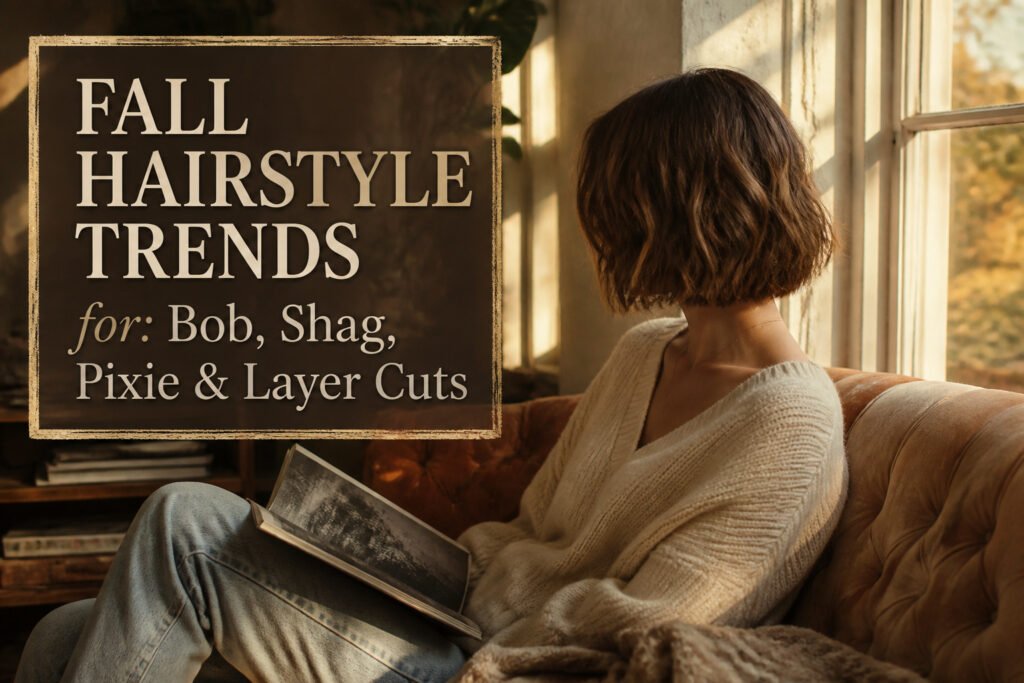
Fall hairstyle trends for 2026 run from collarbone-grazing lobs to jaw-skimming bobs, and the deciding factor is how much daily styling you will actually do. The boyfriend bob, landing two fingers below the chin when wet, is built for air drying; ask for the wrong inch and you end up fighting shoulder flip or losing the relaxed drape entirely.
1. Boyfriend Bob

The boyfriend bob lands right between the chin and collarbone, a length that does the heavy lifting for you. Air drying actually works with this cut, which is rare for a bob. The ends hit that sweet spot where they graze the collarbone without fighting it, so the shape holds even when you do nothing.
I learned the hard way that the exact inch matters here. Too short and you lose the relaxed drape that makes it "boyfriend"; too long and it flips out at the shoulders and needs a round brush. Ask for it to hit about two fingers below the chin when wet. That shrinkage to collarbone after drying is what gives it that slightly grown-out, borrowed-from-him look without the actual grown-out awkward phase.
Styling takes maybe three minutes. A dab of styling cream on damp hair, scrunch the ends while it dries, and the natural texture does the rest. The cut carries enough weight to stay sleek at the top but lightens toward the bottom, so it doesn’t balloon out in humidity the way a blunt bob can.
2. Cloud Bangs

Cloud bangs are the answer for anyone who wants the look of bangs without the daily war against humidity. These are not the thick, heavy fringe that needs constant flat-ironing to behave. Instead, wispy pieces float across the forehead and blend into the rest of the haircut, creating softness without the weight. Nashville-based hairstylist Eric Marshall Wright points out that fall timing matters here: summer humidity makes traditional bangs fussy enough to "devastate you," but cooler months give you a window to try something lighter.
"Instead of a thick, heavy fringe, they’re made up of wispy pieces that gently float across the forehead and blend into the rest of the haircut… They create softness without hiding your features."
— Allure
That last part is what sells it. The point of cloud bangs is to frame your face, not mask it. Ask your stylist for soft, curtain-inspired bangs with feathered edges that disappear into face-framing layers. The keywords are light, airy, and movement. You want them to draw attention to your eyes while barely reading as bangs at all.
3. Face-Framing Layers

Face-framing layers start short at the cheekbones and cascade longer toward the shoulders, blending inward so the pieces curve toward the chin and lift when you move. Los Angeles stylist Owen Gould shapes this with point cutting and razor work through the interior, cutting those front pieces on a diagonal. The result reads as polished rather than choppy, with what he calls "tons of internal movement."
The softer version showing up this fall keeps the same framing idea but diffuses it: longer layers, wispy curtain fringe, and feathered movement throughout, with no extra shaggy pieces added underneath. That makes it easier to grow out than a heavier cut, since the perimeter stays dense and the shape simply softens over time. For the full ’90s supermodel effect, blow-dry the face-framing sections up and away with a large round brush, then set them in large rollers while they cool. That cooling time is what gives the bounce. Ask for face-framing layers starting below the chin if you want the subtle, natural-looking version that works on finer hair without losing fullness through the ends.
4. Soft Shag

A soft shag with diffused layers and wispy curtain fringe lands somewhere between the 1970s original and whatever your hair does when you roll out of bed. The cut keeps feathered movement throughout, not just at the ends, so the shape stays airy rather than blocky. I like this version because it builds on natural texture instead of fighting it; the layers are blended enough that wavy or curly hair falls into place without looking like a deliberate costume.
Medium-to-thick hair carries it best. Fine hair can work, but the layers need to stay conservative or the density disappears fast. For styling, a light mousse on damp hair builds volume without stiffness, and a matte texture spray at the end gives that slightly slept-in finish that makes the cut read intentional rather than messy. The wispy curtain fringe is the detail that softens the face; it grows out better than a blunt bang and splits easily when you want it off your forehead.
Two ways stylists are playing the finish this season: one leans rock-and-roll with more piece-y separation, the other keeps it refined and editorial with cleaner layering. The rock version suits casual dress and air-dried styling; the sleek upgrade photographs better and holds up for occasions where you need the hair to look deliberate.
5. Pixie Shag

The pixie shag lands somewhere between a classic pixie and the longer bixie, with choppy, DIY-looking layers that look better the less you fuss with them. Travis Speck, a New York City-based stylist, calls the imperfections the whole point: the cut is meant to look like you got bored and reached for the kitchen shears.
Thicker hair with natural texture carries this easiest, since the shaggy pieces fall into place on their own. Straight hair can get there too, but you will need a texturizer worked through the strands, then a quick tousle with your fingers. The more undone, the better. Tuck it under a beanie on Saturday morning, rake it into shape for dinner, and it reads as intentional either way.
Emma Chamberlain has worn the look styled up for the Met Gala, which says something about its range. The shorter length keeps it off your neck and out of your way, but the shaggy layering saves it from the buttoned-up feeling a classic pixie can give. If the soft shag feels like too much hair but a standard pixie feels too neat, this is the middle ground worth asking for.
6. Blunt Bob

A blunt bob cut roughly one to two inches below the chin but above the shoulders is sitting at the top of every fall 2026 mood board I have open. The shape is one-length all the way around, no layers, no graduation, just a clean line that frames the jaw. What keeps it from looking like a 2015 Pinterest board is the slight shift in how people are wearing it now: stylists in LA are seeing clients who grew their hair out through the long-hair years finally ready for that decisive chop, and the bluntness reads as intentional rather than safe.
The cut works across textures, which matters when you’re booking an appointment and can’t predict humidity. Straight hair gives you the glassy, polished version. Wavy or loosely curled hair adds movement without breaking the silhouette; a little texture keeps it from looking like a helmet. It pulls back if you need it to, though the whole point is letting that line show. For maintenance, a blunt bob grows out visibly, so plan on a trim every six to eight weeks if you want to keep the edge sharp.
7. Curtain Bangs

Curtain bangs are the one detail that makes every fall outfit feel intentional, whether the rest of the hair is swept into a bun, pulled back in a ponytail, or left loose. A large round brush and blow-dryer create the bouncy, voluminous shape that defines the look this season. The Oribe Italian Resin Large Round Brush is the tool stylists keep reaching for, especially on coarse hair that tangles with cheaper brushes. For anyone coloring this fall, copper spice tones paired with soft waves and curtain bangs add warmth without the brassiness that cooler months tend to amplify. The fringe skims the cheekbones and works across cuts: long layers, a bob, or a shag. A round-brush blowout gives it that effortless movement that reads as polished rather than overdone.
8. Modern Shag

The modern shag builds its shape on stronger texture than the softer version trending alongside it this fall. Alex Pardoe and Eric Vaughn both see the cut as a rock-influenced take on the vintage shag, built with face-framing layers and movement throughout that reads deliberately undone rather than messy. Where the soft shag keeps edges gentle, this version pushes the texture harder.
Medium-to-thick hair carries it best. Vaughn likes it for anyone who wants volume without losing length, and wavy or textured hair responds naturally since the cut follows what the hair already does. Fine hair needs a conservative approach to layering so density stays intact.
For styling, Plus Size Perfect Body Mousse goes in after leave-in conditioner to build airy volume and layer definition, finished with Un.Done Volume and Matte Texture Spray for the lived-in, imperfect result the cut is built around.
9. Lob

A collarbone-length lob sits right where fall wants it: long enough to tuck under a coat collar or pull back on windy mornings, short enough to feel like a real change without the grow-out panic. The move this season is exactly that length, hitting just below the collarbone with ends that read blunt on finer hair and softly layered on thicker textures.
The flippy lob, point-cut throughout for movement without losing density, keeps minimal layering in back and face-framing pieces starting about an inch below the chin. For styling, volume at the front matters more than perfect ends; blow-dry the front section, let the rest air-dry, and finish with texture spray. The softer, slightly curved edges on the off-duty version read smooth without looking salon-stiff, and the wave or side-part variations let you soften angular features or elongate rounder ones depending on how you part it.
10. Grown-Out Pixie

A longer, softer take on the traditional pixie is landing in salons this fall for anyone who wants the impact of short hair without giving up styling options. Extra length through the top and around the face keeps the cut feminine and less severe than the classic version, and that added hair is what makes it workable day to day.
I like that this one doesn’t force a single look. A small amount of styling cream or pomade pieces out the ends for definition, and you can switch between sleek and textured depending on the mood. For something more undone, the diffuser attachment on your blow-dryer does the work.
Fine-to-medium hair gets the most natural advantage here; the shorter length creates the appearance of more fullness. Thicker or coarser strands can still carry it, but only if your stylist cuts strategically and takes the bulk out. Plan on a cleanup every four to six weeks — shorter cuts lose their shape faster, and this one starts looking accidental instead of intentional once it grows past that window.
11. 90’s Inspired Layers

The 90’s layer revival is less about copying Rachel Green exactly and more about capturing that same swing and volume with a modern hand. What separates this fall’s version from a straight throwback is thickness through the ends rather than a million wispy pieces; stylists are cutting a stronger, denser perimeter and placing long layers only where movement is actually needed.
For the blowout that sells the look, a large round brush directs the face-framing sections up and away from the face, then those pieces get set in large rollers while they cool. That cooling time is what creates the bounce. A dry texture spray finishes it, though any airy volume product you already own will do the same job.
The maintenance is forgiving. Layers grow out cleanly, and a trim every 10–12 weeks keeps the ends looking expensive rather than ragged. Finer hair can wear this too, but the layers stay more subtle so you don’t sacrifice fullness where the hair is already light.
12. Mixie

The mixie lands somewhere between a pixie and a mullet in the most deliberate way: very short through the sides and top, then longer strands kept at the back. That rear length is what separates it from the garçon cuts it gets mistaken for, and it’s the detail that lets you style it either slicked down or ruffled up depending on the day.
What convinced me this hybrid has staying power for fall is how specifically it can be mapped to a face. The short crown draws the eye up, while the back length adds weight where jawlines need balancing. Stylists who work the cut regularly call it rebellious but still chic, which reads to me as office-appropriate on Monday and genuinely interesting by Friday night.
Maintenance sits in a practical middle too. You’re not in the chair every four weeks the way a severe pixie demands, but the shape stays intentional enough that six-week stretches still look styled rather than grown out. For women building a wardrobe around pieces that last, a haircut that doesn’t demand constant attention earns its place in the rotation the same way a good wool coat does.
13. Whisper Pixie

The whisper pixie sits at the opposite end of the spectrum from the sharper, more aggressive cuts trending this fall. Soft layers and gentle contours give it an airy, natural effect that reads romantic rather than rebellious. Fine layers and strands fall lightly across the face without any harsh lines, creating something delicate and feminine.
Celebrity stylist Danielle Priano, who coined the name for model Taylor Hill, combined something delicate and ethereal with something playful and magical. The result is shorter and layered with a soft, feathered texture around the edges, distinct from the choppier pixie shag also making rounds this season.
When I look at the two side by side, the whisper pixie keeps length in the front fringe pieces and prioritizes movement on top. Feathered, wispy edges replace the shag’s heavier texture. For styling, medium to light-hold products win here. The goal is touchable texture and movement without stiffness, so the cut keeps looking soft through the day rather than freezing into place.
14. Curly Bob

A curly bob is not a straight bob left to its own devices; the cut has to be built for spring. My stylist took one look at my ringlets and said the same thing the curl specialists keep repeating: weight removal is the whole game. Take out the bulk at the interior and the coil does the rest.
The product load matters as much as the scissor work. A curl mousse, something with hold but no crunch, keeps the shape from frizzing into a cloud by noon. One line that keeps coming up in chair-side conversation is the Santo Curl Mousse; the feedback notes movement without stiffness and enough humidity control to last the afternoon.
For wash-and-go mornings, the real win is the pre-shaped cut itself. Wake up, scrunch in moisture, and the bounce is already architected in. Diffuse if you need speed, air-dry if you have ten extra minutes and want the fullest coil.
15. Textured Lob

The textured lob is what happens when a long bob stops trying to look freshly cut and starts looking like it has somewhere to be. Laura Harrier’s version, styled by Rikke Gajda for New York Fashion Week, kept the length right at the collarbone but added enough movement that the cut read as intentional rather than in-between. That distinction matters because shoulder-length hair is the main event for 2026, not a waiting room.
Sean Michael, a stylist based in Boston, describes the off-duty version as smooth and clean without being overly precise. The edges soften and curve rather than landing blunt. For styling, blow-dry the front for volume, let the rest air-dry, and finish with texture spray. The R+Co Velvet Curtain Cotton Touch Texture Balm works here too, combating frizz while building that second-day hold. A reviewer noted it leaves hair soft without the greasiness other texture balms carry, which tracks with what this cut needs: enough grip to look lived-in, not enough product to look worked-over.
Hair Color Trends

Chocolate brown, warm reds, and muted blondes are the backbone of this season’s palette, but the shades getting the most salon-chair buzz are the ones that sound good enough to drink. Cinnamon spice is pulling ahead of last year’s pumpkin obsession, leaning toward a truer red that reads bright without tipping into costume territory. The difference matters if you’re after something that still feels optimistic once the daylight disappears by five.
Mushroom brown offers the counterargument. Cool-toned and quietly elegant, it suits neutral and light skin beautifully, and the matte, muted version works for anyone tired of chasing warmth. Subtle highlights add dimension; keeping it flat keeps it minimal. Ask for a neutral, dimensional base with blended roots and soft ribbons of beige or taupe, then tone everything with a creamy gloss so no harsh lines show at the grow-out. That seamless fade is why clients are drifting toward mushroom tones this year, even if the name sounds like something you’d find in a risotto, not a color book.
Styling Tips

Texturizing products make the difference between a cut that sits flat and one that moves. A pea-sized amount of paste or mousse worked through damp hair builds the airy volume these cuts depend on, and finishing with a light serum keeps the surface smooth without killing the shape.
Here is what to ask for and how to style it:
- For a modern shag or layered cut, request face-framing layers and movement throughout. Work a body mousse through damp hair after your leave-in, then finish with a matte texture spray for that lived-in, slightly undone finish.
- For a grown-out pixie, ask for extra length through the top and around the face so the style stays feminine and workable. A small amount of styling cream or pomade pieces out the ends, and the diffuser attachment on your dryer gives a softer, more textured look than a direct blast.
- For a Tinkerbell pixie, emphasize texture, wispy edges, and longer fringe pieces to frame the face. Stick to medium or light-hold products; anything stronger fights the softness and touchable movement that define the cut.
- For flipped, layered ends, ask for long chunky layers and use a large curling iron or heated round brush to curl ends under section by section. Lock the shape with hairspray.
- For natural curls, a layered cut that enhances curl pattern keeps styling simple. Apply curl-enhancing gel to damp hair and diffuse on low heat; refresh next-day shape with a mist of water and a small amount of curl cream.
Celebrity and Cultural Notes

Celebrity hair moments tend to stick longer than the red carpet itself. Leslie Bibb’s jaw-grazing bob from The White Lotus season three is still showing up in salon chair requests months later, with stylists citing her as one of the most frequent references clients bring in. The appeal is blunt precision cut right to the jawline, a sharp shift after years of safer midlength-to-long hair. Cool is the new sexy, as one stylist put it, and the super-short bob works across textures if dense hair gets thinned out first.
Taylor Swift’s blunt bangs during her latest tour drove measurable search spikes, and the style is carrying straight into 2026. The look adds a youthful frame, pulled from 1990s references, but texture matters: straight-haired inspiration on naturally curly hair won’t land the same way. Worth checking all bang types before committing.
Korean influences are showing up more quietly but just as persistently. The hush cut, rooted in Korean styling, builds in volume through wispy bangs, face-framing tendrils, and lived-in layers without demanding daily heat styling. It flatters most face shapes and stays low-maintenance, which explains why it keeps surfacing in fall lineup predictions. For precision, ask your stylist to cut it dry so the layer placement is visible in real time rather than guessed wet.
Maintenance

A fresh cut only holds its shape if you treat the hair that grows out of it. These are the habits that keep fall styles looking intentional rather than grown-out and tired.
- Book trims every six to eight weeks. Bobs, pixies, and shags all lose their architecture at the ends first, and waiting too long turns a sharp line into a shapeless wedge.
- Deep condition once a week. Pureology Hydrate Soft Treatment restores moisture that cooler air strips away, which matters especially for color-treated hair that tends to read dull by mid-season.
- Protect before heat. Amika Blockade Heat Defense Serum goes on before any blow-dry or iron work; the damage builds invisibly until the texture changes and the cut no longer falls right.
- Smooth the base layer. Pureology Smooth Perfection Leave-In Cream, applied to damp hair before drying, keeps the surface flat enough that face-framing pieces and curtain sections do what the stylist intended them to.
- Refresh between washes with a dry shampoo that leaves no residue. Amika Perk Up Plus keeps oil from collapsing volume at the crown, which is the first place a shag or layered cut starts looking limp.
- Add oil for shine without weight. Mizani 25 Miracle Nourishing Hair Oil, worked through mid-lengths and ends, smooths frizz on dry or dull strands; the coconut, olive, sunflower, and jojoba blend reads as moisture rather than grease if you start with a small amount.
- Consider steaming monthly if your hair is naturally coarse or curly. A hooded bonnet or handheld steamer helps conditioner penetrate more fully, which keeps textured cuts soft enough to style rather than fighting their own dryness.
Frequently Asked Questions
What are the top fall hairstyles for 2026?
The boyfriend bob, cloud bangs, soft shag, blunt bob, and curtain bangs lead this season’s trends. Face-framing layers, the modern shag, and the textured lob also rank high for fall 2026. The mixie, whisper pixie, and grown-out pixie round out the shorter options, while 90’s inspired layers and the curly bob offer movement and volume.
What hair colors are trending this fall?
Chocolate brown, warm reds, and muted blondes form the base palette, with cinnamon spice and mushroom brown getting the most salon buzz. Cinnamon spice leans toward a truer red that stays bright without looking costume-like, while mushroom brown offers a cool-toned, matte alternative with blended roots and soft ribbons of beige or taupe.
How do I style a modern shag?
Work a body mousse through damp hair after your leave-in conditioner, then finish with a matte texture spray for that lived-in, slightly undone finish. The cut builds on natural texture instead of fighting it, so the layers fall into place with minimal effort. Medium-to-thick hair carries the style best; fine hair needs conservative layering to keep density intact.
What is the best haircut for my face shape?
The mixie specifically maps to facial structure by drawing the eye up with its short crown while adding weight at the back to balance jawlines. Face-framing layers starting below the chin soften angular features, while a textured lob with a side part can elongate rounder faces. Your stylist can point-cut or razor interior layers to curve pieces toward the chin and create lift where your features need it most.