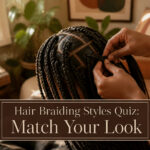
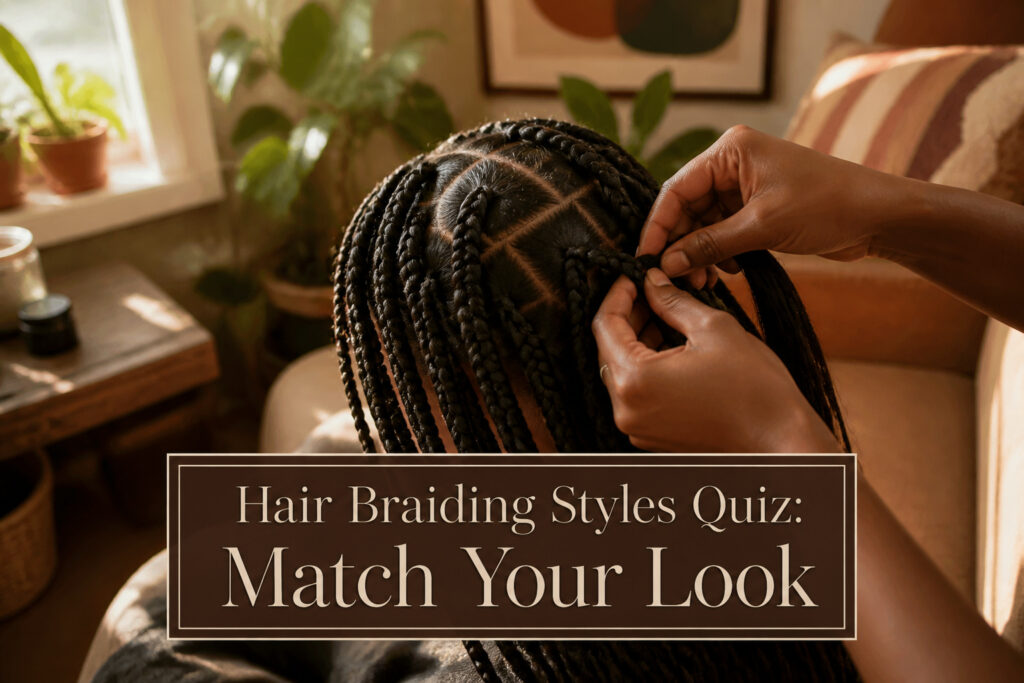
A hair braiding styles quiz matches your preferences to specific techniques like cornrows, box braids, or knotless braids based on texture, maintenance needs, and cultural knowledge.
The catch is that most quizzes flatten centuries of meaning into a five-second visual identification question, treating a cornrow pattern that once signaled tribal lineage as just another aesthetic option.
One quiz format I reviewed actually tests whether you recognize that stitch braids build from West African cornrow foundations, not whether you can execute the stitch itself.
Braiding Techniques and Their Cultural Roots
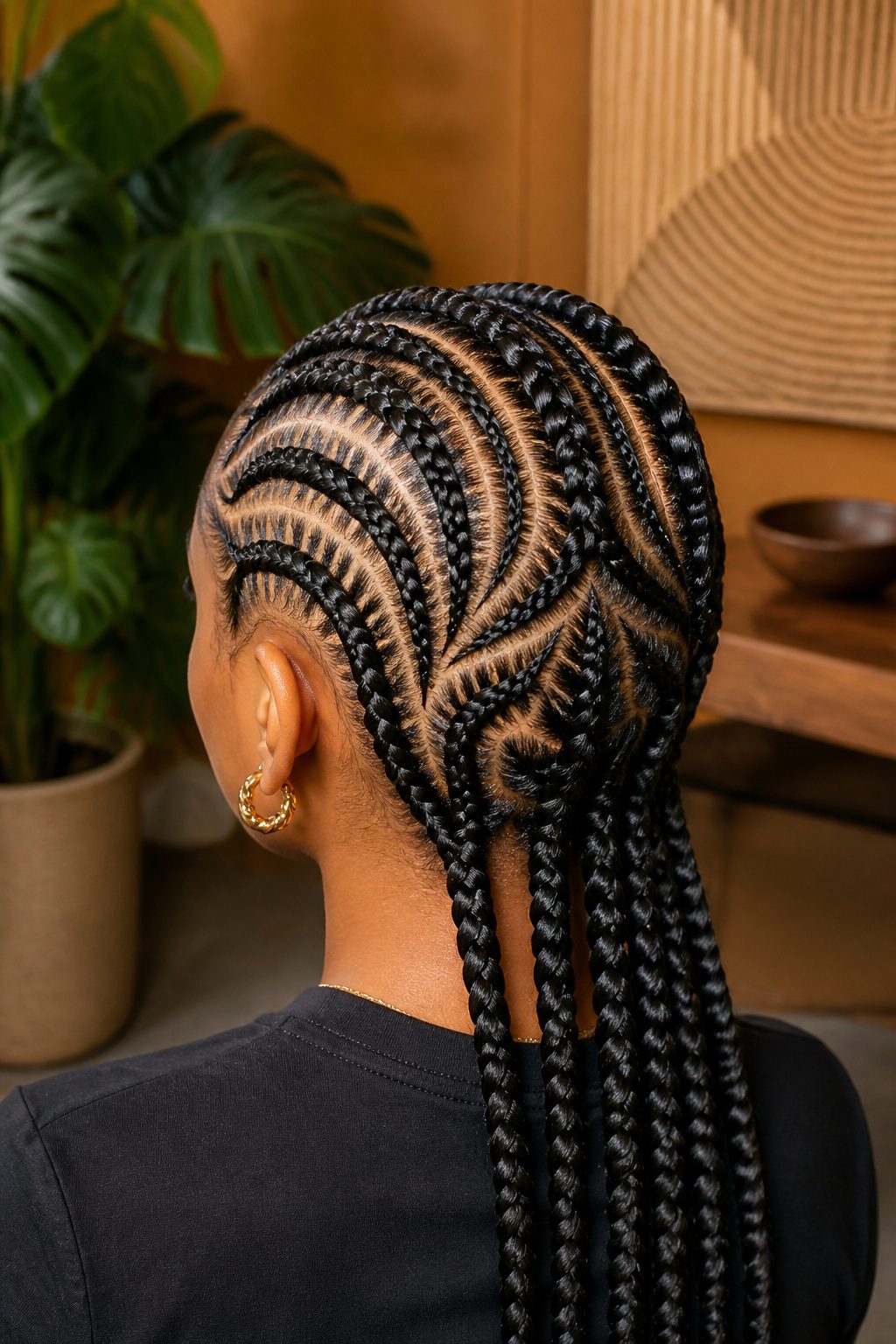
Cornrows carry one of the deepest histories in braiding, with hair braided close to the scalp in straight rows or intricate patterns that signified tribal affiliation, age, or marital status across West African communities.
The geometric precision mattered: specific arrangements identified family lineage and social standing before a word was spoken. Stitch braids build on that cornrow foundation, using a technique that produces a distinctive stitched appearance along each row.
Both methods traveled with the African diaspora and remained central to how communities preserved cultural identity under conditions that actively suppressed it.
When I was reviewing what actually gets tested in these quizzes, cultural background and heritage knowledge ranked as a core topic across three different quiz formats I looked at.
The questions consistently ask not just how a braid is made, but what region or tradition it emerged from and what the pattern communicated.
That makes sense: a cornrow style worn in 2026 still carries the same structural logic as its historical counterpart, and the quiz treats that continuity as something worth recognizing rather than erasing.
Tools You Actually Need for Braiding
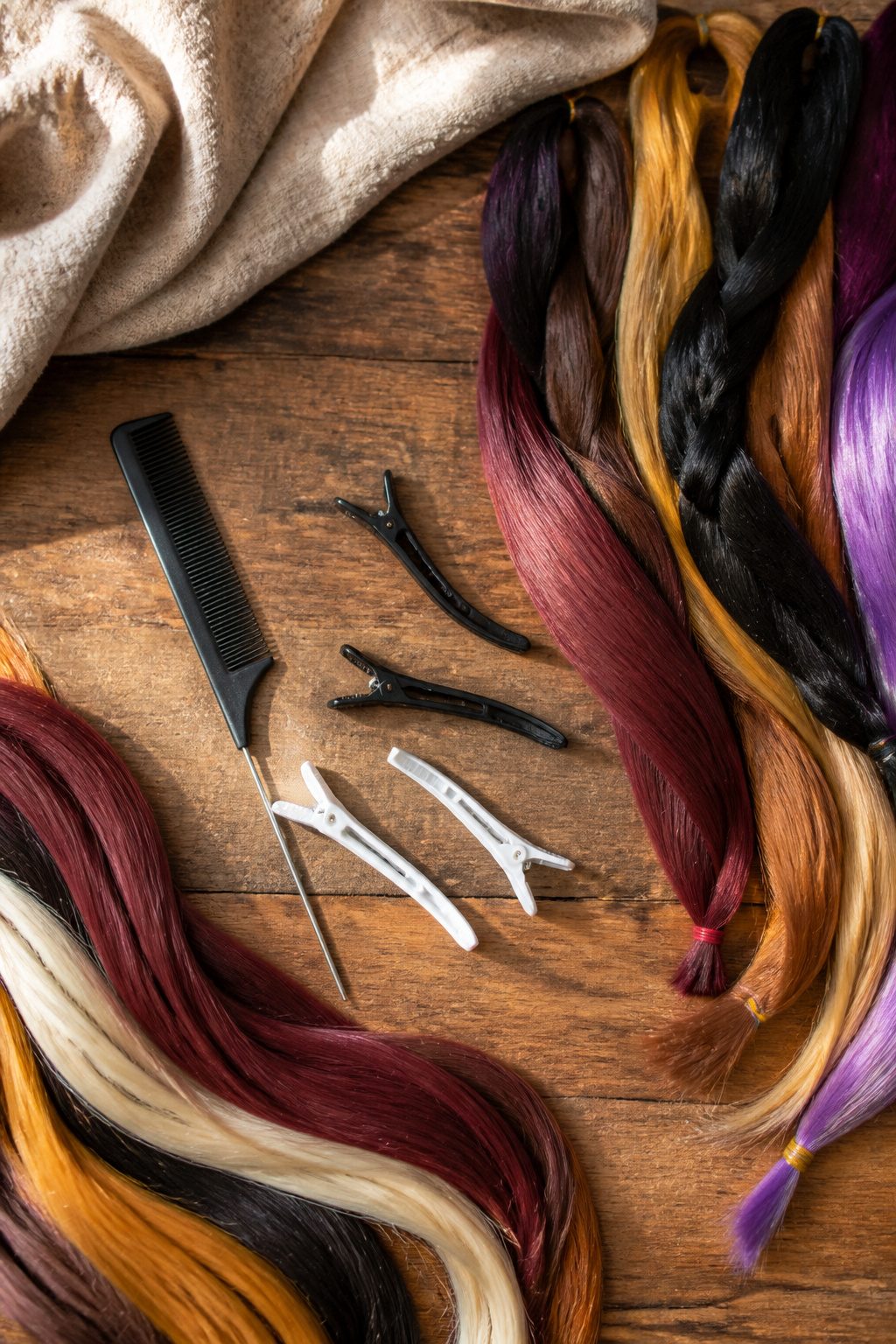
A clean section separates a neat braid from a fuzzy one, and the right tools make that happen without constant do-overs. These three items cover what actually matters:
- A fine-tooth comb slices through tangles and draws exact part lines. The teeth catch flyaways that a brush pushes around, so your sections stay crisp from start to finish.
- Sectioning clips hold loose hair out of the way while you work. Without them, strands drift into the wrong place and you end up ripping out progress to fix the line.
- Hair extensions add length or volume when your natural hair is too short or fine for the style you want. They also let you practice tension on material that is more forgiving than your own roots.
Tension control comes down to what you feel in your fingers, but these tools remove the visual clutter that makes tension harder to judge.
Telling Braid Types Apart
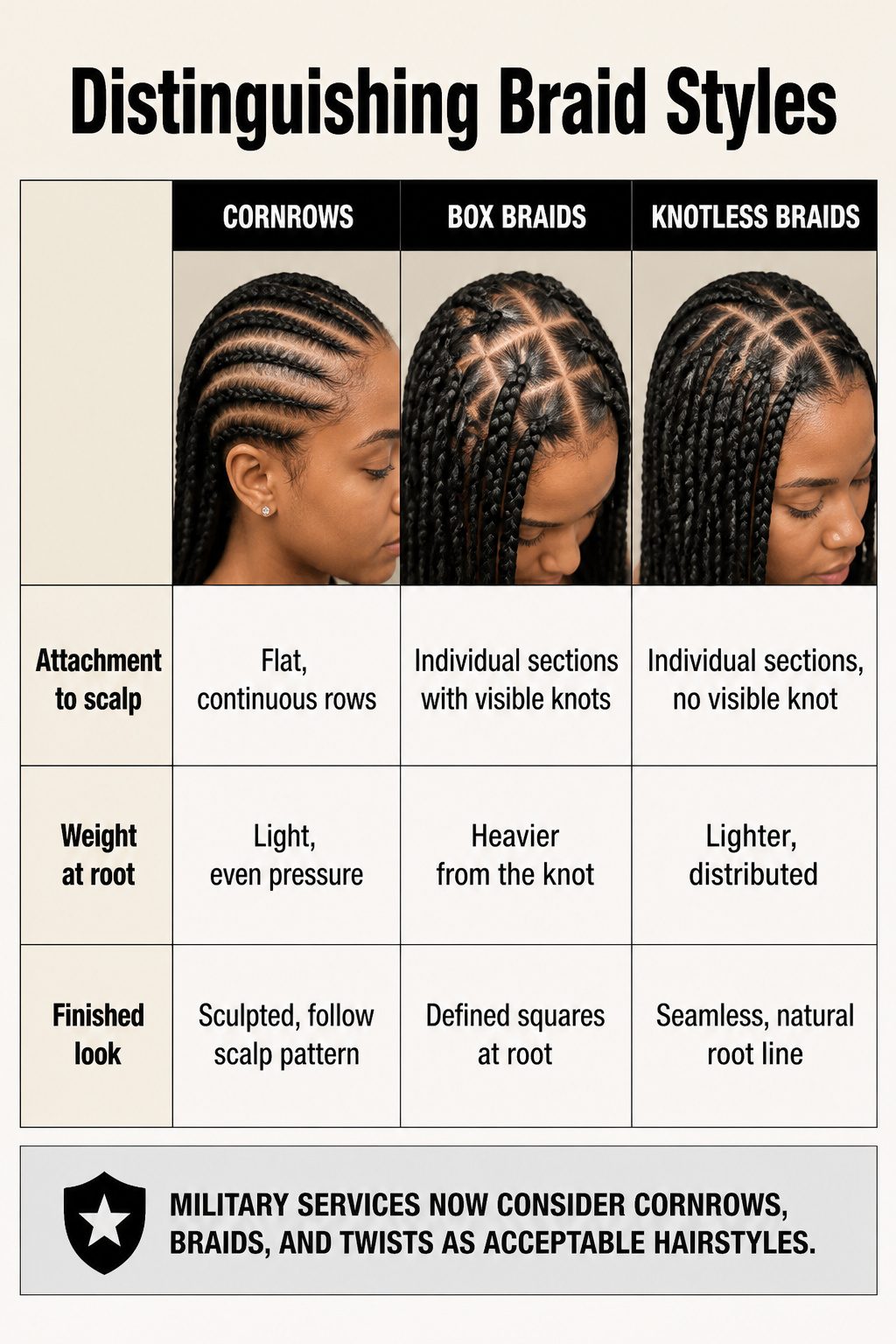
The most common mix-up on any hair braiding styles quiz comes down to three styles that look similar from a distance but build from completely different foundations.
Cornrows braid hair flat against the scalp in raised rows, creating a continuous pattern that starts at the hairline and follows the head’s curve.
Box braids divide hair into square-shaped sections first, then braid each one from root to tip with a small knot securing the extension at the base.
Knotless braids skip that starting knot entirely; the stylist feeds in extension hair gradually for a seamless, lighter root that sits flatter against the scalp.
A quick scan of the base tells you which is which:
| Feature | Cornrows | Box Braids | Knotless Braids |
|---|---|---|---|
| Attachment to scalp | Flat, continuous rows | Individual sections with visible knots | Individual sections, no visible knot |
| Weight at root | Light, even pressure | Heavier from the knot | Lighter, distributed |
| Finished look | Sculpted, follow scalp pattern | Defined squares at root | Seamless, natural root line |
Military services now consider cornrows, braids, and twists as acceptable hairstyles.
That policy shift matters because it reflects what stylists already knew: these three styles are distinct enough to name separately but equally valid as professional, protective options.
The difference is structural, not just aesthetic, and getting it right means knowing where to look first.
Feed-In Methods and Cornrow Technique
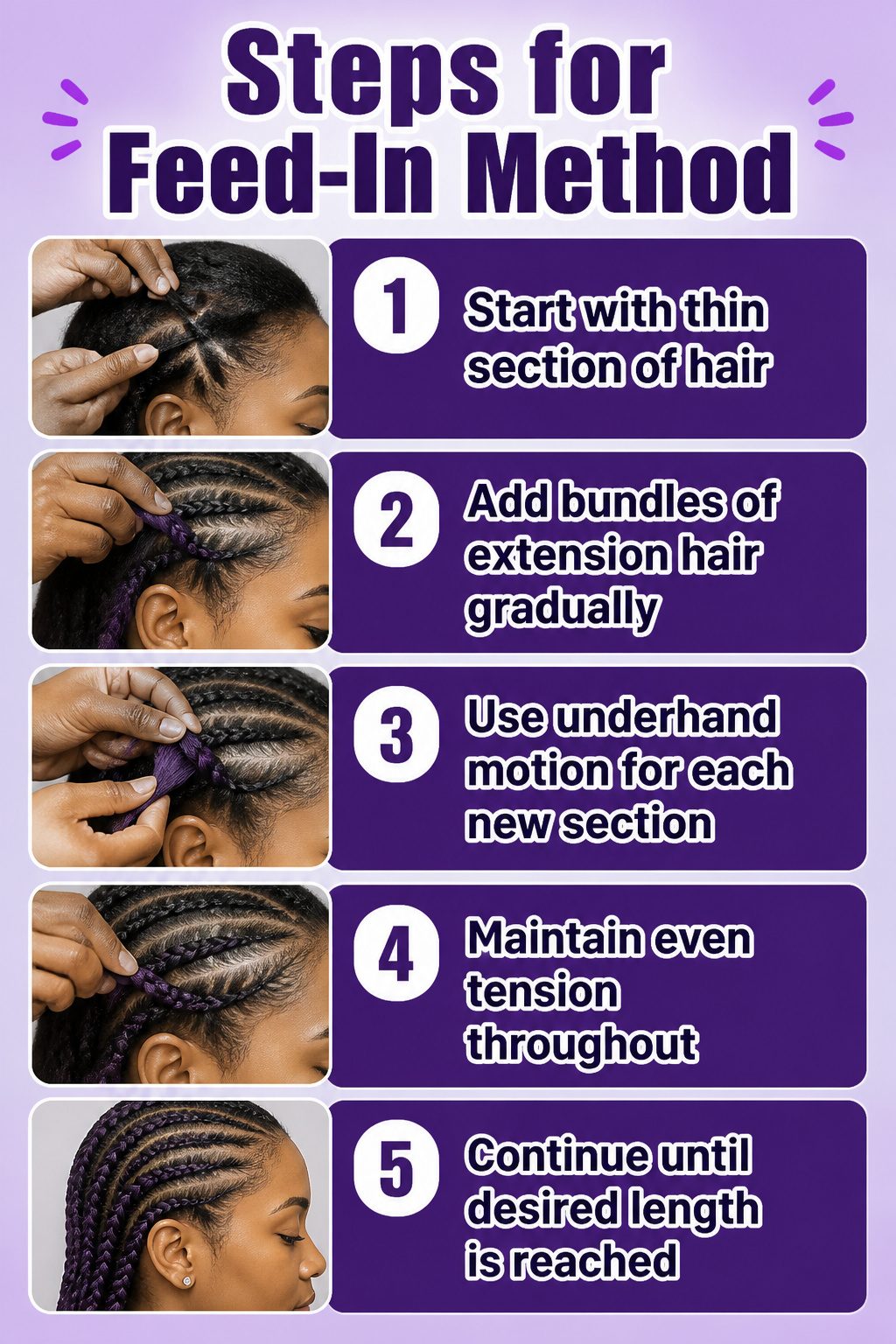
- The feed-in method starts with a thin section of your own hair at the root, then adds small bundles of extension hair bit by bit as the braid progresses. This gradual build keeps the base flat against your scalp instead of jumping straight to full thickness, which is what gives the finished row that natural, grown-out look.
- Cornrowing works with an underhand motion: each new section of hair passes underneath the previous strand rather than over it, pulled tight and close to the scalp in straight rows or patterns. The tension matters here; too loose and the row lifts, too tight and it stresses the follicle.
- Both techniques reward the same habit of adding hair in stages. Feed-in braids layer extension hair for volume from the root down, while cornrows interlock your natural hair in a continuous underhand pattern that sits flat. The quiz tests whether you spot that difference in how the hair enters the braid.
Matching Braid Style to Hair Texture
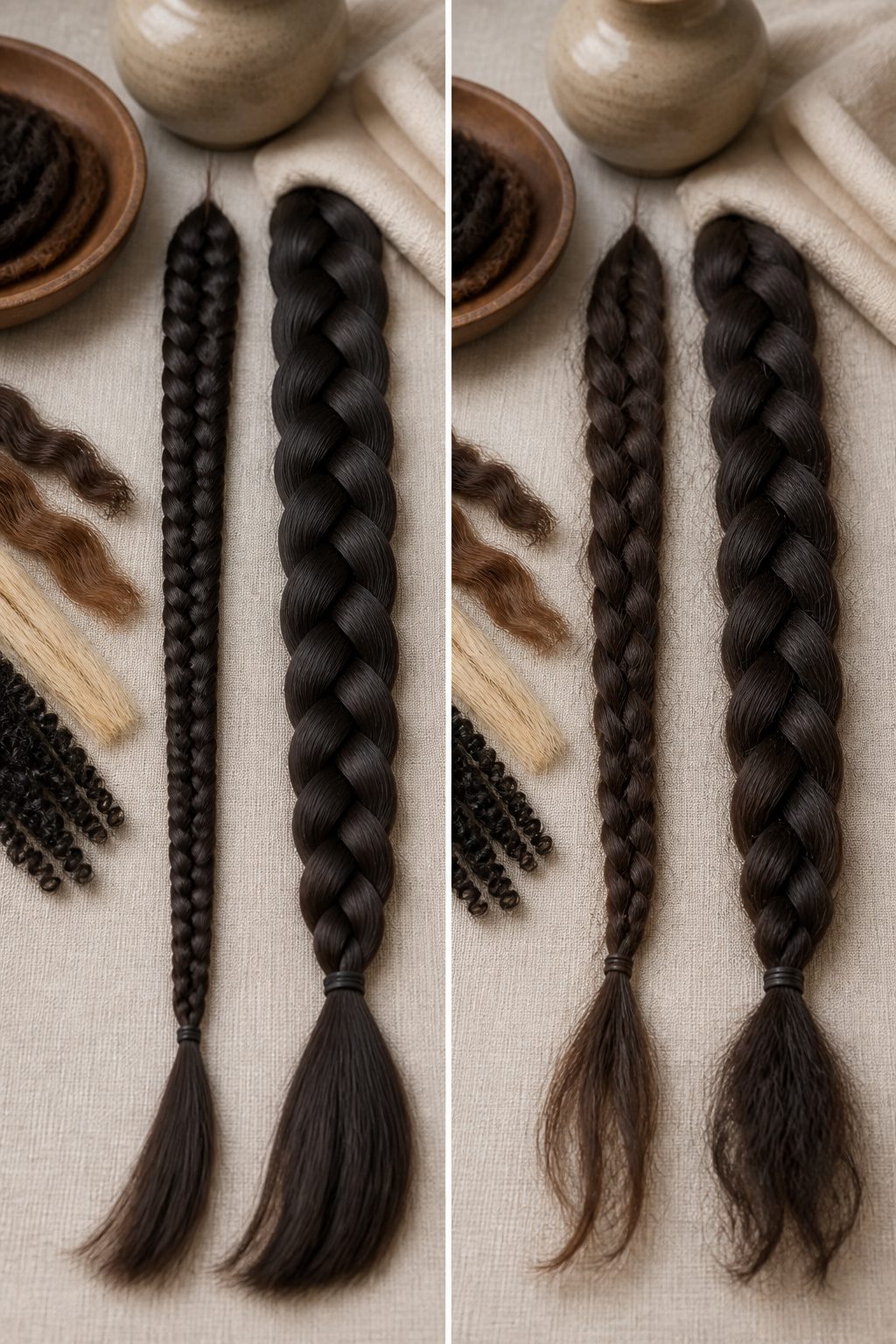
Fine hair grips itself differently than coarse hair under tension, and that single variable changes which braids survive a full day without slipping loose.
Type 2 waves usually need smaller sections and more anchor points to keep a style from unraveling by noon, while the same braids built on type 4 strands can hold with less reinforcement because the curl pattern creates natural friction at every crossover.
The difference matters most with protective styles: cornrows or box braids on coarser textures distribute tension along the strand shaft rather than concentrating it at the root, which is why type 4 hair often tolerates longer wear without the breakage you’d see if you stretched the same schedule onto fine, straight hair.
A quiz that skips texture entirely will point you toward a style that looks right in the mirror and falls apart by Tuesday.
Why Braiding Carries Cultural Weight
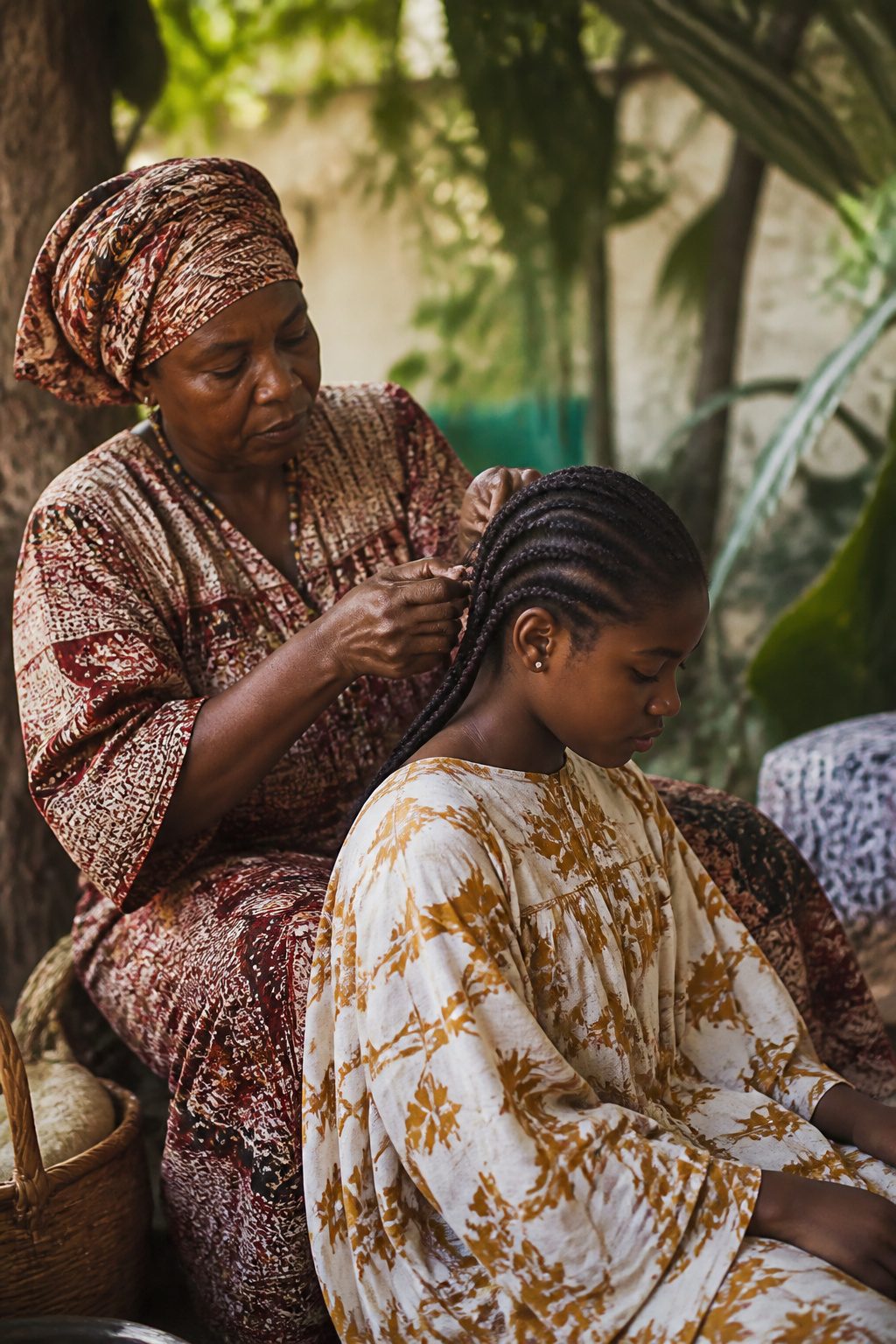
Braiding carries weight that a hair braiding styles quiz rarely has room to explore. Across communities, the practice has functioned as a social ritual: women gather to braid, and the hours spent become conversation, counsel, and connection passed between generations.
In several West African traditions, particular patterns signaled marital status, age, or kinship to anyone who knew how to read them.
The braider was often a historian by default, keeping a visual record that moved from head to head when paper was scarce or dangerous to hold.
The rite-of-passage aspect still surfaces in ceremonies where a girl’s first complex braid marks a transition recognized by her whole community.
What struck me, reading through how these practices are documented, is how often the styling function gets separated from the rest.
A quiz about technique or aesthetic preference can flatten this into "which look suits you," when the original question was closer to "which story do you belong in."
That context matters for anyone choosing a braided style in 2026. Wearing patterns with specific cultural meaning without that background reads as costume rather than participation.
The better quizzes I’ve seen acknowledge this boundary: they ask about texture, maintenance level, and daily wear, not tribal affiliation you haven’t earned.
The Basic Toolkit in One Place
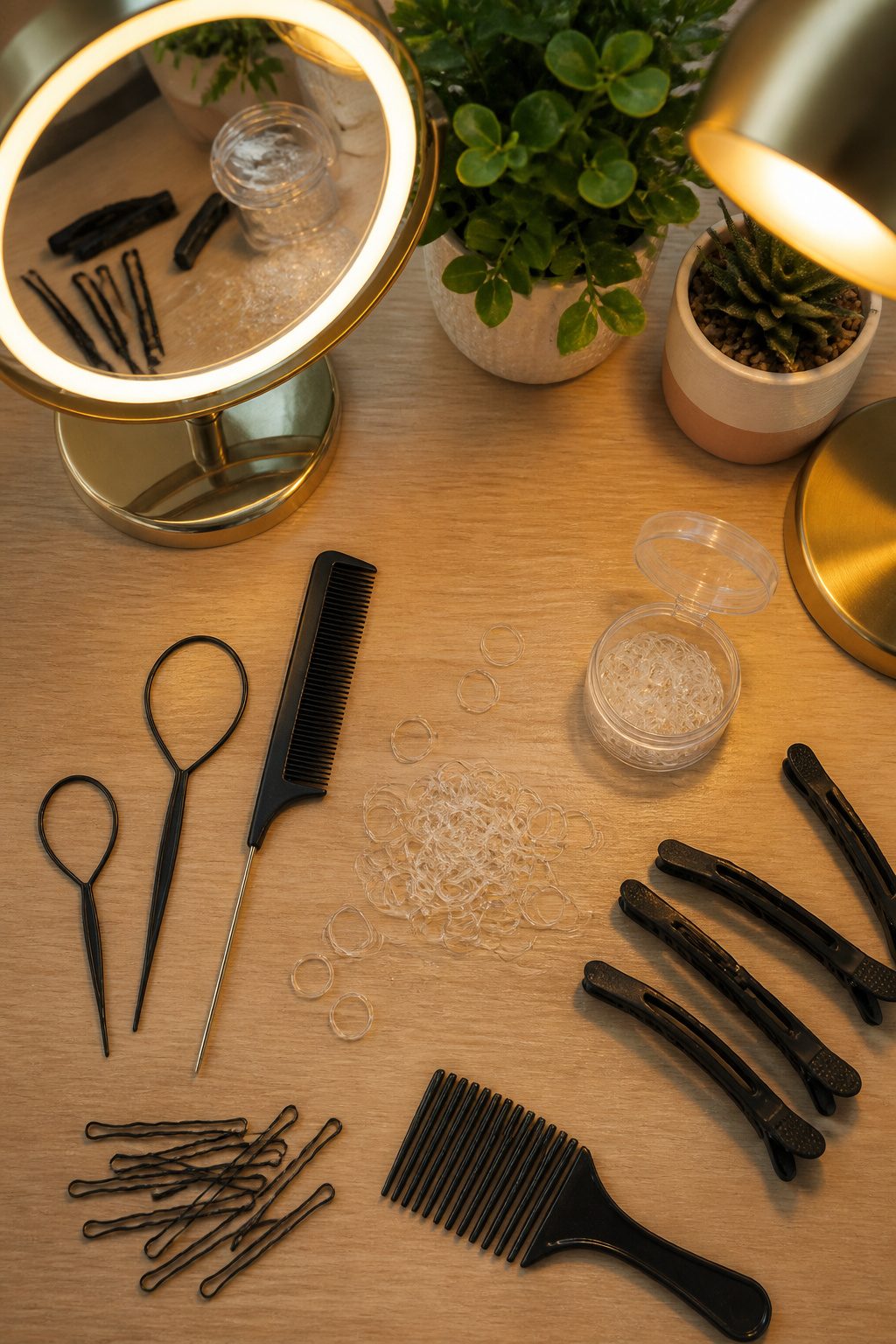
A rat-tail comb and a few packs of small, clear elastics belong in the first purchase. Everything else can wait until you know which braids you actually repeat.
I started with a $14 kit from a drugstore chain and used maybe three items from it; the rest sat in a drawer for two years before I threw them out.
The upgrade that pays off first is a stand mirror with magnification on one side.
Being able to check the back of your own head without a phone propped against a windowsill changes whether you finish the style or abandon it halfway through.
Lighted mirrors help, but a desk lamp you already own does the same job for free.
What you can skip: specialized sectioning clips in fancy colors, braid-specific pomades that cost more than regular edge control, and any tool labeled "professional grade" that does the same thing as the basic version.
The difference is packaging, not function, and the money is better saved toward a good leave-in conditioner that keeps the hair you are braiding healthy enough to hold the style.
How Braiding Styles Changed Over Time
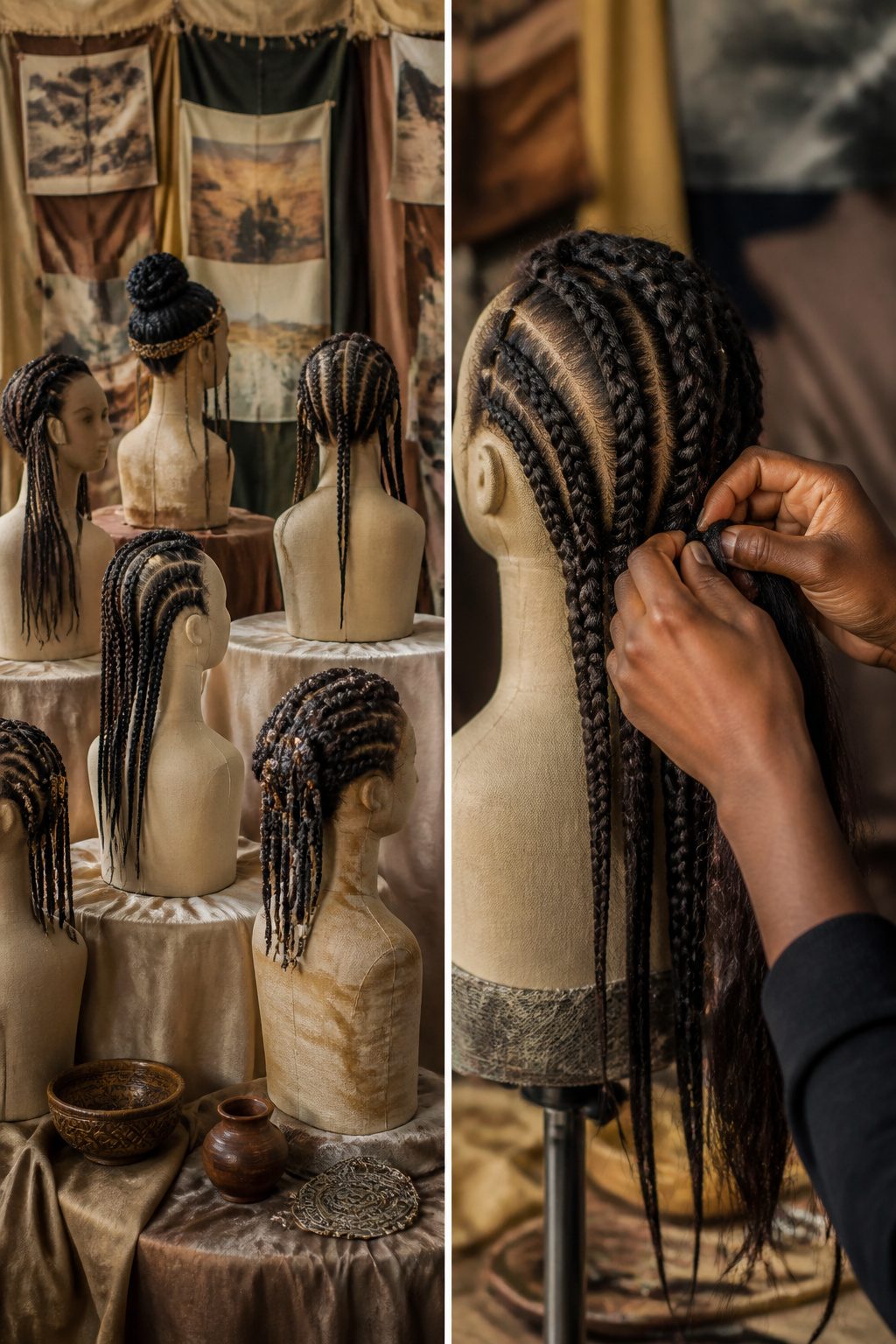
Braiding has never stayed in one place for long. Techniques traveled with trade and migration, picking up local materials and losing others along the way.
Cornrows in West Africa threaded in beads and shells that recorded age and village; when the style crossed the Atlantic, those details flattened out, then resurfaced in new forms.
Box braids as American women wear them now owe something to that journey, though the exact path is harder to trace than most people assume.
What I noticed, looking through the scattered records, is how rarely a technique arrives intact.
The three-strand braid is nearly universal, but the hand position, whether you add hair from the top or the bottom, whether tension stays loose or pulls scalp-tight, those shift every few hundred miles.
Dutch braiding and French braiding are basically the same motion inverted, yet they picked up separate names and separate tutorials once magazines started printing steps in the 1990s.
By the time a style shows up in a hair braiding styles quiz, it has usually been stripped back to visual markers: crossed-under versus crossed-over, tight scalp grip versus hanging loose. The history gets compressed into a five-second identification question.
That is not wrong, exactly, but it is worth remembering that the quiz version is a photograph, not the full technique.
Frequently Asked Questions
What are the different types of braids?
The main braid types are cornrows, box braids, and knotless braids. Cornrows braid hair flat against the scalp in continuous rows.
Box braids divide hair into square sections with a small knot at the base securing the extension. Knotless braids skip that starting knot and feed in extension hair gradually for a seamless, lighter root that sits flatter against the scalp.
What tools are essential for braiding?
You need a fine-tooth comb for exact part lines, sectioning clips to hold loose hair out of the way, and hair extensions when your natural hair is too short or fine for the style you want.
A rat-tail comb and clear elastics complete the basic kit. A stand mirror with magnification helps you check the back of your own head without propping a phone against a windowsill.
How do cultural backgrounds influence braiding styles?
Cultural background and heritage knowledge rank as a core topic across quiz formats. Cornrows originated in West Africa, where specific patterns signified tribal affiliation, age, marital status, and family lineage before a word was spoken.
These methods traveled with the African diaspora and remained central to preserving cultural identity.
A quiz that treats this continuity as worth recognizing rather than erasing asks not just how a braid is made, but what region or tradition it emerged from and what the pattern communicated.