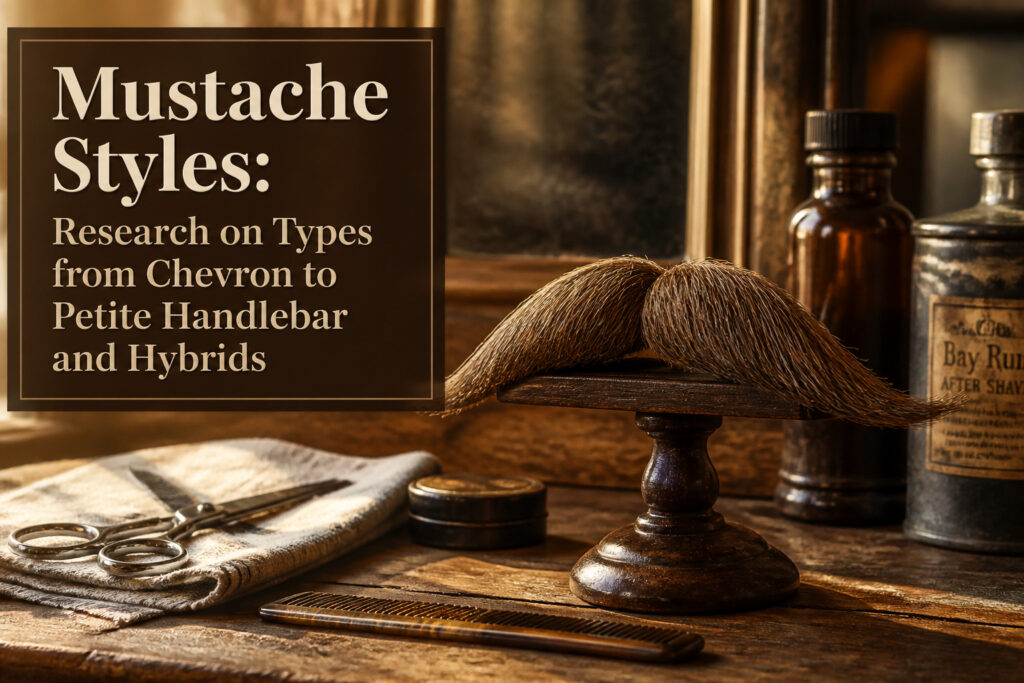
A mustache style is only as wearable as the time and hair type behind it. The full handlebar demands six months of growth and daily waxing from month three onward, yet some men will never grow one no matter how patient they are; terminal length decides before they do. Tom Selleck’s chevron, by contrast, needs only 4–6 weeks and a pair of scissors.
1. Chevron Mustache
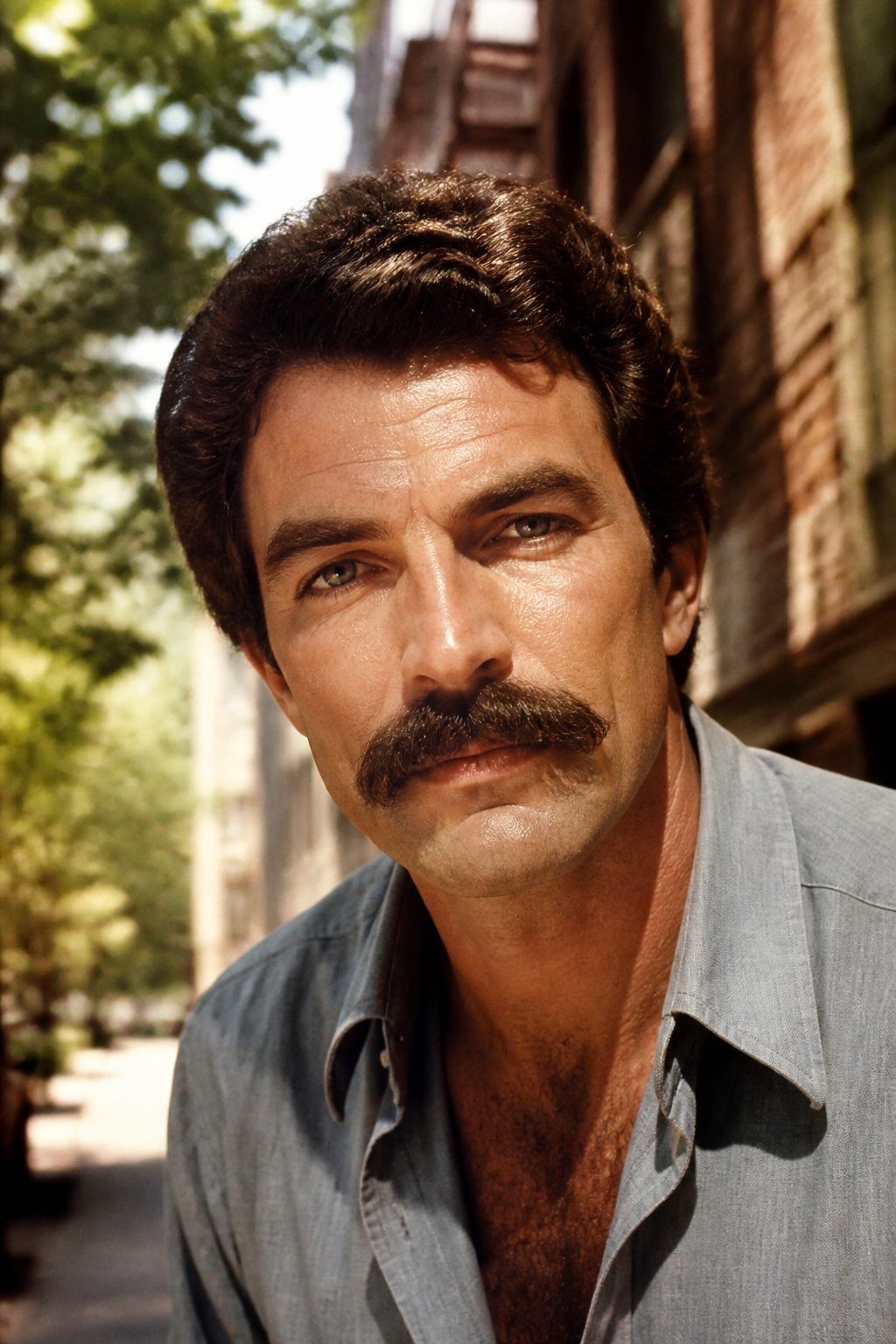
The Chevron mustache covers the entire upper lip in a thick, inverted V that grows straight down past the corners of the mouth. Tom Selleck fixed it as the default image of 1980s masculinity, and the style still reads as the most natural starting point for anyone who has never worn a mustache alone.
Growth takes roughly 4–6 weeks for enough density to hold the shape, though some sources suggest 2–3 months for full thickness. Monthly trimming keeps the bottom edge clean along the lip line and prevents the ends from dropping below the mouth corners, which would push the look into horseshoe territory. The grooming is otherwise minimal: a pair of scissors for the few hairs that reach too far, and patience while the rest fills in.
2. Pencil Mustache
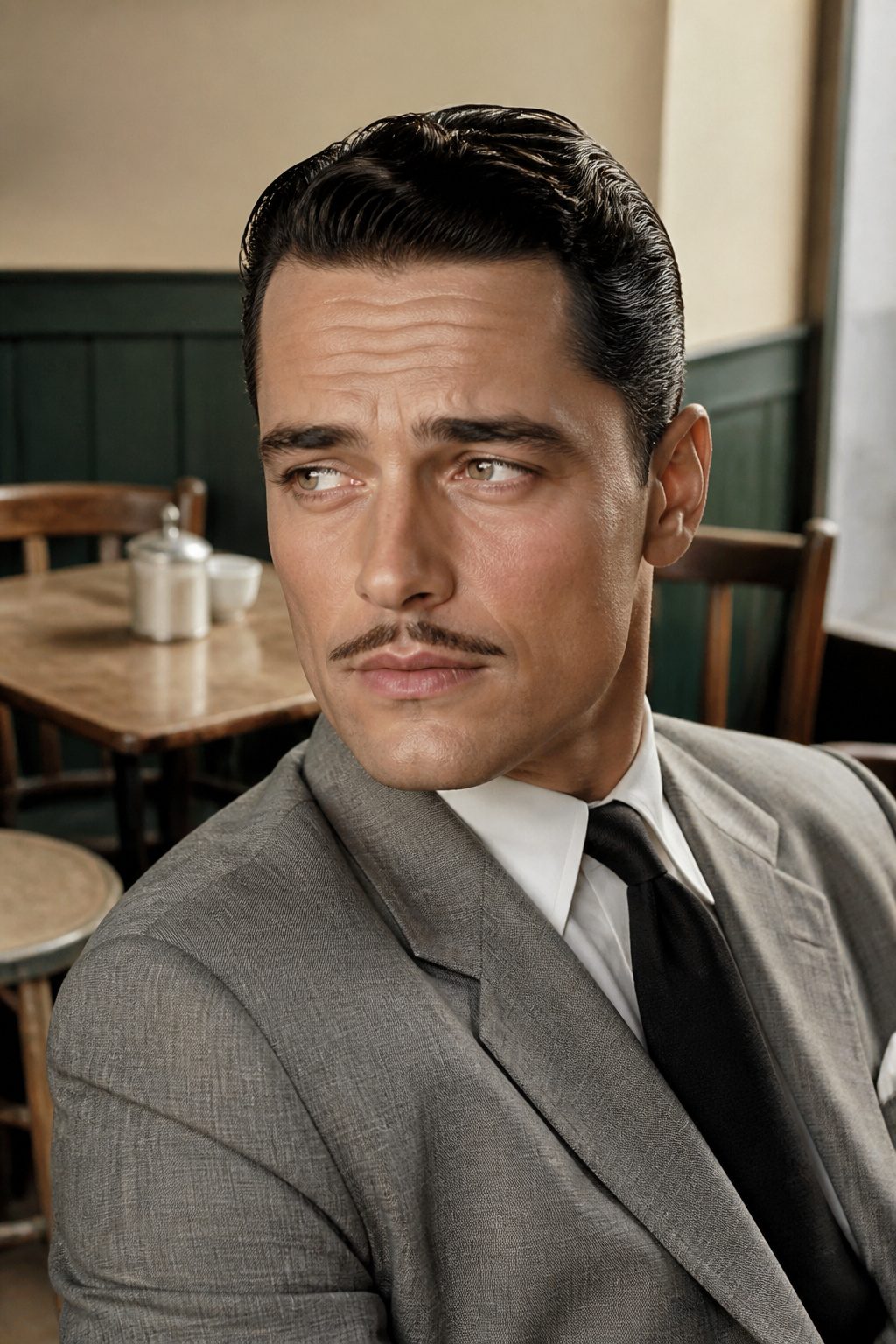
A pencil mustache is a thin line of hair sitting just above the upper lip, narrow enough to look drawn on with a pencil or eyeliner. The surrounding skin demands near-daily shaving to keep the line crisp; let stubble creep in and the effect shifts from intentional to forgotten. Sources suggest shaving the upper line a few times per week at minimum, though daily upkeep is the safer bet for keeping the bottom edge tight.
Clark Gable wore this style in classic Hollywood, and John Waters later made it part of his signature look. The same precision that reads as polished on one face can add years visually on another. Thicker pencil styles pair better with diamond face shapes, while the thinnest versions suit oval, heart, and round faces. Triangle, square, and oblong faces tend to look more prominent and unbalanced with this much restraint above the lip. Grow about two to four weeks of hair to start, longer if your color is light, then keep the length short and the gap between lip and mustache shaved to your preference.
3. Horseshoe Mustache
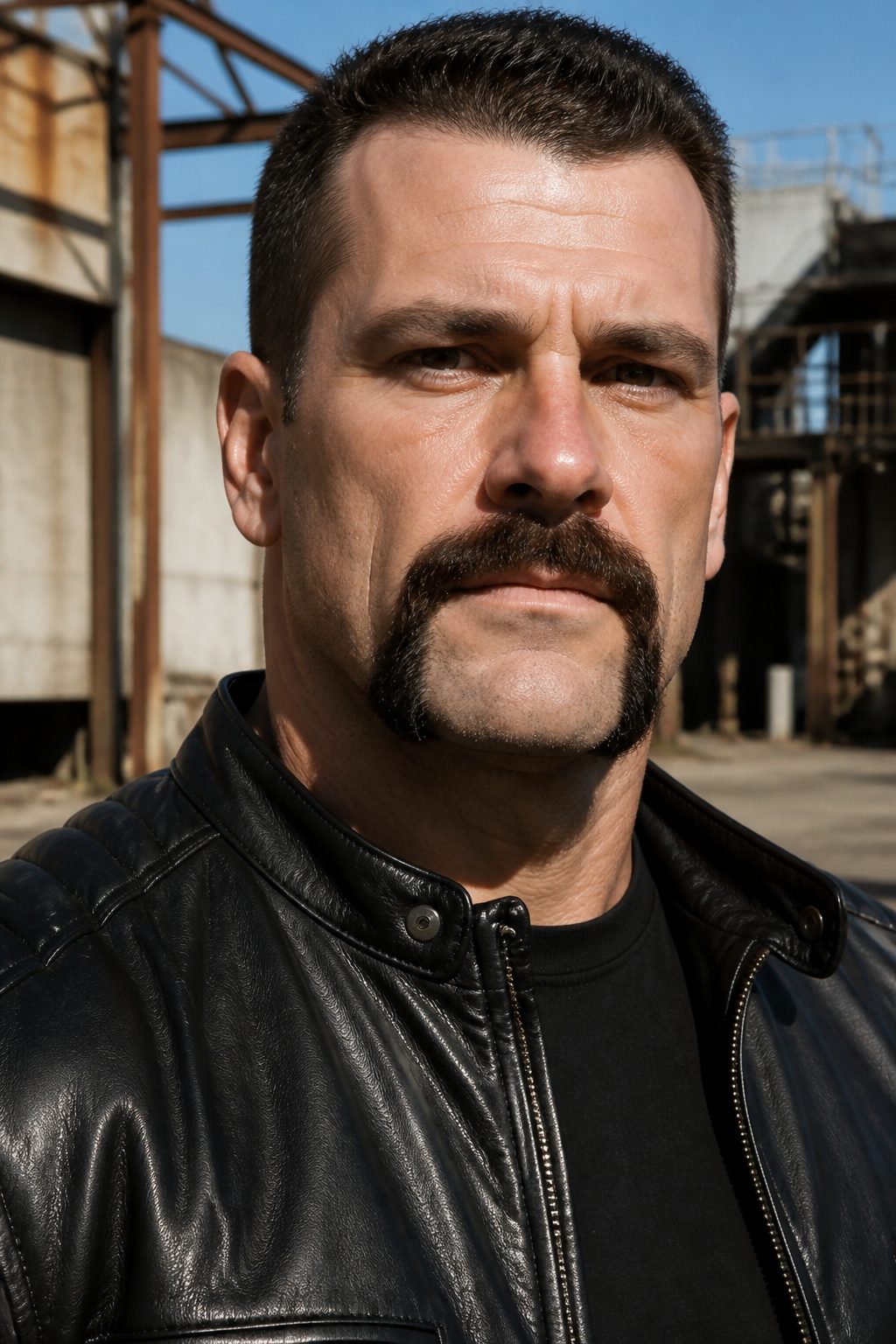
The horseshoe mustache is shaped like an upside-down U, with a thick full mustache that connects to two vertical strips of cheek hair running down either side of the mouth to the jawline. Unlike a Fu Manchu, which hangs free, or a walrus, which is all mustache grown long enough to droop beside the mouth, this style requires actual cheek growth; you cannot lift it away from the face.
This is the style Hulk Hogan wore for decades, and it carries the same baggage he did. The association with bikers, wrestlers, and Southern muscle-car culture makes it read as aggressive on most face shapes, particularly oval or rectangular ones where the vertical lines pull the eye downward into a scowl. Sam Elliott and John Lennon both wore it, but the look still lands closer to intimidation than irony.
Growing one takes three to six months of full beard growth before you can shave away the goatee, soul patch, and mutton chops to leave only those two parallel vertical lines. Aaron Rodgers and Jared Allen have pulled it off in the NFL, where the horseshoe has seen a minor resurgence, but for most men the twelve-plus week commitment ends at a style that narrows rather than flatters.
4. Handlebar Mustache
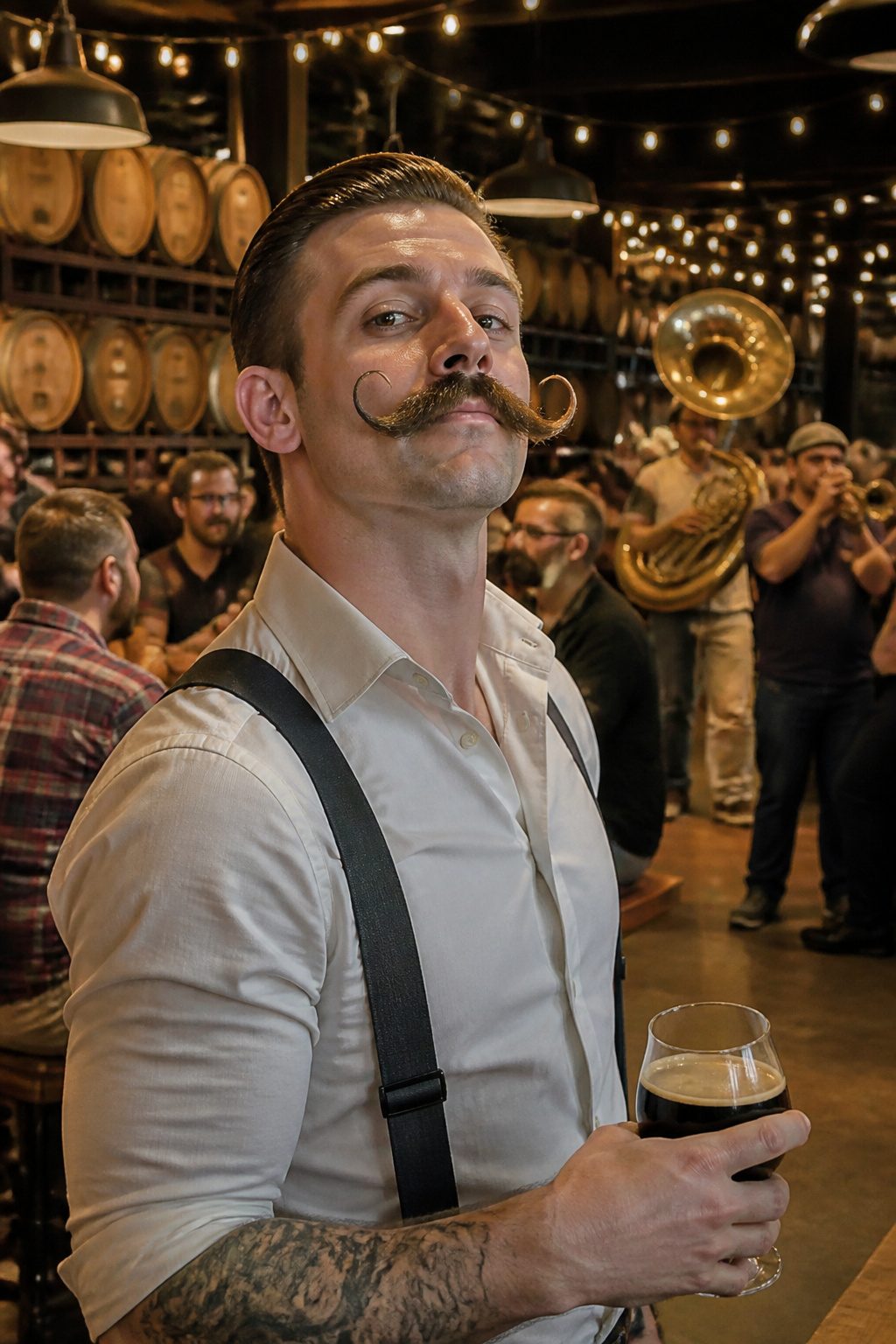
A full handlebar mustache requires significant length, usually six months or longer of growth before the handles, grown from the hair at the edges of the mustache, have enough material to work with. Some men will never get there; if the terminal length of your mustache hair runs short, the style simply will not form, no matter how patient you are.
The real work starts around month three, when daily waxing begins. Training the hair into curves demands a strong-hold wax and a comb with a smaller side, worked through the ends and then snapped and twisted until the curl sets. You will face a choice at this stage between a natural curl, which keeps some movement and softness, and a stiffened curl locked into precise points that jut out over the cheeks and arc back toward the middle of the face. The stiffened version reads more dramatic but needs touch-ups through the day; the natural version forgives a little humidity.
Keeping the center neat is non-negotiable. Lift the mustache and shave any hair beneath the handles at the outer corners of your mouth, or the whole shape collapses into a messy bracket.
Somewhere in the last decade, this style became visual shorthand for craft beer culture, the same way fixed-gear bicycles and sleeve garters did for adjacent scenes. The association is strong enough that sporting a handlebar at a brewery now reads as a costume even when the wearer arrived there honestly, through six months of growth and daily waxing from month three onward.
5. Walrus Mustache
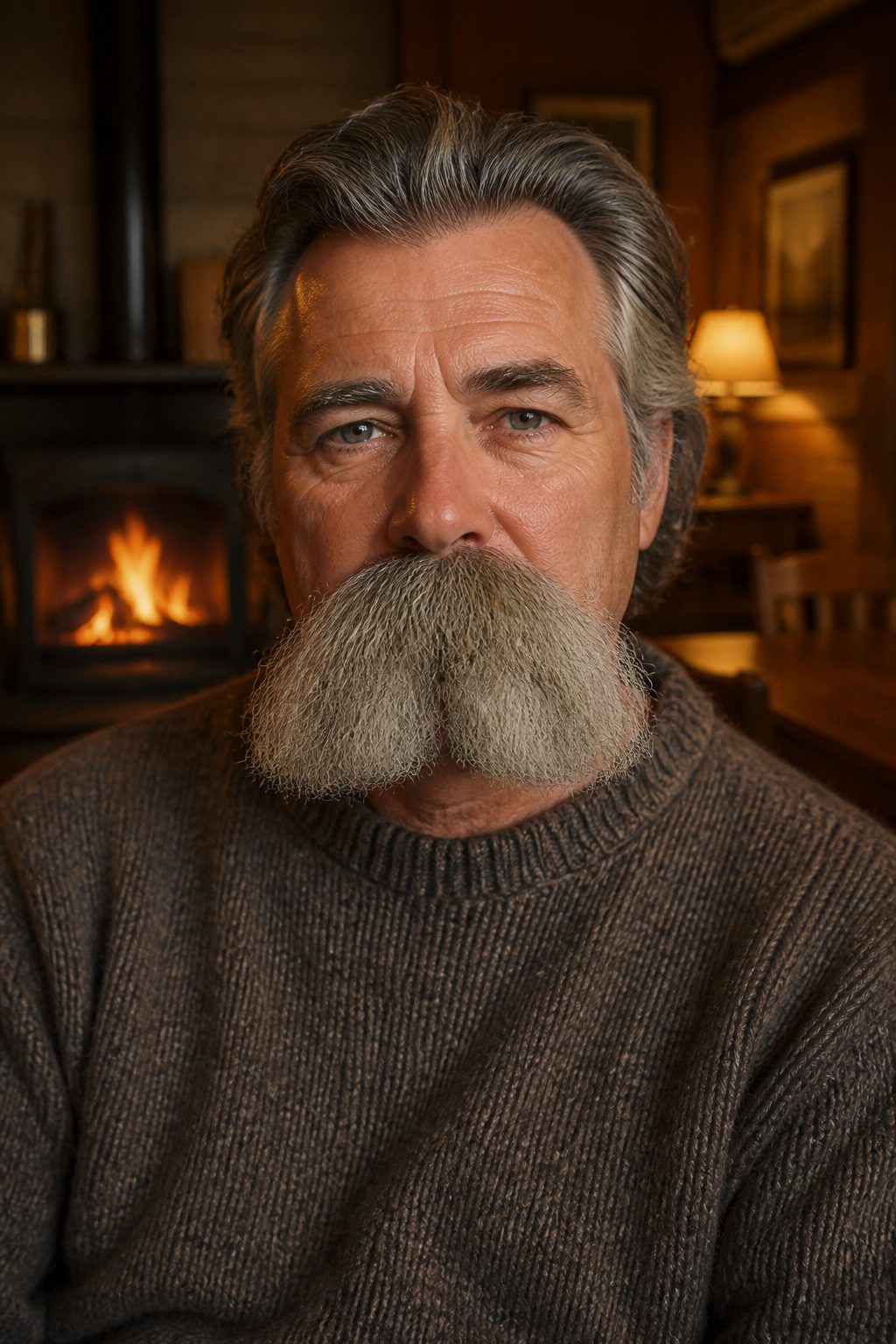
The walrus mustache drapes straight down from the upper lip like the whiskers on its namesake, thick enough in full form to cover the bottom lip entirely. Mark Twain owned this look so thoroughly that his portraits still define it: untrimmed, uncurled, and uncompromising. Growing one demands patience most men underestimate. Beardbrand puts the minimum at six months to a year of letting every hair grow untouched, though Cremo suggests a functional version can emerge closer to six months. Either way, the first three to four months look like an awkward mistake you simply have to wear through.
Eating becomes a practiced skill. Soup, sandwiches, anything with sauce: the mustache intercepts it. Sources recommend carrying a pocket comb to clear the hairline between bites, and even then, some meals stay off the menu entirely. Terminal length, set by genetics, caps what any individual can achieve; if the hairs stop lengthening around month four, the walrus has reached its ceiling.
This style reads as distinguished rather than trendy, and it flatters older men with white or gray hair in a way that darker, younger growth rarely manages. The color softens the bulk, and the years lend the face enough gravity to carry the statement.
6. Fu Manchu Mustache
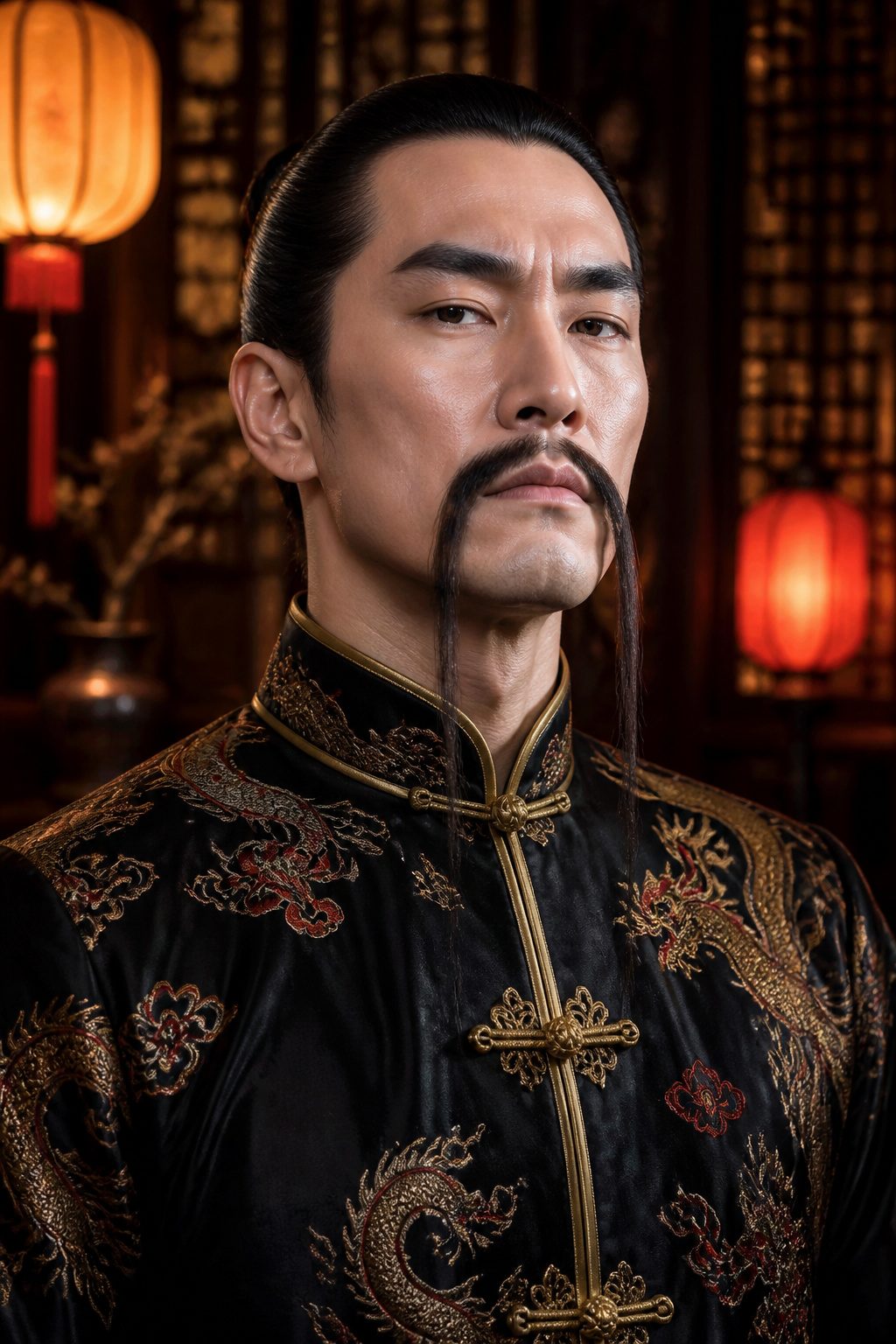
The Fu Manchu hangs free, connected to the face only at the top corners of the mouth, with two long tendrils dropping past the jawline. That gap at the philtrum is the giveaway. If the hair connects to sideburns or chin hair, you are looking at a horseshoe, not this style.
Sax Rohmer created the fictional Dr. Fu Manchu in 1911, and the character’s film portrayals fixed this look in popular culture, particularly in martial-arts movies where it signaled exotic villainy. The style demands daily shaving to keep the cheeks and chin smooth and to maintain that central separation. Medium-hold wax shapes the points, though heavy wax turns the tendrils into what one description calls "hanging toothpicks."
Today the Fu Manchu is rarely worn straight. The cultural weight of those portrayals makes unironic adoption difficult, and the maintenance is high for something that reads as costume. Most who attempt it do so with deliberate self-awareness, or as part of competitive beard and mustache circuits where historical styles are displayed rather than lived in.
7. English Mustache
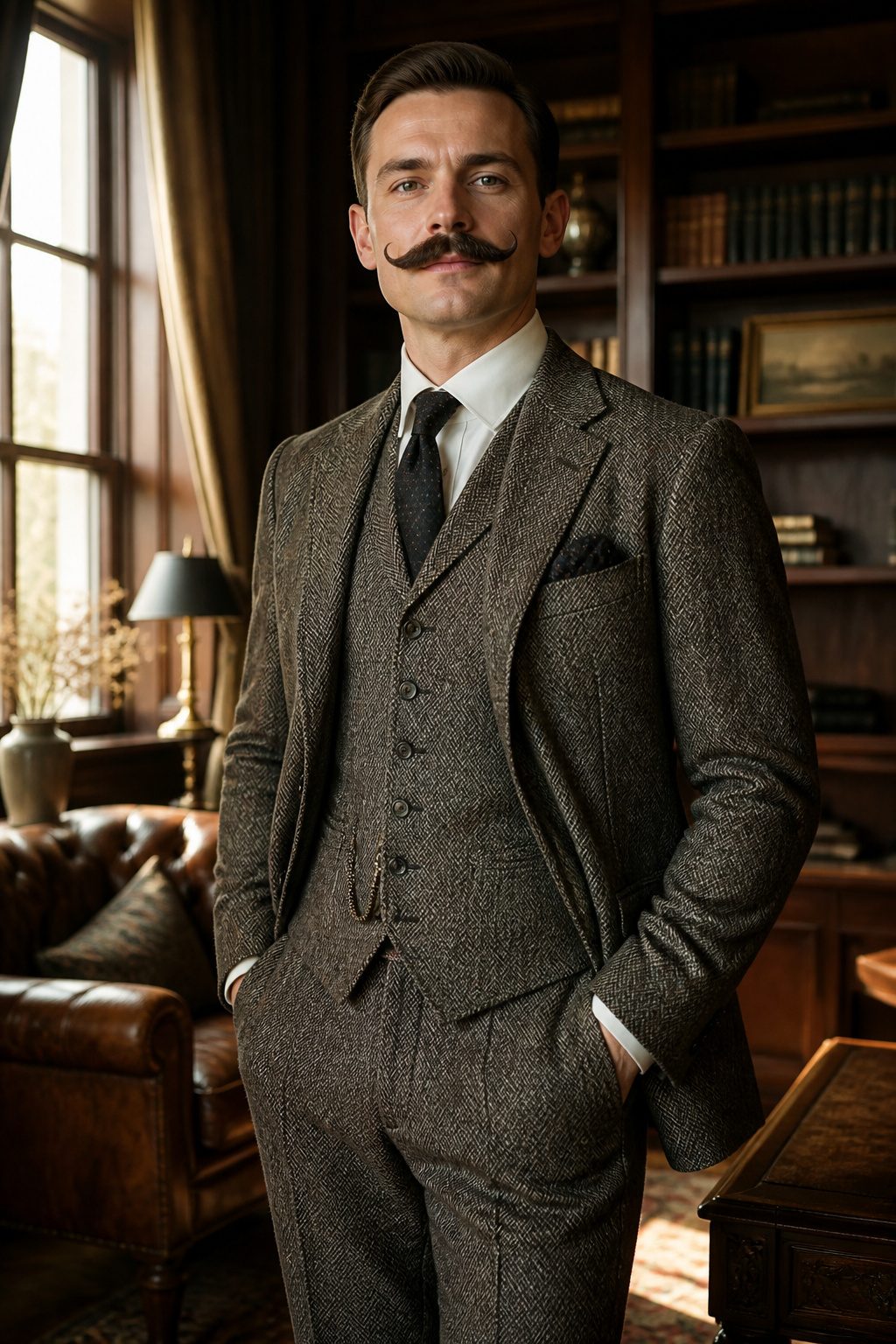
The English mustache sits on the face like a straightened-out handlebar, and that single change in geometry shifts the whole impression. Where the handlebar loops upward with a carnival flourish, the English style runs horizontally to a neat point, held rigid with a stiff wax application that keeps every hair in military formation. The effect reads formal, almost severe, like a letter written in copperplate rather than casual script.
Growing one means committing to the same 4-5 month timeline as a standard handlebar, since the ends need real length to shape outward. The center stays trimmed tight above the lip, often with a hard part at the philtrum to sharpen the divide. I find the grooming more demanding than the curled cousin; without the forgiving curve of a handlebar loop, any stray hair breaks the line entirely, and you will be shaving beneath the corners of your mouth regularly to keep the silhouette clean.
The style carries Edwardian and military origins in its bones. That horizontal severity once signaled discipline and station, not whimsy. On a modern face it still telegraphs control before personality, which makes it a deliberate choice rather than a default. Jimmy Edwards, the English comedian, wore one occasionally, though the style never reached the mainstream fame of its curled counterpart. For oblong, square, or triangle face shapes it holds structure well; on rounder or heart-shaped faces the horizontal emphasis tends to widen rather than flatter.
8. Dalí Mustache
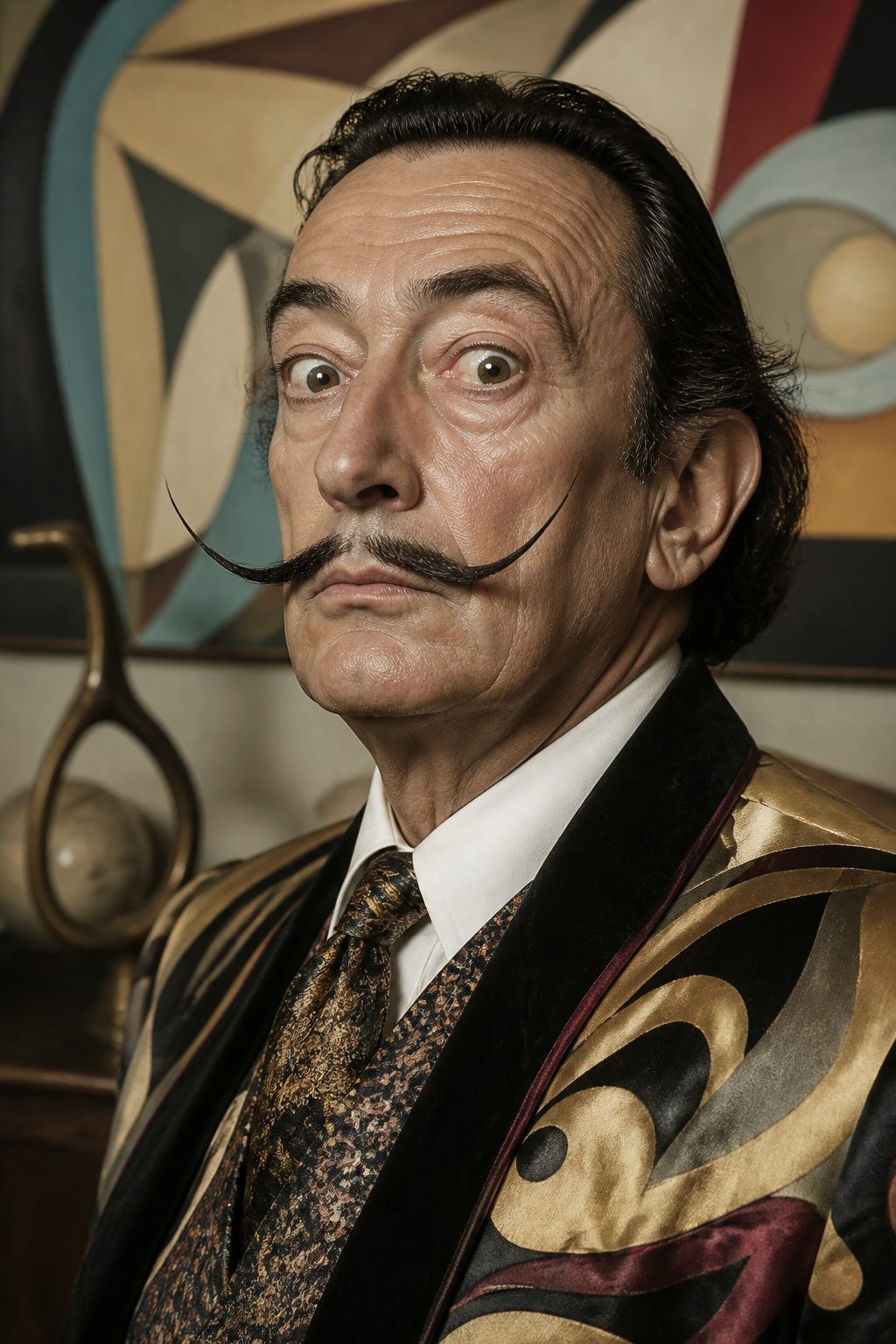
The Dalí mustache takes the handlebar’s long ends and pushes them into performance art. Salvador Dalí wore his so thin and sharply waxed that the points shot upward toward the outer edges of his eyes, more like the horns of a Texas Longhorn than anything you’d call facial hair. He sometimes styled them into an infinity symbol, which tells you this was never about grooming. It was about being seen.
Growing one demands six months or longer just to build the handlebar length, starting from a full handlebar or Hungarian mustache. Once you have the length, you shave the gap between the top of the mustache and the bottom of the nose, trim anything hanging over the lip, and commit to daily shaving to keep the pencil line tidy. The waxing is extreme: heavy-hold product, applied with enough discipline to defy gravity. Dalí himself claimed his mustache functioned as an antenna for his dreams, which sounds like exactly the kind of thing a man would say when he’d spent that much time in front of a mirror with a tin of wax.
For most people, this lands closer to facial jewelry than to a style you maintain before work. The upkeep is constant, the look is deliberately absurd, and the payoff is pure spectacle.
9. Lampshade Mustache
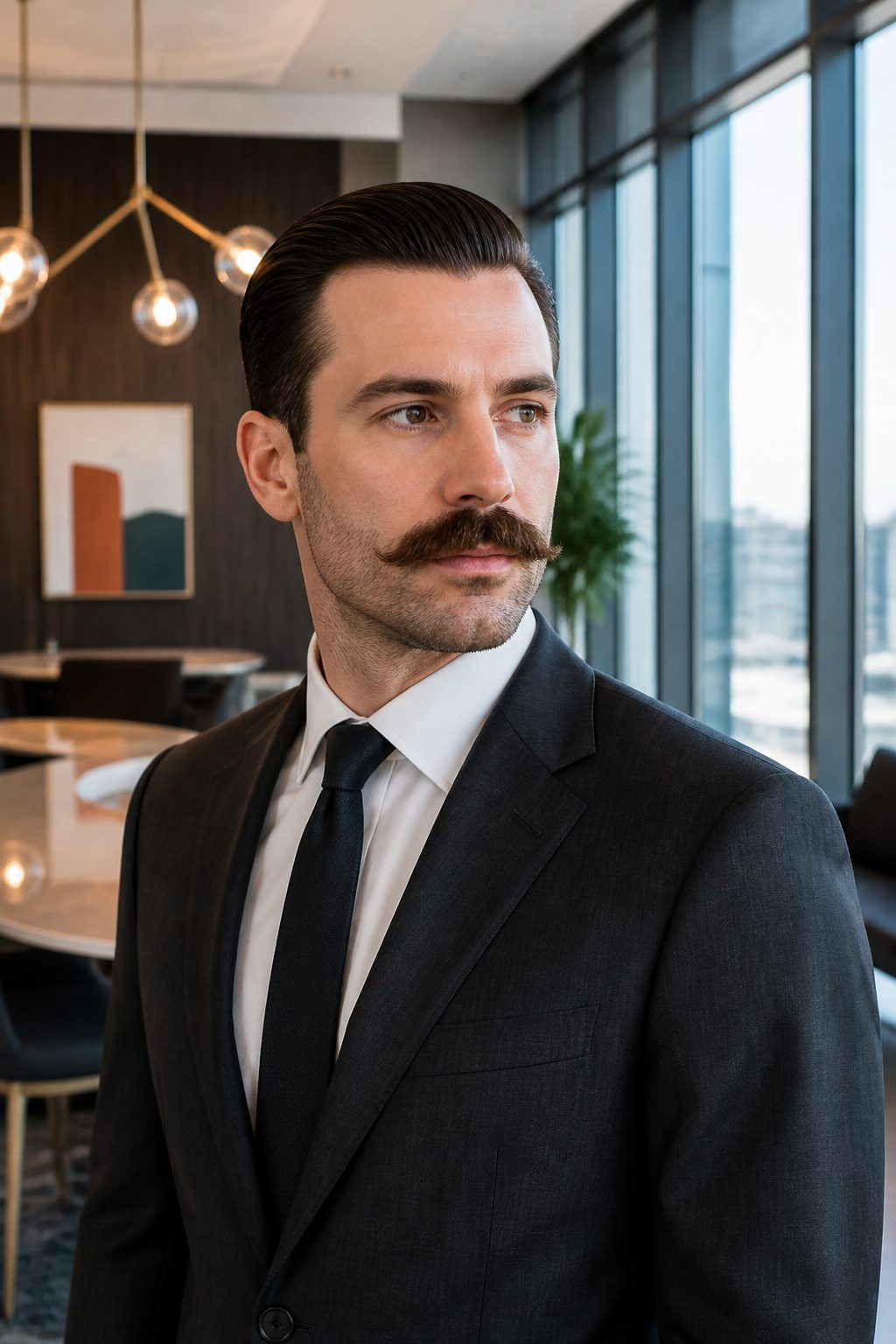
The lampshade mustache earns its name from the trapezoid silhouette it casts: flat across the top, straight down the sides, wider at the corners of the mouth than beneath the nose. That geometry is not accidental. Military grooming regulations have long dictated that a mustache cannot extend past the edge of the upper lip, rise above the bottom of the nose, or touch the lip itself, and the lampshade shape is what remains when you enforce all three rules at once. Police departments adopted the same standard, which is why the style still reads as uniform even when the wearer is off duty.
Weekly trimming keeps the top line level and the sides vertical, usually with a razor or electric trimmer run against the skin just outside imaginary lines drawn from nose to mouth corner. Some municipalities have relaxed their grooming codes lately, permitting beards and fuller styles, but the lampshade persists where regulations stay strict. Grow time runs one to two months for the basic shape, though letting it go bushier or keeping it clipped short both work within the same outline.
10. Painter’s Brush Mustache

The painter’s brush mustache carries the thickness of a chevron but drops the downward angle entirely, leaving a straight top edge with corners rounded off like a flat brush turned sideways. That horizontal line sits just above the upper lip and stops at the edges of the mouth, never creeping past them.
Growth lands in a narrow window. Two to three months gets you the density, but the real work happens once the length is there. The top edge needs to read as level, which means checking it every few days as the center grows faster than the corners. The neckline underneath matters more than you’d expect; a clean shave below the mustache keeps the shape from bleeding into the upper lip and looking accidental rather than intentional.
This style suits men with softer jawlines who want definition without the aggression of sharp angles. The straight top edge adds structure, while the rounded corners keep the look approachable. Diamond and heart face shapes carry it best. Oblong or rectangular faces tend to look longer with a mustache this contained, so those shapes usually need something wider to balance the proportions.
Minimal daily grooming keeps it presentable, though that simplicity can read as ironic in an era of more elaborate styles. Fictional characters named Ron, from Burgundy to Swanson, have kept the painter’s brush alive more than real-world wearers have.
11. Toothbrush Mustache
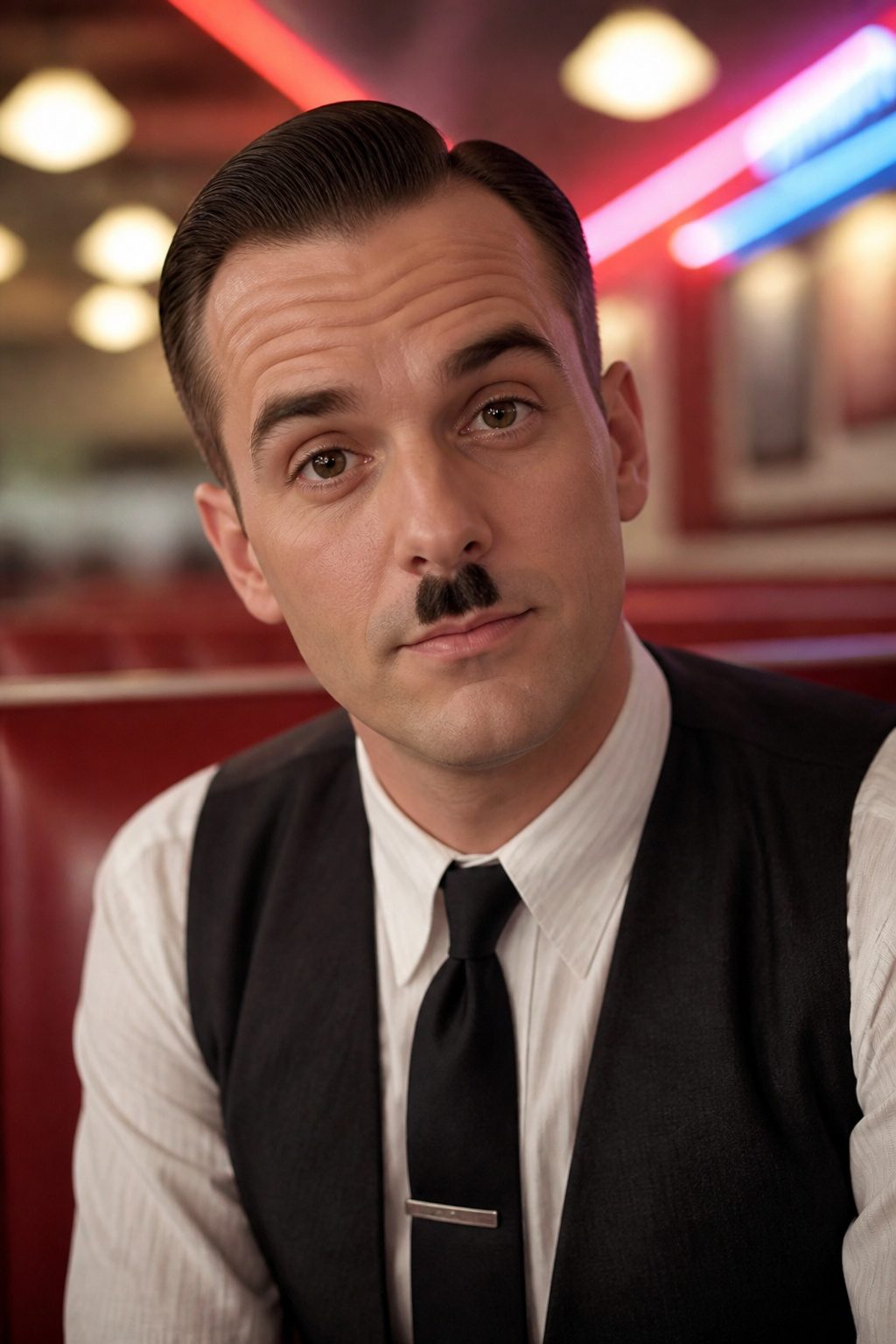
The toothbrush mustache sits narrow and centered, a small rectangle of hair trimmed to the width of the nose. Charlie Chaplin adopted it in 1914 for his Tramp character, choosing it precisely because it looked absurd and could be read as comic from any distance in silent film. By the 1920s the style was his visual signature, so closely tied to his persona that he wore it offscreen as well.
After World War II, the look became permanently contaminated. Adolf Hitler had worn the identical style since 1919, and the association proved stronger than Chaplin’s twenty years of prior ownership. Chaplin himself retired the mustache with the Tramp in 1936’s Modern Times, then spent 1940 satirizing Hitler in The Great Dictator, where the visual joke depends on the audience recognizing the same facial hair on two men with opposite meanings.
Western culture has never managed to separate them. Attempts to reclaim the style as "the Chaplin" run into the problem that the image registers as Hitler first, Chaplin second, for viewers born decades after either man’s death. The mustache’s compact size, once its practical advantage for a silent comedian, now works against it: there is no variation wide enough to signal distance from the historical source. The toothbrush remains the only mustache style defined largely by who cannot wear it.
12. Military Mustache

The military mustache sits right at the edge of regulation, and that narrow band is what defines it. The hair cannot extend past the upper lip line or sideways beyond the corners of the mouth, a rule born from practical need rather than parade-ground vanity. Gas masks seal poorly against whiskers; food hygiene in field conditions collapses when a mustache dips into every ration. Each branch phrases the limit slightly differently, but the geometry stays the same: a neat trapezoid, narrow under the nose and widening to the mouth’s edge, kept short enough that it never brushes the lip itself. Most servicemen who wear one are working within the only facial hair their branch permits, which turns this constrained shape into a recognizable type rather than merely a lampshade cut worn short. The style takes one to two months to grow in, and the maintenance is constant; a weekly trim at minimum to keep the line crisp and the length above the lip. What reads as severity is really just compliance made visible, the mustache equivalent of a pressed uniform.
13. Imperial Mustache
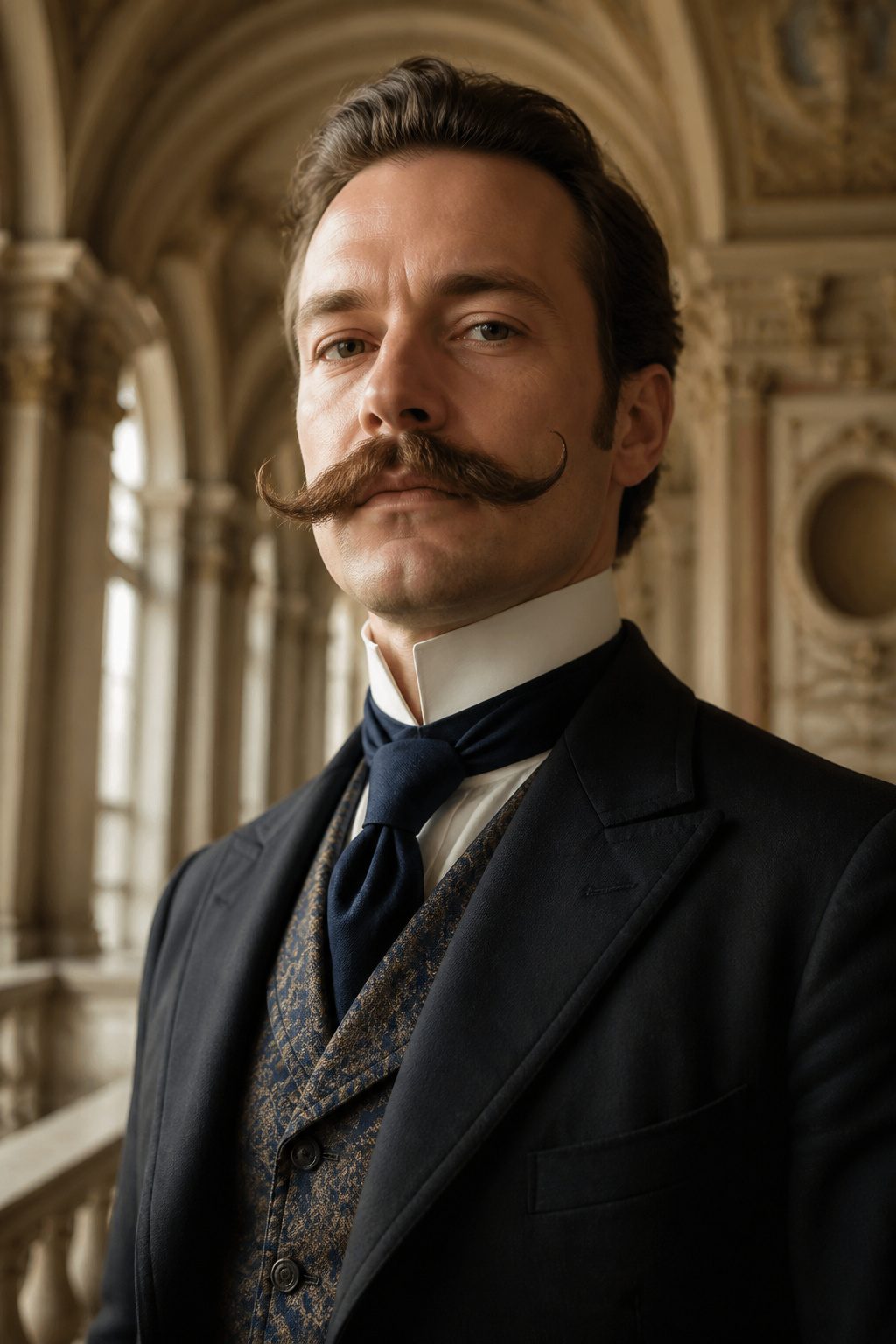
The Imperial mustache carries its weight differently than the handlebar styles that get more attention at modern barbershops. Where a handlebar depends on wax to twist the ends into sharp points, the Imperial gets its upward curl from dense, coarse hair and combing alone, no product required. That natural lift is the whole point: looser, fuller curls that look grown rather than sculpted.
Kaiser Wilhelm II made this style famous, and the Austro-Hungarian military aristocracy wore it as standard dress before him. The historical connection matters because the style demands the same hair type those men typically had: thick, wiry growth that extends past the corners of the mouth and up toward the cheeks. Fine or sparse hair will not hold the curl and will simply droop.
Growing one takes patience. Most men need four to six months of heavy growth, and starting from a full beard then shaving down avoids the awkward in-between phases. The cheek hair is part of the style, not an accident of lazy trimming, which makes this more advanced than it first appears. A barber’s help pays off early, especially for shaping those cheek transitions. The finished look suits triangle, oval, oblong, and square faces; round and heart shapes tend to look smaller-chinned underneath all that volume.
14. Trash Stache

The trash stache only exists as a style because someone dared to call it one. Two weeks of patchy, uneven growth that most guys would shave off in embarrassment becomes, in certain circles, a deliberate anti-statement. Indie bands and skate crews started wearing it as a joke that stuck, the facial-hair equivalent of a stained thrift-store tee. The irony is the whole point: claiming this barely-there scruff belongs in a catalog of mustache styles is itself the punchline. What reads as lazy grooming in one room signals in-group belonging in another. The two-week minimum matters because anything less doesn’t even register as intentional; you need enough time for the patchiness to become visible, then for that visibility to become the joke. Maintenance is nearly nonexistent, which is the maintenance. Some hybrids try to bridge the gap by pairing it with a fuller beard or adding a deliberate shape, but that usually kills the effect. The trash stache works when it looks like you forgot to care, not like you’re performing forgetfulness.
15. Pyramid Mustache

The pyramid mustache tapers to a clean point centered below the lower lip, with the bulk sitting wide across the mustache line before narrowing in steady increments. That geometry is what separates it from a standard goatee or a simple soul patch: every millimeter of width has to be earned through deliberate trimming, usually with a precision blade angled to follow the natural grain while carving the diagonal lines inward. The point must land dead center, and even a slight drift left or right reads as a mistake the mirror does not forgive.
This shape had a brief but visible run through 1970s soul and funk culture, where sharp grooming signaled stage presence and control. What photographs from that era do not reveal is the maintenance between sets; the pyramid collapses into an uneven triangle the moment symmetry slips.
Most faces do not provide that symmetry naturally. A stronger growth pattern on one side, a subtle scar, or simply the way light falls across the philtrum can throw the whole illusion. The style demands checking from three angles minimum, and even then, what reads as centered in morning light shifts by afternoon. For most growers, the pyramid becomes a lesson in how much their face refuses to cooperate.
16. Petite Handlebar Mustache
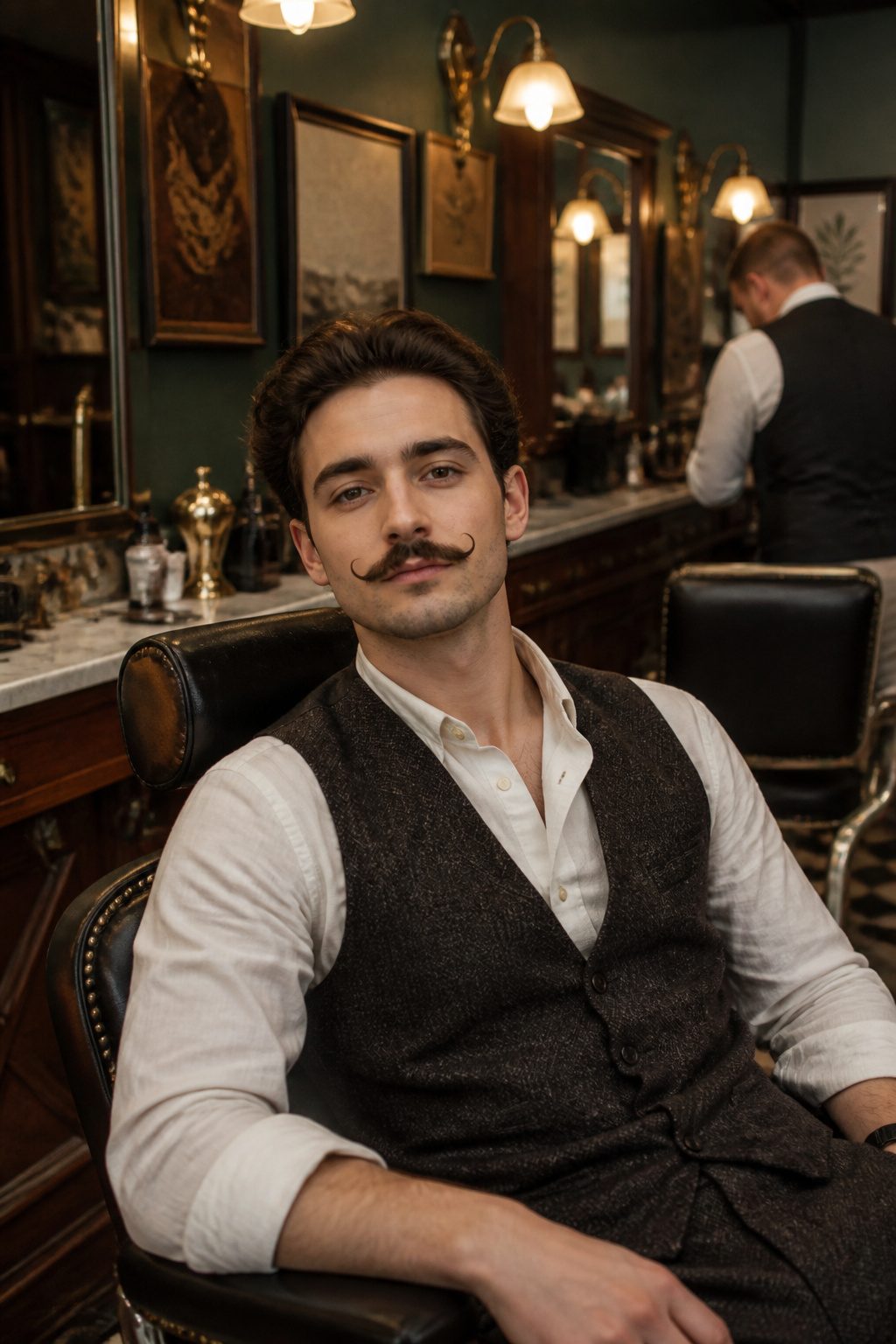
The petite handlebar mustache keeps the curled ends but stops them right at the corners of the mouth, never pushing past. That shorter span matters most for men whose growth simply quits before the full drama arrives. Terminal length limits more mustaches than people expect, and this style quits fighting biology.
Wax demand drops sharply with the reduced length. A full handlebar drinks the stuff daily; the petite version needs enough to train a modest upward wave, not a sculptural curl. The vintage aesthetic stays intact without the morning theater of heating, twisting, and praying the wind cooperates.
Two to three months of growth usually gets you there, with the center kept trimmed clean above the lip. The tradeoff is maintenance frequency: because the handles sit closer to the skin, stray hairs beneath the outer edges need shaving more often than the standard version demands. Some men add a hard part at the philtrum to sharpen the separation.
Oval and diamond face shapes carry this best. On larger rectangular faces, the proportions can look swallowed rather than styled.
17. Hybrid Mustache Styles
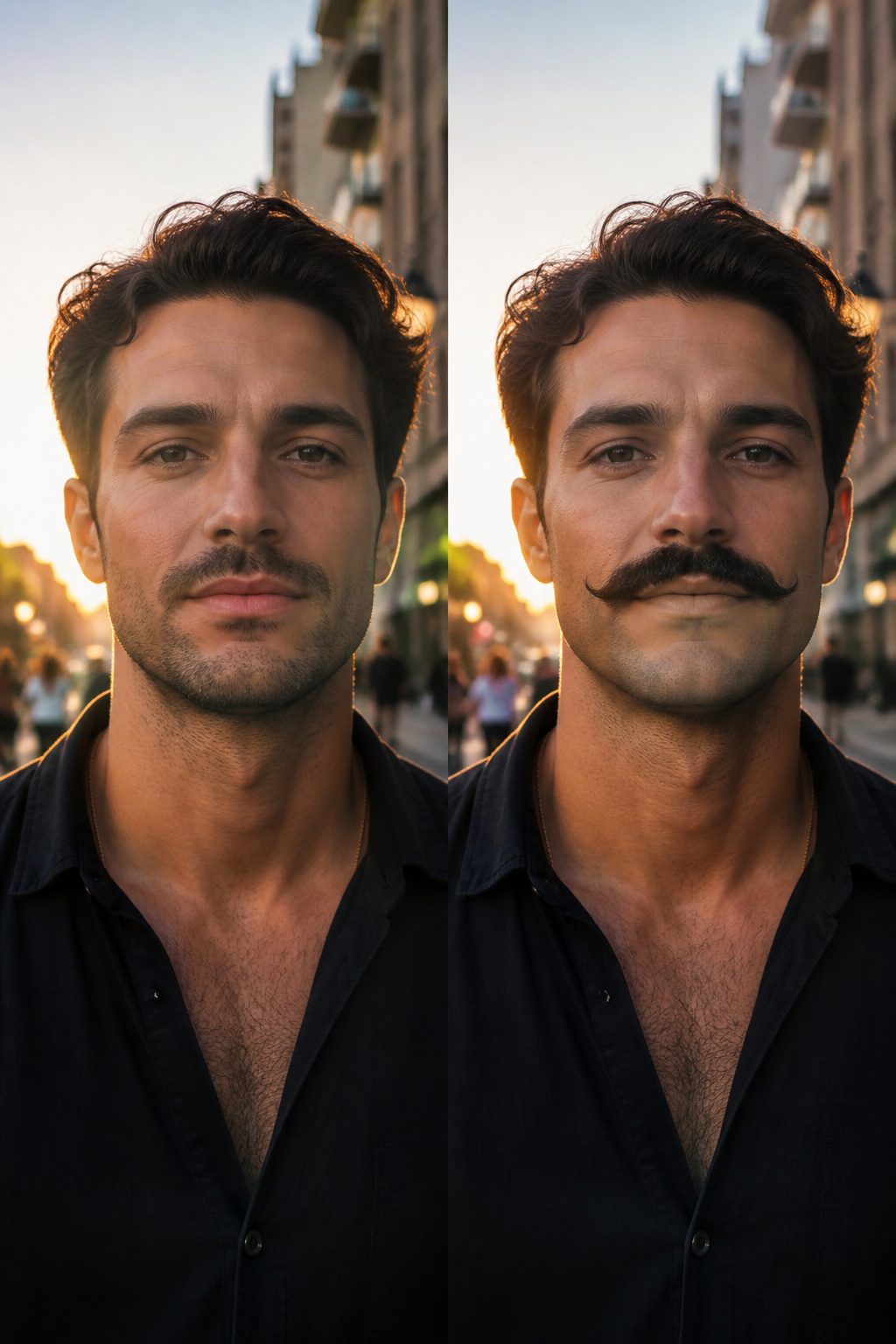
Hybrid mustaches sit right where most men actually live: somewhere between a clean upper lip and a full beard. The beardstache pairs a full, deliberate mustache with short, even stubble rather than a groomed beard. That contrast, the fullness above the lip against the roughness below, works on oval and square faces and needs almost no maintenance beyond keeping the mustache shaped and the stubble from growing past a few days’ length. I have watched this style go from niche to default in barbershops over the last decade, and the reason is practical. It solves the problem of a weak jawline without committing to a full beard, and it lets the mustache itself stay the point of focus.
The cowboy takes a walrus-thick mustache and adds a soul patch beneath the lower lip. That small anchor of hair breaks up the vertical sweep of a longer face, adding weight to the center where a walrus alone might leave the chin looking bare. For oblong or rectangular face shapes, the combination creates horizontal interest that a standalone mustache of any width struggles to achieve alone.
Then there is the gunslinger: a handlebar with curled ends paired with a chin curtain, that line of hair running the jaw’s edge with no mustache connection. The chin curtain fills in what the handlebar’s upward sweep can exaggerate, a narrowness in the lower face that the curled points draw the eye toward. Heart-shaped faces, with their wider cheekbones and pointed chins, get balance from the curtain’s straight line across the jaw.
These combinations have become the most common modern choice because they treat the face as a whole canvas rather than isolating the space between nose and lip. A man with a round face might find a pencil mustache too precise, too exposing, but a beardstache adds the structural shadow his jaw lacks. Someone with a square face gets softness from the cowboy’s soul patch without surrendering the mustache’s masculinity. The hybrid approach lets you borrow from two traditions and correct what either would do alone.
Grooming Tools and Products
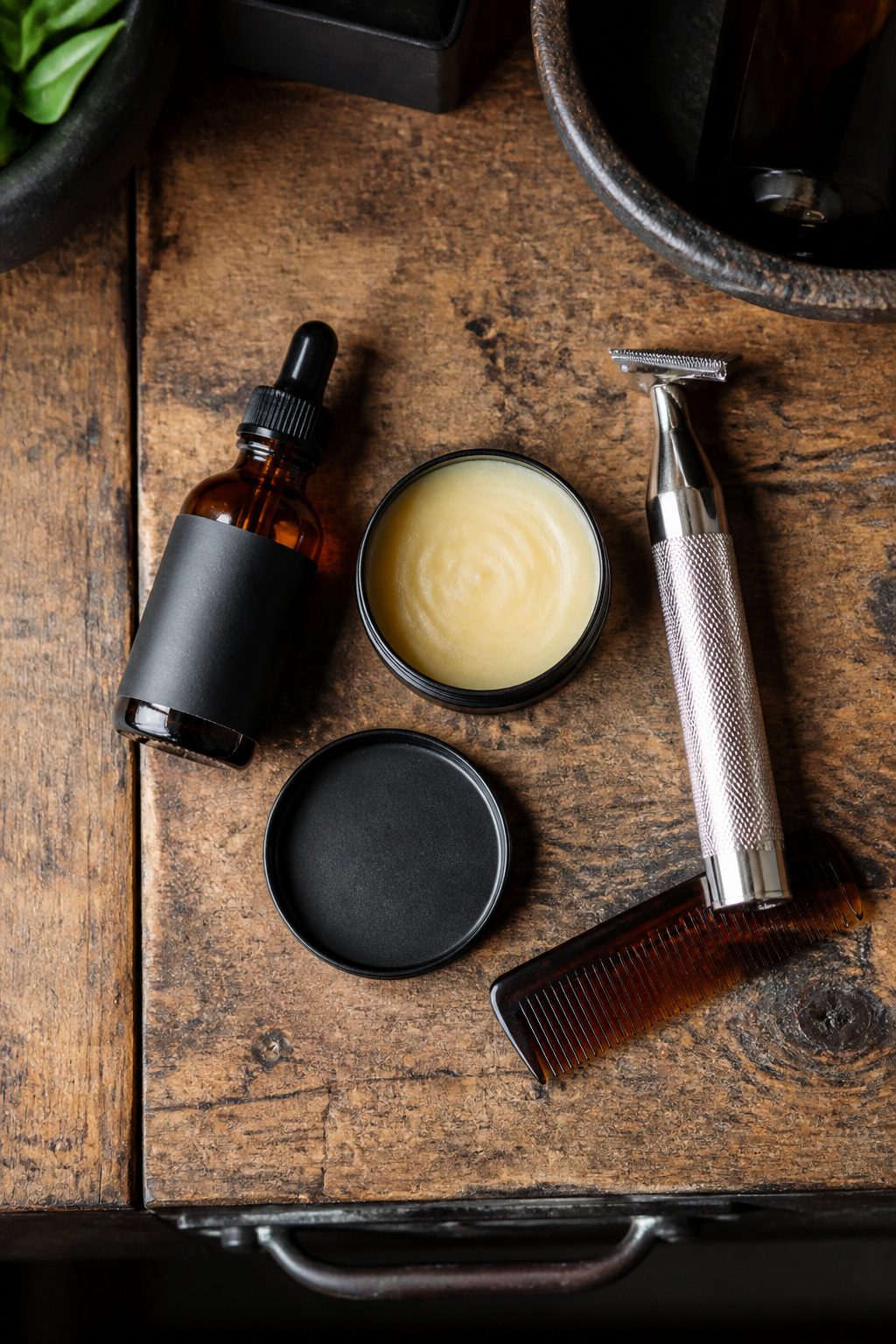
A mustache only looks deliberate if the tools behind it are. Here is what actually earns its place on the shelf, and what I have watched fail.
- Beard oil softens the hair and hydrates the skin underneath. Apply it daily, especially if you are growing a fuller style like the Walrus or Beardstache, since coarse hair drags and itches against dry skin. A 1-ounce bottle typically runs $8–$15 and lasts two months.
- Mustache wax is for shaping, not conditioning. Use a strong-hold wax to train curls and hold structure on a Handlebar or English mustache. The snap-and-twist method works better with wax that has real grip, not the soft balm some brands mislabel.
- Beard balm conditions but does not shape. It is lighter than wax and better for everyday softness on styles that do not need architecture, like a natural Chevron.
- A precision trimmer with a narrow head keeps the lines clean on a Pencil or Royale. I have had a $25 pharmacy model die in six months and a $45 King C. Gillette All-in-One last three years; the difference is usually the blade housing, not the motor.
- A fine-tooth mustache comb aligns hairs before trimming and distributes wax evenly without clumping. The smaller side of a standard beard comb works in a pinch, but dedicated mustache combs sit flatter against the lip.
Face Shape Matching
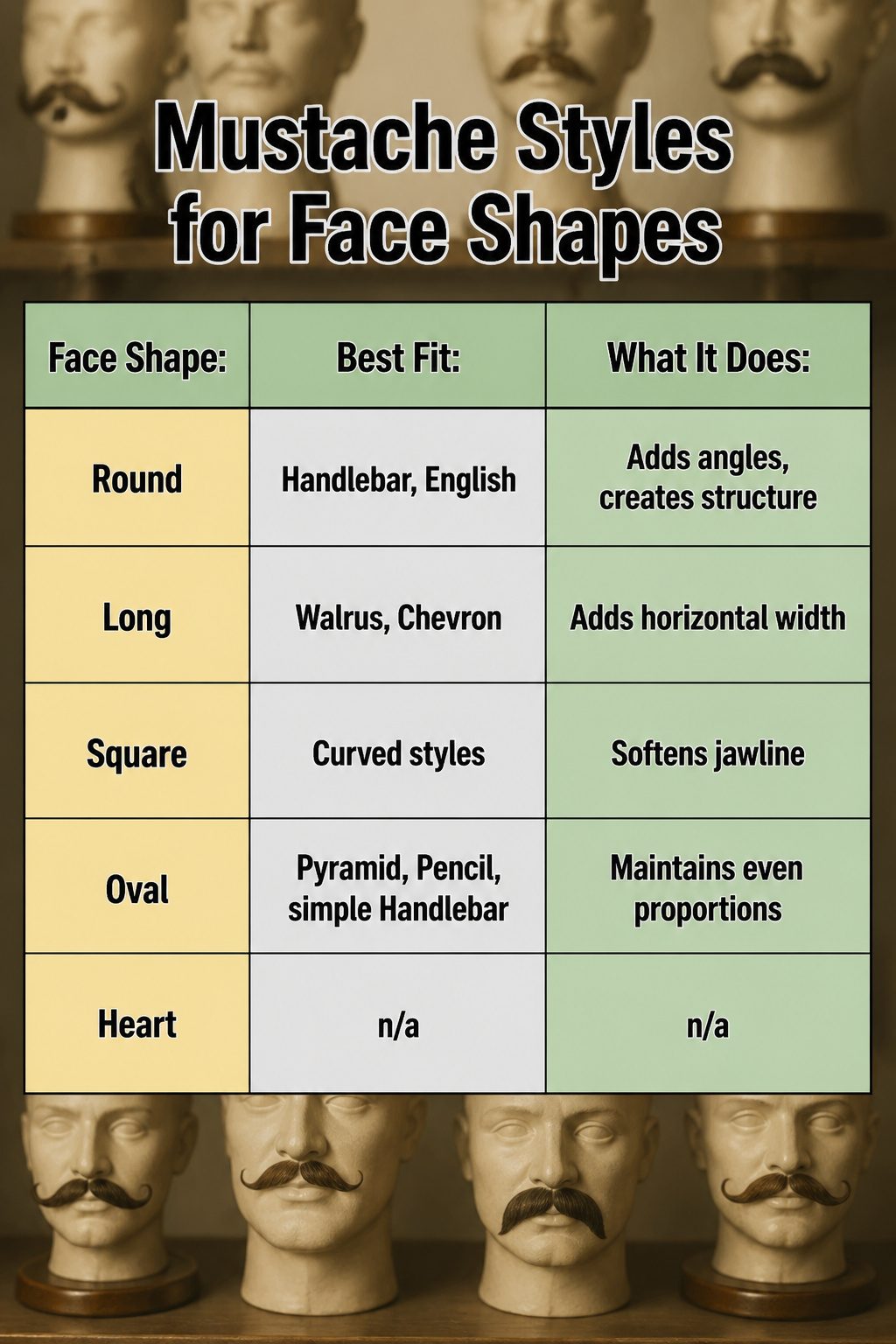
A mustache that fights your face shape looks like a costume piece, not a choice. Round faces need hard angles: the upward sweep of a handlebar or the straight horizontal line of an English mustache adds structure where there is none. Long faces run the opposite direction; width is the fix, so a walrus or chevron that stretches across the full lip shortens the face visually. Square jaws already have the geometry; curves soften them, which is where a handlebar’s rounded ends or a relaxed chevron helps.
Oval faces carry the most flexibility, though the sources split on how much. One reading says almost any style works; another warns that oversized shapes throw off already-even proportions. I landed on the wrong side of that split last year, growing a full walrus that sat heavy on my longer oval face and aged me by a decade in photos. A slimmer pyramid or simple handlebar would have kept the balance.
| Face Shape | Best Fit | What It Does |
|---|---|---|
| Round | Handlebar, English | Adds angles, creates structure |
| Long | Walrus, Chevron | Adds horizontal width |
| Square | Curved styles | Softens jawline |
| Oval | Pyramid, Pencil, simple Handlebar | Maintains even proportions |
| Heart | n/a | n/a |
The table leaves heart-shaped faces blank; the sources I worked from did not address them, and guessing felt worse than admitting the gap.
Maintenance Levels
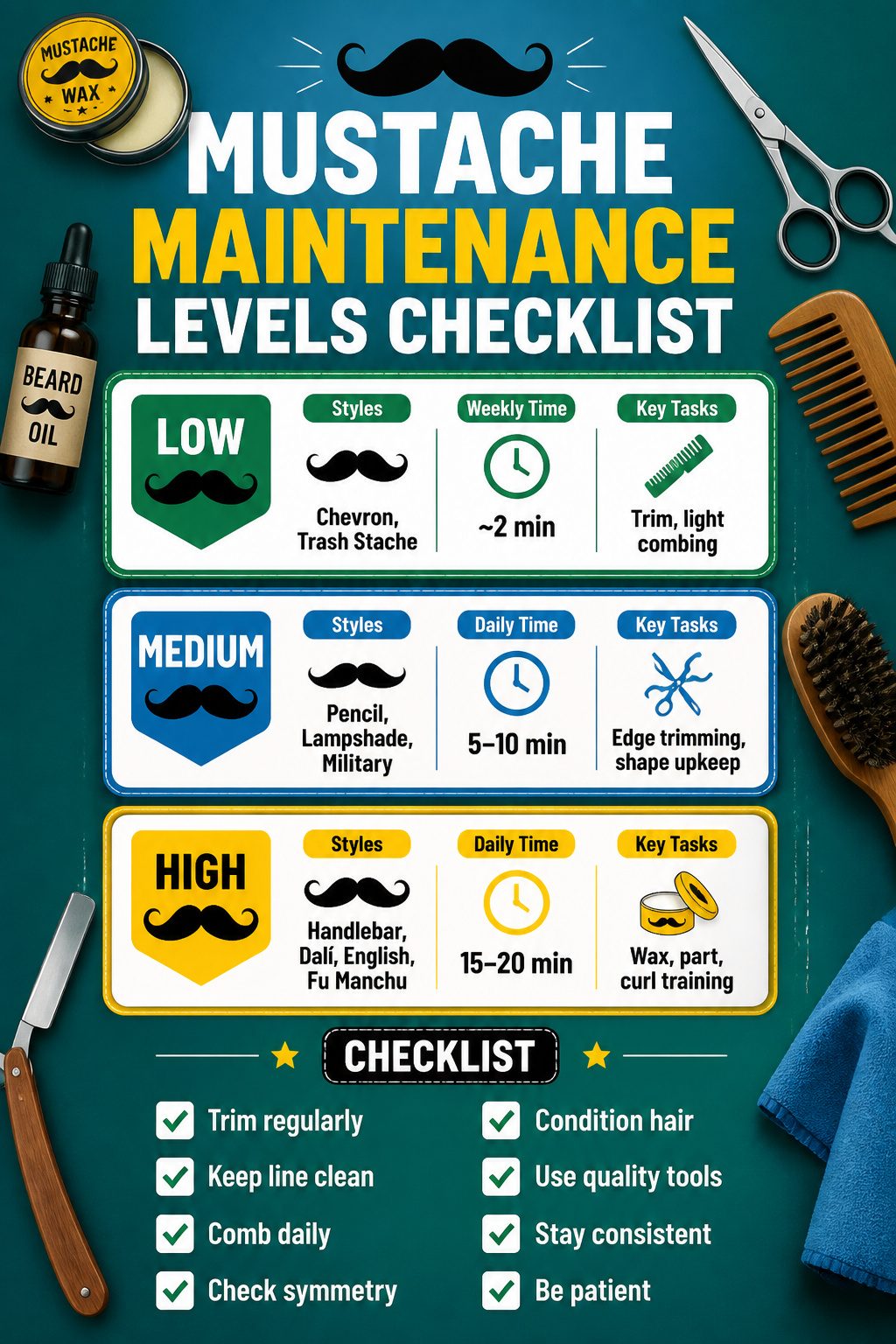
The real cost of a mustache style is measured in morning minutes, not mirror glamour. Low-maintenance options like the chevron and trash stache cost about two minutes weekly, mostly a quick trim to keep the line above the lip. Medium styles such as the pencil, lampshade, and military land in the five-to-ten-minute range; they need regular edging to hold their defined borders but skip the waxing ritual entirely. High-maintenance styles, the handlebar, Dalí, English, and Fu Manchu, demand fifteen to twenty minutes daily for wax application, precise shaping, and the patience to train hair against its natural growth pattern.
| Maintenance Level | Styles | Daily Time | Weekly Time | Key Tasks |
|---|---|---|---|---|
| Low | Chevron, Trash Stache | n/a | ~2 min | Trim, light combing |
| Medium | Pencil, Lampshade, Military | 5–10 min | n/a | Edge trimming, shape upkeep |
| High | Handlebar, Dalí, English, Fu Manchu | 15–20 min | n/a | Wax, part, curl training |
The weekly versus daily split matters more than the total. A low-maintenance style forgives a skipped Monday; a high-maintenance one punishes it with drooping tips and a half-formed curl that looks like a mistake rather than a choice.
Frequently Asked Questions
Which mustache style is most attractive?
The Chevron, Beardstache, and Pencil styles tend to suit the broadest range of face shapes and personal styles. A Chevron reads as natural and masculine, a Pencil adds polish when kept crisp, and a Beardstache pairs a bold upper lip with low-commitment stubble below.
How long does it take to grow a mustache?
Most men see enough length to shape a basic style in two to four weeks. Fuller styles like the Chevron need four to six weeks, while a Handlebar or Walrus can demand six months to a year before the hair reaches its full potential.
What products help maintain a mustache?
Mustache wax trains and holds shaped styles like the Handlebar and English, while beard oil or balm softens coarser growth. A fine comb with a smaller side works the wax through the ends, and a precision trimmer keeps edges clean between shaves.
Does a mustache make you look older or younger?
A fuller mustache, like a thick Chevron or Walrus, tends to add years and gravity. A neatly trimmed or Pencil mustache reads younger and lighter, though the same thin line on the wrong face can also sharpen features in a way that ages rather than softens.