

A long bob in 2026 ranges from chin-grazing asymmetry to blunt collarbone lines, and the deciding factor is not your hair texture but your tolerance for upkeep. Blunt edges need trims every 6 to 8 weeks or the density illusion collapses into a fuzzy grow-out; layered and textured versions buy you 10 to 12 weeks because they were built to soften gracefully. The collarbone length itself is the workable middle, long enough to avoid severity and short enough to still read as deliberate architecture rather than accident.
1. Blunt Lob

A single blunt line at the collarbone gives this cut its weight and swing. Without layers interrupting the perimeter, the edge reads as dense and intentional, which is why fine hair looks thicker than it actually is. The tradeoff is commitment: that clean line grows out visibly, so trims every 6 to 8 weeks keep the shape from going ragged.
Thick, straight hair carries the blunt lob differently. The same edge that adds density to fine strands can turn heavy on its own, though a smoothing serum on damp hair before blow-drying keeps the line glassy rather than helmet-like. The collarbone length is the workable middle here, long enough to soften the severity of a true jaw-length bob but short enough that the cut still reads as deliberate architecture rather than grown-out layers.
I have watched enough people skip that trim schedule to know what happens. The blunt perimeter feathers, the density illusion collapses, and the cut starts looking like a failed grow-out rather than a choice. The maintenance is non-negotiable if you want the effect you paid for.
2. Layered Lob

Internal layers change everything about how a long bob behaves. Weight removal happens from the inside, not the outline, so the perimeter stays strong and full while the bulk thins out. Without that interior work, thick hair sits like a triangle; with it, the shape falls cleaner and moves on its own.
Round and square faces especially benefit. The softness breaks up hard lines, and the movement keeps the eye traveling instead of locking on jaw width or face width. A quick rough-dry is usually enough; the layers settle into place without much coaxing.
What won me over reading through the options was how this cut grows out. A blunt lob stays precise for about six weeks, then looks obviously grown and heavy. Layered lobs forgive the stretch because the interior texture already exists; the shape softens gradually rather than collapsing all at once. You buy more time between appointments, and the in-between weeks look intentional rather than neglected.
3. Wavy Lob

A wavy lob lives or dies on whether the texture looks earned or forced. The cut itself sits at the shoulder, which gives waves enough length to move without the weight that pulls them flat on longer hair. Air-dry with sea salt spray scrunched through damp hair and the bend comes in soft and irregular, the kind of undone that reads as intentional rather than lazy. For more polish, a large-barrel curling iron with no clamp wrapped once or twice around the midshaft builds loose bends in short order; holding the end keeps it from curling under like a pageant wave.
Heart-shaped and oval faces carry this especially well. The soft volume at the jawline balances a wider forehead, and the natural movement keeps the line from reading too severe. Straight hair may need that single pass with the iron to hold the shape, while wavy and curly textures can skip heat entirely and just diffuse on low if the day demands faster drying. The common mistake is overworking it. Tuck the sides behind the ears while damp and let the hair set into its own relaxed shape; the best versions always look a little like you forgot to finish styling them.
4. Asymmetrical Lob

One side of an asymmetrical lob hangs a full two to four inches longer than the other, creating a diagonal line that pulls the eye across the face rather than straight down. That angle is what makes this cut worth considering for heart-shaped faces; the longer side fills in the narrower jaw area while the shorter side keeps the forehead from looking top-heavy. The sources disagree on where the angle should start. One approach has the shortest point hitting at the chin, which keeps the face open and works with a deep side part to push the drama further. Another starts the slope down at the collarbone for a softer, more wearable line that still reads edgy with beachy waves added in. The styling commitment is real: this cut looks intentional only when you blow-dry the angle smooth or commit fully to the tousled contrast. Let it air-dry straight and the asymmetry can look like a growing-out mistake rather than a choice. For heart-shaped faces specifically, the chin-start version wins if you want definition; the collarbone-start version wins if you want the angle to do slimming work without the cut feeling like a statement piece every morning.
5. Graduated Lob

Shorter layers at the back stack upward while longer pieces fall forward toward the face, building volume at the crown that keeps a graduated lob from falling flat where a simple angled cut often does. The difference matters in practice: an angled lob merely drops longer toward the front, but a true graduated cut uses those stacked, shortened layers at the nape to push the build upward, making the silhouette round rather than triangular.
If you are growing out a shorter bob, this is the shape that bridges the awkward phase. When styled straight, the graduated cut reads as an effortlessly grown-out bob rather than a deliberate structure, which is why stylists reaching for minimal results often keep the color flat or barely touched with balayage.
The neckline grows out soft and fast. Those stacked layers lose their vertical push first, so the shape flattens at the back within six to eight weeks for most people. Maintenance is the trade: you trade the crown volume for more frequent trims than a blunt lob requires, and the difference between a fresh graduated cut and a grown-out one is obvious where a one-length shape hides its age longer.
6. Lob with Bangs

A fringe redraws where a long bob starts and ends. Blunt bangs cut straight across at the brow give the cut a bold, horizontal frame that shortens the look of a longer face, which is why oblong shapes tend to carry it best. Side-swept bangs do the opposite: the angle creates an illusion of length and draws attention away from the cheeks, so round faces usually win here. Either way, the bangs become the focal point and the lob itself reads shorter than it actually is.
The real cost is the calendar. Blunt fringe needs a trim every two to three weeks to stay sharp, and even side-swept pieces lose their shaping without regular upkeep. I stopped wearing mine after counting four salon visits in ten weeks. If you are deciding between the two, match the fringe to your face shape first, then ask whether your schedule can absorb that maintenance.
7. Textured Lob

Point-cutting or razor-cutting removes weight from the inside of thick hair so a long bob does not sit like a triangle, keeping the perimeter strong while the interior thins out. The technique leaves ends piece-y rather than blunt, which means the shape looks intentional even as it shifts. By day three, the separation has settled into something messier, and that is the point: the cut was built to collapse well. A texturizing spray scrunched through the mid-lengths revives the separation when it starts to clump together. Straight hair benefits from this too, since choppy layers add volume where a blunt line would lie flat, and any highlights catch light at slightly different angles as the pieces move.
8. Ombre Lob

Dark roots melting to lighter ends on a long bob create horizontal interest at the perimeter, but only if the transition lands in the right place. On this length, the shift should sit between the chin and collarbone, low enough that the lighter mass pools at the ends and widens the silhouette visually. Higher placement reads as grown-out rather than intentional, and too low misses the cut entirely.
The color placement changes how dense the hair reads. Keeping darkness concentrated at the crown preserves the impression of depth where hair is naturally thickest, while the lighter ends catch light and open up the shape. Someone with fine hair gets more mileage from this than from all-over color, which can flatten the perimeter.
Most lobs hold their shape for 8 to 10 weeks between salon visits, and an ombre buys you the full stretch of that window. The root area is deliberately untouched, so the grow-out line softens rather than announces itself. Layered versions stretch even further; blunt perimeters need attention closer to every 6 to 8 weeks to stay sharp, though the color itself can wait.
9. Lob with Highlights
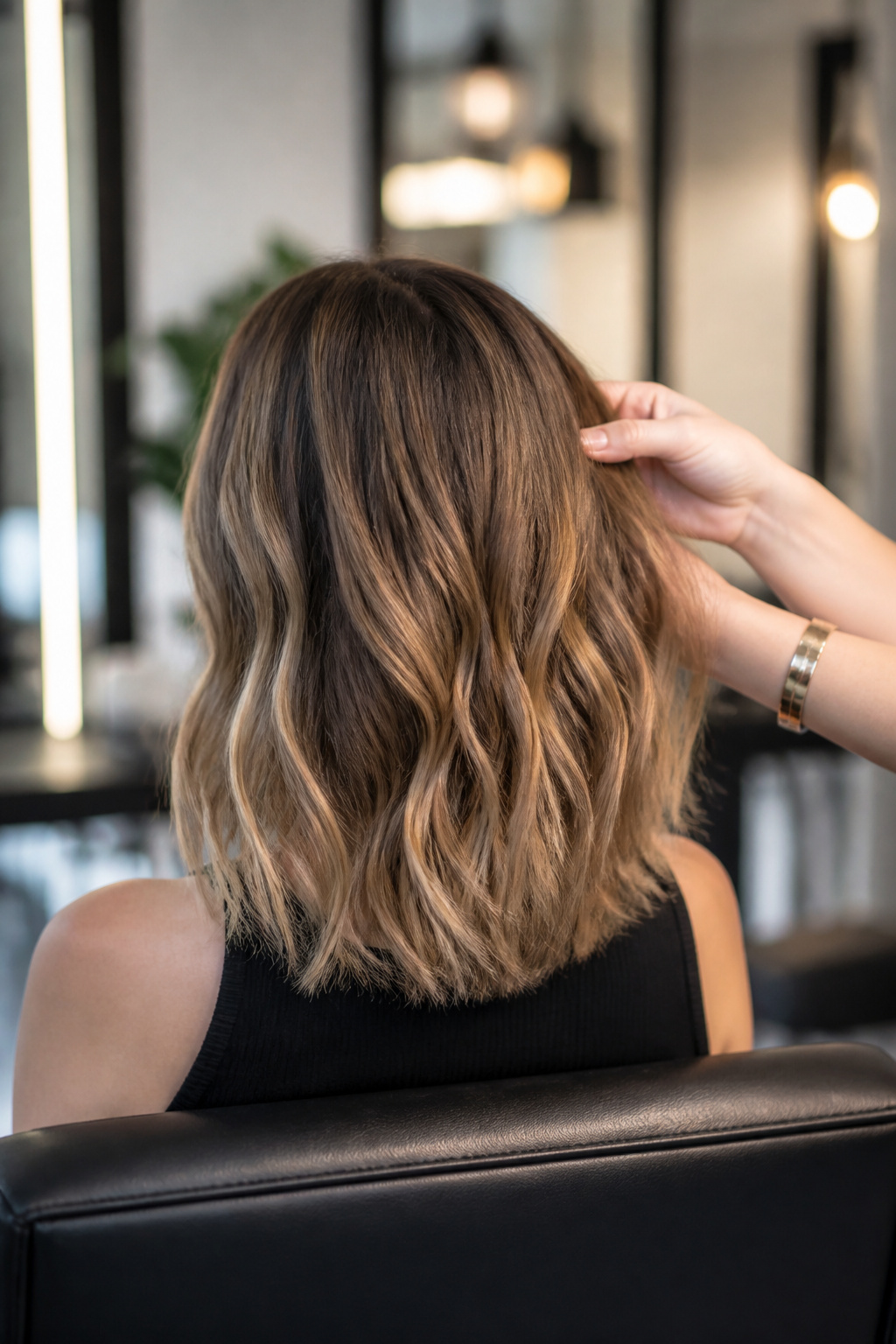
Traditional foil highlights woven through a long bob add dimension while keeping the overall color closer to natural than all-over lifting. The density matters more at this length than people expect. About a third to half the hair in foils keeps the balance right; beyond that, the ends start reading as thin because the visual weight clusters toward the roots and the bottom loses the density that makes a lob feel substantial.
Partial placement, concentrated around the face and crown, brightens where light naturally hits and leaves the underneath closer to your base. Full placement pushes brighter pieces through every layer, which reads more dramatic but also demands faster upkeep as the contrast grows out. A lived-in brunette approach, with lowlights woven through rather than highlights on top, adds depth that makes the hair look thicker and glossier with the lowest maintenance of the three choices, since darker tones fade slowly.
10. Lob with Balayage

Hand-painted color on a long bob lands softer and less regimented than foils because the placement follows how the hair actually moves. The brightest pieces typically sit on the mid-lengths and ends, melting into a darker root that stays natural and grown-out. That root shadow is what stretches the gap between appointments to every twelve weeks, compared with the standard six-to-eight-week scramble for foils. The dimension also makes layers in a lob read more clearly, since the lighter strands catch light against the darker base without looking striped. For anyone shifting toward lower-maintenance color without giving up brightness, this is the move that actually buys you time.
How a Long Bob Sits on Different Face Shapes

A long bob flatters a round face when you keep it at the longer end and add a deep side part or angled ends. Those vertical and diagonal lines visually lengthen the face and break up width. Avoid a chin-length blunt cut with a center part, which tends to emphasize roundness.
For heart-shaped faces, an asymmetrical long bob brings sharp angles that frame the jawline and add edge without widening the forehead. Square jaws soften under waves, which is why a wavy lob earns its keep here by rounding off strong corners.
If your features run highly angular or highly soft, the cut needs to push the other way. Sharp bone structure wants movement and texture, not more geometry. Very rounded features need the lengthening angles, not additional volume at the sides.
| Face Shape | Lob Length & Structure | Parting | What to Skip |
|---|---|---|---|
| Round | Longer end, angled ends | Deep side | Chin-length blunt with center part |
| Heart | Asymmetrical, sharp angles | Side or off-center | Symmetrical volume at crown |
| Square | Wavy texture, soft perimeter | Flexible | Blunt, straight ends at jaw |
| Highly angular | Layered, with movement | Side | Sharp, geometric lines |
| Highly soft | Angled, longer length | Deep side | Rounded silhouette, center part |
Bring both front and back reference photos to your stylist so the shape holds correctly from every angle.
Styling Products That Actually Work

The right product for a long bob depends on what you’re fighting. Fine hair that falls flat by day two usually carries too much weight at the root, not the wrong cut. Swap heavy creams for a lightweight volumizing mousse applied only at the roots and the shape holds without the droop.
- Volumizing mousse works for fine hair and straight textures that need lift without bulk
- Sea salt spray or light texture cream gives wavy and curly lobs their bend; scrunch as it dries for natural movement, or diffuse on low heat
- Smoothing serum tames thick or coarse hair that’s prone to frizz
- Heat protection becomes non-negotiable the moment you pick up a straightener or tong, even for a quick bend on very straight hair
- Air-dry cream is enough when your texture cooperates and you’re skipping hot tools entirely
"The key product he used to get the look? Olaplex’s Bonding Oil."
That oil sits at the finishing end, not the styling start. On a lob, it seals and adds shine after the work is done.
Maintenance Schedule and Trimming Frequency

Most lobs need a trim every 8 to 10 weeks, though blunt cuts collapse faster and land closer to 6 to 8. The extra length of a lob hides grow-out better than a shorter bob, but a blunt edge shows that soft, fuzzy line sooner while layers and choppy versions mask the in-between stage. I stretch my own timeline by leaning into air-dried texture rather than fighting it with heat tools every morning.
Daily styling time splits cleanly by texture. Straight hair air-dries in about 5 minutes if you let it, or 15 to 20 with a round brush and 1.25-inch iron for a polished finish. Wavy and curly textures take the same heat-tool window if you want smooth, though a diffuser and the right product let you reclaim those twenty minutes. The real savings come from matching your product to your texture: lightweight mousse at the roots for fine hair that falls flat by day two, smoothing serum for thick hair, salt spray for waves. If your lob looks great leaving the salon but drops shape fast, the culprit is usually product weight, not the cut itself.
The Dry-Cutting Exception for Curly Hair
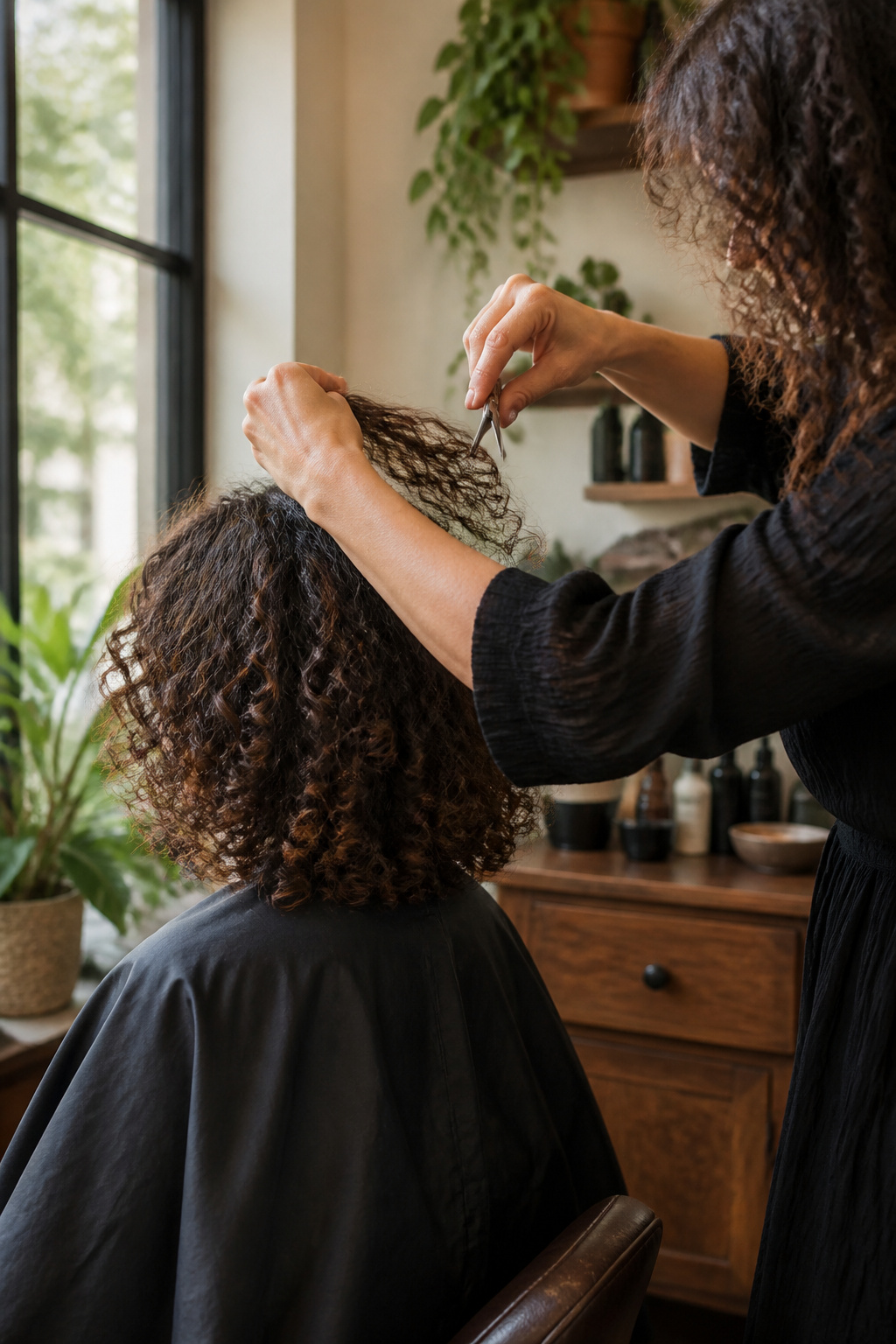
Curly hair shrinks. A wet cut on a long bob can land two or three inches shorter than intended once the coils spring up, and by then the scissors have already done their work. Ask for a dry cut so the stylist sees exactly where each curl falls day to day, not where it hangs stretched and dripping at the shampoo bowl.
The collarbone-skimming length that looks so right on a salon poster becomes a chin-grazing surprise if shrinkage is not built in from the start. Leave extra length to account for that lift, or the lob you planned can rise above your jawline by the time you style it yourself. A curl-specific dry cut also lets the stylist work with your natural movement rather than fighting it, which matters more on a structured shape like a long bob where the line is the whole point.
Finer, straighter hair gets the opposite treatment. Clean, precise lines come from wet cutting, and the stylist can keep that even length that delivers thickness. But for textured hair, dry is the only honest way to measure where you will actually live in the cut.
Frequently Asked Questions
What is a long bob?
A long bob, usually called a lob, is a hairstyle that falls somewhere between the chin and the collarbone. It sits longer than a classic bob but shorter than mid-length hair, which makes it more versatile and easier to tie back than a true bob. The length is why it works across so many face shapes and hair types without the commitment of going fully short.
How do I style a long bob?
Match your product to your texture. Fine hair gets lightweight volumizing mousse at the roots, wavy textures respond to sea salt spray scrunched through damp hair, and thick or coarse hair needs smoothing serum to fight frizz. For soft bends, wrap hair around a large-barrel curling iron without the clamp, or skip heat entirely and let air-dry cream do the work. The best long bobs always look slightly undone.
How often should I trim a long bob?
Most lobs need a trim every 8 to 10 weeks. Blunt cuts collapse faster and land closer to 6 to 8 weeks, since that clean edge grows out visibly and feathers. Layered or choppy versions mask the in-between stage better and let you stretch the timeline. If your lob loses shape fast between appointments, product weight is usually the culprit, not the cut itself.
Will a long bob suit my face shape?
A long bob flatters nearly every face shape with the right adjustments. Round faces need the longer end of the range with angled ends and a deep side part. Heart-shaped faces carry asymmetrical cuts well. Square jaws soften under waves. Highly angular features need movement and texture, while very soft features need lengthening angles. The article includes a full table matching face shape to length, parting, and what to avoid.